
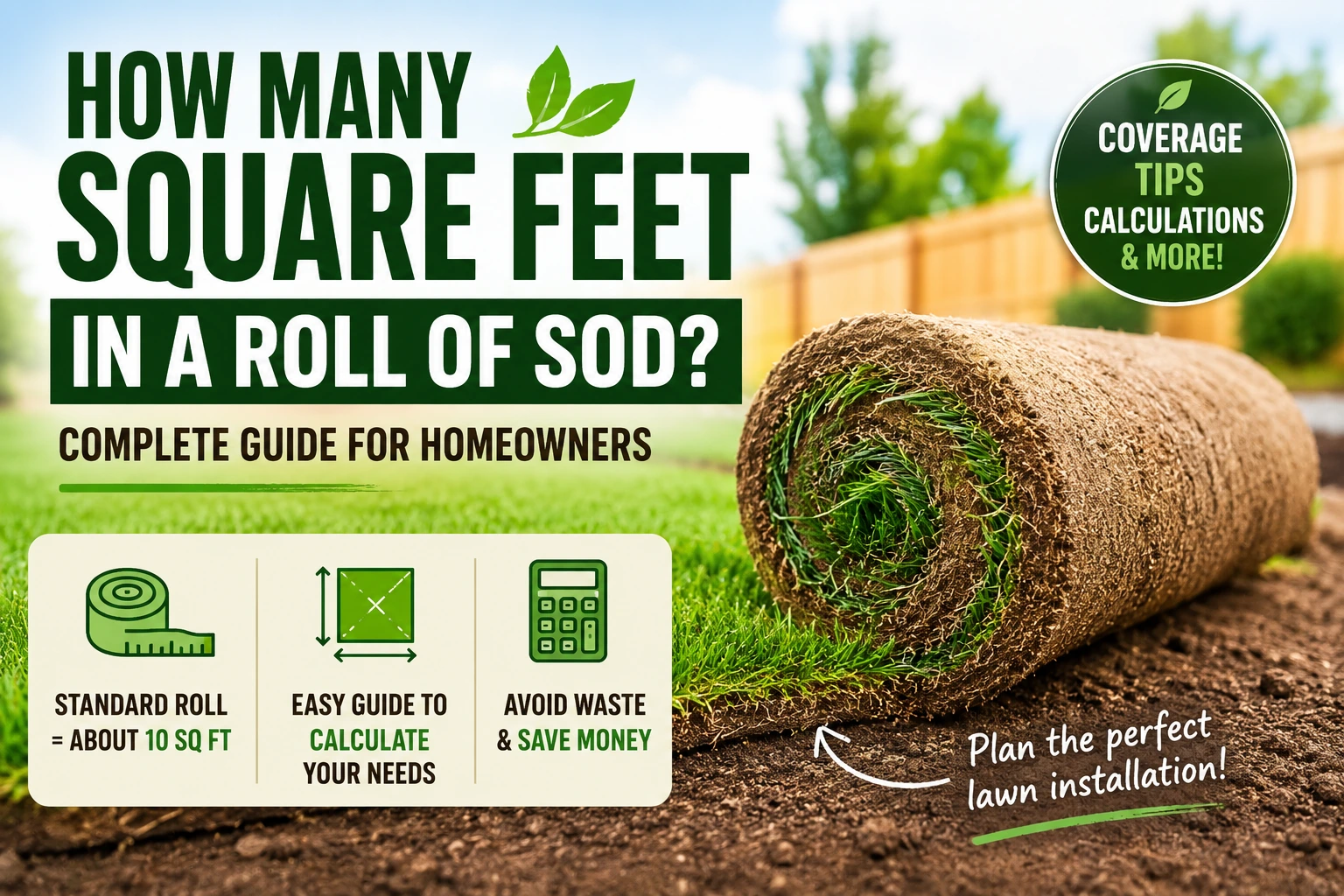
A healthy lawn can instantly improve your home’s curb appeal, increase property value, and create a welcoming outdoor space. But before ordering sod, one of the first questions homeowners ask is how many square feet in a roll of sod.
The answer isn’t always the same. Sod rolls come in several sizes depending on the supplier, grass variety, and region. While many standard rolls cover approximately 10 square feet, others may cover anywhere from 8 to 20 square feet. Because of these differences, understanding sod dimensions is essential before placing an order.
Whether you’re replacing a damaged lawn, installing grass in a new yard, or planning a landscaping project, knowing the exact coverage helps you estimate costs, reduce waste, and ensure you purchase enough sod to complete the job.
In this guide, you’ll learn standard sod roll sizes, how coverage varies, simple ways to calculate the amount you need, and practical tips to make your sod installation successful.
The Quick Answer: How Many Square Feet in a Roll of Sod?
If you’re looking for the short answer, here’s what you need to know:
- Most standard sod rolls cover about 10 square feet.
- Some suppliers sell smaller rolls covering 8–9 square feet.
- Large commercial rolls may cover 15–20 square feet or more.
- Always confirm dimensions with your local sod supplier before ordering.
Although many homeowners assume every roll is identical, sod farms often use different harvesting equipment. That means one company’s “standard roll” may not match another’s.
Typical Sod Roll Coverage
| Sod Roll Type | Approximate Coverage |
|---|---|
| Small Roll | 8–9 sq ft |
| Standard Roll | 10 sq ft |
| Medium Roll | 12–16 sq ft |
| Large Commercial Roll | 15–20 sq ft |
As you can see, coverage varies significantly. This is why professionals calculate projects using the supplier’s stated dimensions rather than relying on averages.
Standard Roll of Sod Sizes
Not every sod roll is produced the same way. Sod growers harvest grass using specialized machines, and those machines determine the final size of each roll.
Below are the most common roll sizes you’ll encounter.
Small Sod Rolls
Small rolls are lightweight and easy for homeowners to carry. They’re commonly used for:
- Small lawn repairs
- Backyard landscaping
- DIY installation
- Garden borders
- Patching damaged grass
Typical dimensions include:
- 16 inches × 72 inches
- Approximately 8 square feet
These rolls are convenient but require more pieces to cover large areas.
Standard Sod Rolls
The standard roll is the most popular choice for residential lawns.
Typical dimensions may include:
- 24 inches × 60 inches
- 18 inches × 80 inches
- Other similar combinations
Coverage usually averages around:
10 square feet per roll
These rolls strike a good balance between ease of handling and installation speed.
Advantages include:
- Easy to transport
- Faster installation
- Widely available
- Suitable for most home lawns
Because of their manageable size, standard rolls are the preferred option for homeowners and landscaping professionals alike.
Large Commercial Sod Rolls
Commercial landscaping projects often require larger rolls to speed up installation.
These rolls are commonly used for:
- Sports fields
- Parks
- Golf courses
- Commercial buildings
- Large residential developments
Coverage generally ranges between:
- 15 and 20 square feet
- Sometimes even larger depending on harvesting equipment
Large rolls reduce seams between pieces, helping create a smoother finished lawn. However, they are much heavier and usually require machinery or multiple workers for installation.
Sod Coverage Chart
The following chart provides a quick comparison of common sod roll sizes and the approximate area each covers.
| Roll Type | Typical Dimensions | Coverage |
|---|---|---|
| Small Roll | 16″ × 72″ | 8 sq ft |
| Standard Roll | 18″ × 80″ | 10 sq ft |
| Standard Roll | 24″ × 60″ | 10 sq ft |
| Medium Roll | Various | 12–16 sq ft |
| Commercial Roll | Various | 15–20 sq ft |
Use this chart as a general guide. Actual dimensions vary by region and sod producer, so verify the measurements before purchasing.
Why Sod Roll Sizes Are Different
Many people expect sod to come in one universal size, but that’s rarely the case. Several factors influence the dimensions and coverage of a roll.
1. Harvesting Equipment
Sod farms use different cutting machines. Each machine produces rolls with specific widths and lengths, leading to variations in coverage.
2. Grass Variety
Different grass species have unique root structures and growing characteristics. Some varieties are harvested in slightly different dimensions to maintain quality during transportation and installation.
Common sod grasses include:
- Kentucky Bluegrass
- Tall Fescue
- Bermuda Grass
- Zoysia Grass
- St. Augustine Grass
- Centipede Grass
Certain grasses are thicker or more delicate, affecting how they are cut and rolled.
3. Regional Standards
Sod sizes often depend on where you live. A supplier in one state or country may package rolls differently than another supplier using different equipment or local industry practices.
4. Residential vs. Commercial Orders
Residential customers typically receive smaller rolls that are easy to lift and install by hand.
Commercial contractors, on the other hand, often purchase larger rolls because they:
- Reduce installation time
- Minimize visible seams
- Cover large areas more efficiently
- Lower labor costs
Understanding these differences helps you compare quotes accurately and estimate the true coverage of your sod order
How to Calculate How Many Rolls of Sod You Need
Now that you know how many square feet in a roll of sod, the next step is determining how many rolls your project requires. Accurate calculations help you avoid running short or buying more sod than necessary.
Follow these simple steps.
Measure Your Lawn
Start by measuring the length and width of every area where you plan to install sod.
For a simple rectangular lawn, use this formula:
Square Feet = Length × Width
For example:
- Length = 40 feet
- Width = 25 feet
40 × 25 = 1,000 square feet
If your yard has curves, flower beds, patios, or walkways, divide it into smaller rectangles or squares and calculate each section separately. Add the totals together for your final measurement.
Measure Irregular-Shaped Lawns
Not every yard is perfectly square. For irregular lawns:
- Break the lawn into simple shapes.
- Measure each section separately.
- Calculate the square footage of each section.
- Add everything together.
- Subtract areas covered by driveways, sheds, pools, or landscaping features.
This approach provides a much more accurate estimate.
Determine Sod Roll Coverage
Once you know your lawn’s total square footage, divide it by the coverage of one roll.
Formula:
Number of Rolls = Lawn Square Footage ÷ Square Feet Per Roll
Example:
Lawn Size: 1,200 sq ft
Standard Roll Coverage: 10 sq ft
1,200 ÷ 10 = 120 rolls
If your supplier’s rolls cover 8 square feet instead, you’ll need:
1,200 ÷ 8 = 150 rolls
This simple calculation highlights why knowing your supplier’s exact roll size is important.
Add Extra Sod for Waste
Professional landscapers rarely order the exact amount calculated. They usually add extra sod to account for:
- Cutting around trees
- Curved garden edges
- Uneven property lines
- Mistakes during installation
- Damaged pieces
- Future repairs
A good rule is to order:
| Lawn Shape | Extra Sod Recommended |
|---|---|
| Simple rectangular lawn | 5% |
| Average residential yard | 7–10% |
| Curved or complex landscape | 10–15% |
For example:
1,000 sq ft lawn
Extra 10%
Total to order:
1,100 square feet of sod
That small buffer can save time, money, and the hassle of placing a second order.
Examples for Different Yard Sizes
The following examples assume each roll covers 10 square feet, which is the most common residential size.
| Lawn Size | Rolls Needed |
|---|---|
| 100 sq ft | 10 rolls |
| 250 sq ft | 25 rolls |
| 500 sq ft | 50 rolls |
| 750 sq ft | 75 rolls |
| 1,000 sq ft | 100 rolls |
| 1,500 sq ft | 150 rolls |
| 2,000 sq ft | 200 rolls |
| 3,000 sq ft | 300 rolls |
If your supplier sells rolls with different coverage, simply adjust the calculation using the same formula.
How Many Rolls Are on a Pallet of Sod?
Many homeowners purchase sod by the pallet instead of by individual rolls.
The number of rolls on a pallet varies depending on the grower, but most pallets cover between 400 and 500 square feet.
Typical Sod Pallet Coverage
| Pallet Type | Approximate Coverage |
|---|---|
| Small Pallet | 400 sq ft |
| Standard Pallet | 450 sq ft |
| Large Pallet | 500 sq ft |
If each roll covers 10 square feet:
- 400 sq ft pallet = approximately 40 rolls
- 450 sq ft pallet = approximately 45 rolls
- 500 sq ft pallet = approximately 50 rolls
Some suppliers sell slabs instead of rolls, while others offer both options.
Roll vs. Slab vs. Pallet
Understanding the differences helps you choose the right product for your lawn project.
| Feature | Roll | Slab | Pallet |
|---|---|---|---|
| Coverage | 8–20 sq ft | 4–8 sq ft | 400–500 sq ft |
| Best For | Most residential lawns | Lawn repairs | Large projects |
| Easy to Carry | Yes | Yes | No |
| Installation Speed | Fast | Moderate | Very Fast |
| Purchased Individually | Yes | Yes | Usually No |
Rolls
Rolls are ideal for:
- Medium-sized yards
- DIY installation
- Faster placement
- Easy transportation
Slabs
Slabs are better for:
- Repairing damaged areas
- Small landscaping projects
- Tight spaces
- Patching lawns
Pallets
Pallets work best when covering:
- Entire front yards
- New construction homes
- Commercial landscapes
- Large residential properties
Buying by the pallet is often more cost-effective for larger projects.
Factors That Affect Sod Coverage
Even if two rolls have the same stated dimensions, several factors can influence the actual coverage during installation.
Lawn Shape
A perfectly rectangular lawn uses nearly every inch of sod.
Complex landscapes with curves and obstacles create more offcuts and waste.
Examples include:
- Circular flower beds
- Trees
- Walkways
- Retaining walls
- Garden borders
Installation Pattern
Experienced installers stagger seams like brickwork.
Although this improves the lawn’s appearance and strength, it may require trimming pieces, slightly increasing waste.
Soil Preparation
Uneven ground can stretch or compress sod during installation.
Proper preparation includes:
- Removing weeds
- Leveling the soil
- Filling low spots
- Breaking up compacted soil
- Adding topsoil if needed
A smooth surface allows sod to fit together neatly and reduces wasted material.
Grass Thickness
Different grass species produce sod with varying thicknesses.
Thicker sod:
- Weighs more
- May require additional handling
- Can influence transport costs
- Sometimes results in slightly different roll dimensions
While thickness doesn’t directly change square footage, it can affect installation efficiency.
Common Mistakes When Buying Sod
Buying sod seems simple, but a few common mistakes can lead to extra costs or installation problems.
Assuming Every Roll Covers the Same Area
The biggest mistake is believing all sod rolls are identical.
Always ask your supplier:
- What are the roll dimensions?
- How many square feet does each roll cover?
- How many square feet are on each pallet?
Never rely solely on online averages.
Forgetting to Measure Carefully
Estimating your yard by eye often leads to ordering too little or too much.
Take time to:
- Measure every section
- Double-check calculations
- Exclude patios and sidewalks
- Include side yards if applicable
Accurate measurements save money.
Not Ordering Extra Sod
Many first-time buyers purchase the exact amount calculated.
Unfortunately, installation almost always involves trimming and fitting.
Ordering an extra 5–10% provides peace of mind and leaves spare pieces for future repairs.
Waiting Too Long to Install
Fresh sod is a living product.
Once delivered, it should usually be installed within 24 hours, especially during warm weather.
Delaying installation can cause:
- Dry roots
- Yellowing grass
- Poor establishment
- Increased watering requirements
Plan your project before the sod arrives.
Ignoring Delivery Logistics
Sod is surprisingly heavy.
A pallet covering 500 square feet can weigh well over a ton, depending on moisture content and grass type.
Before delivery, make sure:
- The truck can access your property.
- There’s enough space to unload.
- The sod can be moved quickly to the installation area.
- Installation tools and helpers are ready.
Proper planning helps maintain sod quality and reduces unnecessary handling.
Expert Tips Before Ordering Sod
Purchasing sod is an investment in your property’s appearance and value. A little planning before you order can save money, reduce waste, and help your new lawn establish quickly.
Measure Twice Before Ordering
One of the easiest ways to avoid costly mistakes is to verify your measurements.
Before placing an order:
- Measure every section of your yard.
- Double-check all calculations.
- Subtract areas that won’t receive sod.
- Round up rather than down if you’re unsure.
Accurate measurements make ordering much easier.
Choose the Right Grass Type
Not all sod is the same. Different grass species perform better in different climates and conditions.
Consider factors such as:
- Sunlight exposure
- Shade tolerance
- Foot traffic
- Water requirements
- Local climate
- Maintenance preferences
Choosing the appropriate grass variety increases the chances of long-term success.
Schedule Delivery Carefully
Fresh sod begins losing moisture immediately after harvesting.
For the best results:
- Schedule delivery on the day you plan to install it.
- Prepare the soil before the sod arrives.
- Have watering equipment ready.
- Recruit helpers if covering a large area.
Installing sod quickly helps the roots establish faster.
Water Immediately After Installation
Watering is one of the most important steps after laying sod.
A newly installed lawn should be watered thoroughly so moisture reaches the soil beneath each roll.
During the first few weeks:
- Keep the sod consistently moist.
- Avoid letting it dry out.
- Water early in the morning when possible.
- Reduce watering gradually as roots establish.
Always follow local recommendations based on your climate and grass type.
Buy From a Reputable Sod Supplier
Quality matters just as much as quantity.
Look for suppliers that offer:
- Freshly harvested sod
- Healthy green grass
- Weed-free products
- Clear coverage information
- Good customer reviews
- Delivery guarantees
A reputable supplier can also help you estimate the correct amount for your project.
Signs You’ve Ordered the Right Amount of Sod
After installation, it’s easy to tell whether your estimate was accurate.
You’ve likely ordered the correct amount if:
- Every section of the lawn is covered.
- There are only a few leftover pieces.
- You didn’t need to place a second order.
- Waste is minimal.
- You have a couple of spare sections for future repairs.
Having a small amount left over is generally better than running short.
FQAs
How many square feet in a roll of sod?
Most standard residential sod rolls cover about 10 square feet. However, depending on the supplier and region, rolls may cover anywhere from 8 to 20 square feet. Always confirm the exact dimensions before purchasing.
How many rolls of sod do I need for a 1,000-square-foot lawn?
If each roll covers 10 square feet, you’ll need approximately 100 rolls. It’s also wise to order an additional 5–10% to account for trimming, fitting, and unexpected waste.
How many square feet are on a pallet of sod?
A standard pallet typically covers between 400 and 500 square feet, although this can vary by supplier. Some pallets contain more or fewer rolls depending on the roll size and harvesting method.
Is every roll of sod the same size?
No. Sod roll sizes differ based on the grower, harvesting equipment, grass variety, and regional practices. This is why checking the supplier’s stated coverage is always recommended.
Should I buy extra sod?
Yes. Most landscaping professionals recommend ordering 5–10% more sod than your calculated requirement. This extra material helps cover trimming losses and provides spare pieces for future repairs if needed.
Conclusion
Knowing how many square feet in a roll of sod is one of the most important steps in planning a successful lawn installation. While the average residential roll covers around 10 square feet, actual coverage can range from 8 to 20 square feet depending on the supplier, grass type, and harvesting equipment.
Before placing your order, take accurate measurements, verify the roll dimensions with your supplier, and add a small allowance for waste. These simple steps help ensure you purchase the right amount of sod, avoid unnecessary expenses, and complete your project without delays.
Whether you’re refreshing a small backyard or installing an entirely new lawn, understanding sod coverage makes the process smoother and more cost-effective. With proper planning, careful installation, and consistent watering, your new sod can establish quickly and provide a lush, healthy lawn for years to come.
Discover more
]how many square feet will a yard of concrete cover