
If you’ve ever wondered how many square feet is a 30 ft camper, you’re not alone. This is one of the most common questions asked by first-time RV buyers, campers planning long trips, and families looking for enough living space without purchasing an oversized trailer.
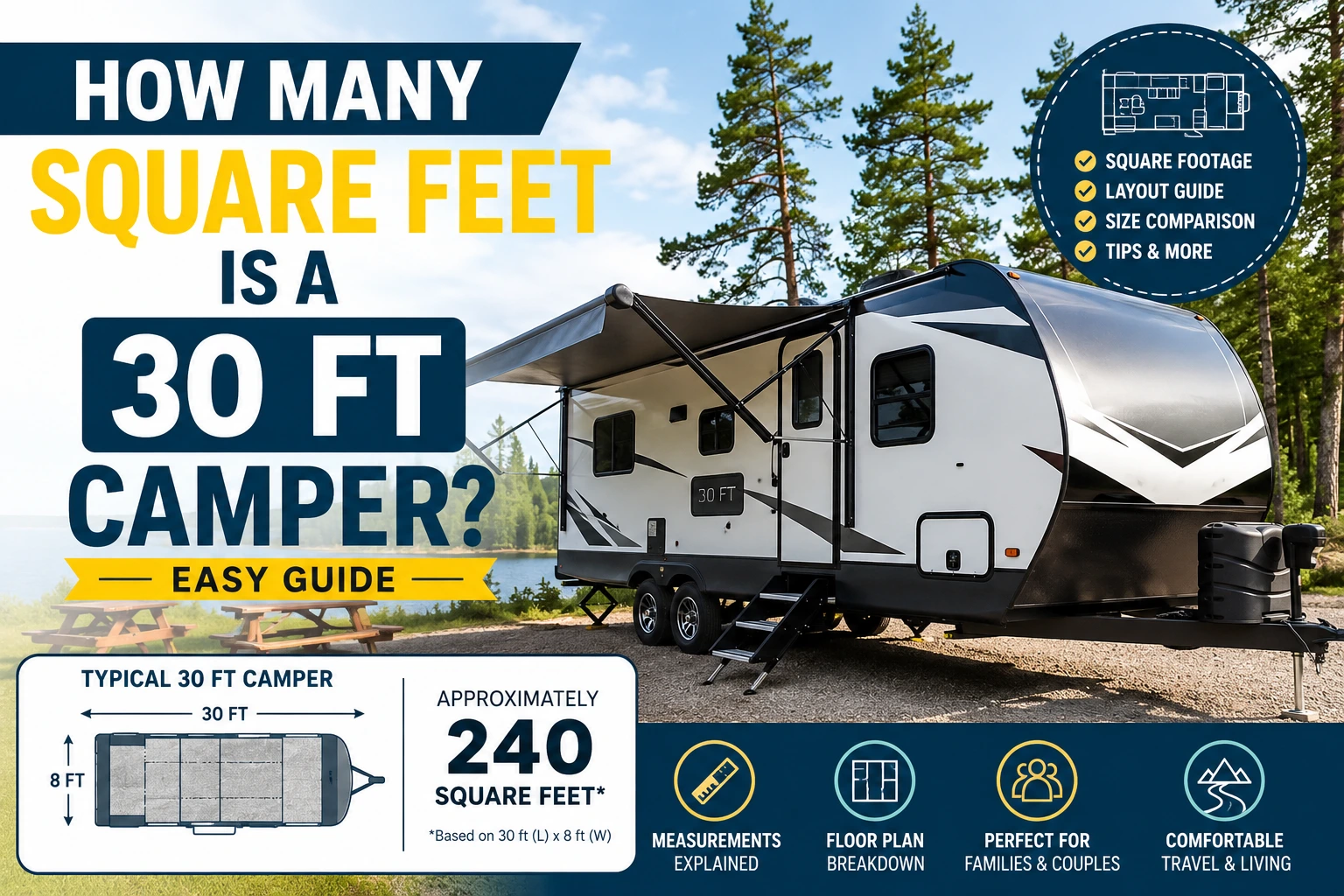
A 30-foot camper typically provides about 240 square feet of floor space if it measures approximately 30 feet long and 8 feet wide. However, the exact square footage depends on the camper’s actual exterior dimensions, interior design, slide-outs, and usable floor area.
Understanding square footage helps you compare campers, estimate living comfort, organize storage, and determine whether a particular RV fits your travel style. In this guide, you’ll learn how camper square footage is calculated, what 240 square feet actually feels like, and whether a 30-foot camper is the right size for your needs.
What Does a 30 Ft Camper Mean?
Many people assume that a “30-foot camper” has exactly 30 feet of usable living space. In reality, manufacturers often measure campers differently.
Some measure from the hitch to the rear bumper, while others refer only to the body length. Because of this, two campers advertised as 30 feet long may have slightly different interior dimensions.
Knowing these measurements helps you make better buying decisions.
Exterior Length vs Interior Living Space
The advertised length usually refers to the camper’s exterior measurement.
The interior living area is normally a little shorter because space is taken up by:
- Wall thickness
- Front storage compartments
- Rear construction
- Insulation
- Cabinets
- Utility systems
For example:
| Measurement | Approximate Size |
|---|---|
| Exterior Length | 30 ft |
| Interior Length | 26–28 ft |
| Interior Width | 7.5–8 ft |
| Estimated Living Space | Around 200–240 sq ft |
This explains why two campers with the same listed length can feel quite different inside.
Why Camper Width Matters
Length is only one part of the equation.
Width has an equally important impact on total floor area.
Most travel trailers and campers are between:
- 7 feet wide
- 7.5 feet wide
- 8 feet wide
- 8.5 feet wide (maximum legal width in many areas)
For example:
| Length | Width | Approximate Square Feet |
|---|---|---|
| 30 ft | 7 ft | 210 sq ft |
| 30 ft | 7.5 ft | 225 sq ft |
| 30 ft | 8 ft | 240 sq ft |
| 30 ft | 8.5 ft | 255 sq ft |
As you can see, just six extra inches of width can add several square feet of usable living space.
How Many Square Feet Is a 30 Ft Camper?
The simplest answer is:
A standard 30-foot camper is approximately 240 square feet if it measures 30 feet long and 8 feet wide.
The calculation is straightforward.
Length × Width = Square Feet
For a typical camper:
- Length = 30 ft
- Width = 8 ft
30 × 8 = 240 square feet
However, not every camper has an 8-foot interior width. Wall thickness, cabinetry, wheel wells, and furniture reduce usable walking space, so the practical living area may feel closer to 200–220 square feet.
Some modern campers also include one, two, or even three slide-outs. When extended, these significantly increase the interior living area, making the camper feel much larger than its base square footage suggests.
In the next section, we’ll explore what 240 square feet actually looks like inside a 30-foot camper, including common floor plans, sleeping arrangements, kitchen layouts, bathrooms, and storage options.
Typical Layout Inside a 30 Ft Camper
Knowing how many square feet is a 30 ft camper is useful, but understanding how that space is arranged is even more important. A well-designed floor plan can make a 240-square-foot camper feel much larger than its measurements suggest.
Most modern 30-foot campers are designed to maximize every inch of available space. Manufacturers use multi-purpose furniture, overhead cabinets, hidden storage, and slide-outs to create a comfortable living environment.
Here’s what you’ll usually find inside.
Bedroom
Most 30-foot campers include a private bedroom located at either the front or rear of the RV.
Common bedroom features include:
- Queen-size RV bed
- Wardrobes on both sides
- Overhead storage cabinets
- USB charging ports
- Under-bed storage compartments
- Sliding privacy door
Some luxury models even offer a king-size bed, though this usually reduces storage space.
Kitchen
A camper kitchen may be compact, but it often includes everything needed for daily cooking.
Typical features include:
- Three-burner stove
- Oven or convection microwave
- Refrigerator
- Freezer
- Sink
- Pantry cabinet
- Countertop workspace
Many newer campers also feature solid-surface countertops and residential-style appliances.
Bathroom
A 30-foot camper usually has a full bathroom rather than a small wet bath.
You’ll commonly find:
- Shower
- Toilet
- Vanity sink
- Medicine cabinet
- Skylight
- Exhaust fan
- Linen storage
This provides much more comfort for extended trips compared to smaller campers.
Living Area
The living room serves several purposes throughout the day.
It often includes:
- Sofa or theater seating
- Dinette
- Entertainment center
- Television mount
- Fireplace (in some models)
- Extra sleeping space
Many sofas and dinettes convert into beds, allowing a 30-foot camper to sleep four to eight people.
Storage
Storage is one of the biggest advantages of a 30-foot camper.
You’ll usually find:
- Overhead cabinets
- Pantry shelves
- Closet space
- Exterior pass-through storage
- Under-bed compartments
- Kitchen drawers
- Bathroom cabinets
These features make longer camping trips much easier by keeping gear organized and accessible.
Is a 30 Ft Camper Big Enough?
Whether a 30-foot camper is the right size depends on how you plan to use it.
For many travelers, it offers an excellent balance between comfort and mobility.
For Couples
A 30-foot camper is often considered ideal for couples.
Benefits include:
- Plenty of personal space
- Comfortable bedroom
- Full kitchen
- Spacious bathroom
- Large storage capacity
- Easy weekend or seasonal travel
Couples who work remotely while traveling also appreciate the additional living area.
For Families
Families with children generally find a 30-foot camper comfortable.
Depending on the floor plan, it may include:
- Double bunk beds
- Convertible dinette
- Sofa bed
- Private master bedroom
This layout comfortably accommodates four to six people and, in some models, even up to eight sleepers.
For Full-Time RV Living
Many full-time RV travelers choose campers around 30 feet long because they provide a good mix of living space and drivability.
Advantages include:
- More storage for clothing
- Larger kitchen
- Better insulation
- Dedicated sleeping areas
- Comfortable seating
- Room for pets
However, people living full-time may prefer campers with slide-outs, as they create noticeably more interior space when parked.
Comparing a 30 Ft Camper to Other Camper Sizes
Choosing the right camper often means comparing several sizes before making a purchase.
The table below shows how a 30-foot camper compares with other popular RV lengths.
| Camper Length | Approximate Square Feet | Typical Occupancy | Best For |
|---|---|---|---|
| 20 ft | 140–160 sq ft | 2–4 people | Weekend trips |
| 25 ft | 180–200 sq ft | 3–5 people | Small families |
| 30 ft | 220–240 sq ft | 4–6 people | Families and extended travel |
| 35 ft | 260–300 sq ft | 6–8 people | Full-time RV living |
A 30-foot camper often represents the “sweet spot” for buyers who want enough room without moving into the largest and most expensive RV categories.
Compared to a 20 Ft Camper
A 20-foot camper is easier to tow and park, but it sacrifices interior comfort.
Compared with a 30-footer, you’ll notice:
- Smaller kitchen
- Less storage
- Compact bathroom
- Limited sleeping capacity
- Less counter space
If you camp only a few weekends each year, a 20-foot camper may be enough. For longer trips, the extra room in a 30-foot model makes a significant difference.
Compared to a 25 Ft Camper
A 25-foot camper provides a nice middle ground, but a 30-foot model usually offers:
- Larger bedroom
- Bigger living room
- More kitchen storage
- Additional seating
- More exterior storage compartments
That extra five feet often improves comfort more than buyers expect.
Compared to a 35 Ft Camper
A 35-foot camper offers additional luxury, but it also comes with trade-offs.
These include:
- Higher purchase price
- Increased towing weight
- More difficult parking
- Limited campsite availability
- Higher maintenance costs
Unless you need maximum living space, many RV owners find that a 30-foot camper delivers the best balance of comfort, affordability, and maneuverability.
How many square feet is a standard 30 ft camper?
A standard 30 ft camper that measures 30 feet long by 8 feet wide has approximately 240 square feet of floor space.
Calculation:
30 × 8 = 240 square feet
Keep in mind that the usable interior space may be slightly smaller because of wall thickness, built-in cabinets, and storage compartments. Campers with slide-outs can also feel much larger than their official square footage suggests.
Is 240 square feet enough for full-time RV living?
Yes, for many people it is.
A well-designed 30-foot camper provides enough room for:
- Sleeping
- Cooking
- Dining
- Bathroom facilities
- Storage
- Relaxing
Couples often find this size ideal for full-time travel. Families can also live comfortably in a 30-foot camper, especially if it has bunk beds or multiple slide-outs.
How do you calculate the square footage of a camper?
The basic formula is:
Length × Width = Square Feet
For example:
- Length = 30 feet
- Width = 8 feet
30 × 8 = 240 square feet
For the most accurate result, measure the interior floor dimensions instead of relying only on the advertised exterior length.
Does a slide-out increase a camper’s square footage?
Technically, no.
The manufacturer’s listed square footage usually refers to the camper’s base dimensions.
However, slide-outs significantly increase the usable living space once they are extended. They create wider walkways, larger seating areas, and more room in the kitchen or bedroom, making the interior feel much more spacious.
Is a 30 ft camper easy to tow?
It depends on your tow vehicle.
Many 30-foot travel trailers require:
- A half-ton or three-quarter-ton pickup truck
- A proper towing package
- Trailer brakes
- A weight-distribution hitch
- Sufficient towing capacity
Always check your vehicle’s manufacturer-recommended towing limits before purchasing or towing a camper.
Conclusion
If you’ve been asking how many square feet is a 30 ft camper, the simple answer is that a standard model measuring 30 feet long and 8 feet wide provides approximately 240 square feet of floor space. While this number offers a helpful estimate, the actual living experience depends on several factors, including the interior layout, wall thickness, storage design, and whether the camper has slide-outs.
For many travelers, a 30-foot camper strikes the perfect balance between comfort and practicality. It offers enough room for couples, families, and even full-time RV living while remaining easier to tow and park than larger models. With thoughtful floor plans, efficient storage solutions, and modern amenities, today’s 30-foot campers make excellent homes on the road.
Before making a purchase, don’t focus only on the advertised length. Compare the interior dimensions, examine the floor plan, consider the number of slide-outs, and think about how you’ll use the space. These details will help you choose a camper that fits both your lifestyle and your travel goals.
Whether you’re planning weekend adventures or long cross-country journeys, understanding how many square feet is a 30 ft camper allows you to make a more informed decision and enjoy a more comfortable RV experience.
Discover more
how many square feet in a roll of sod