

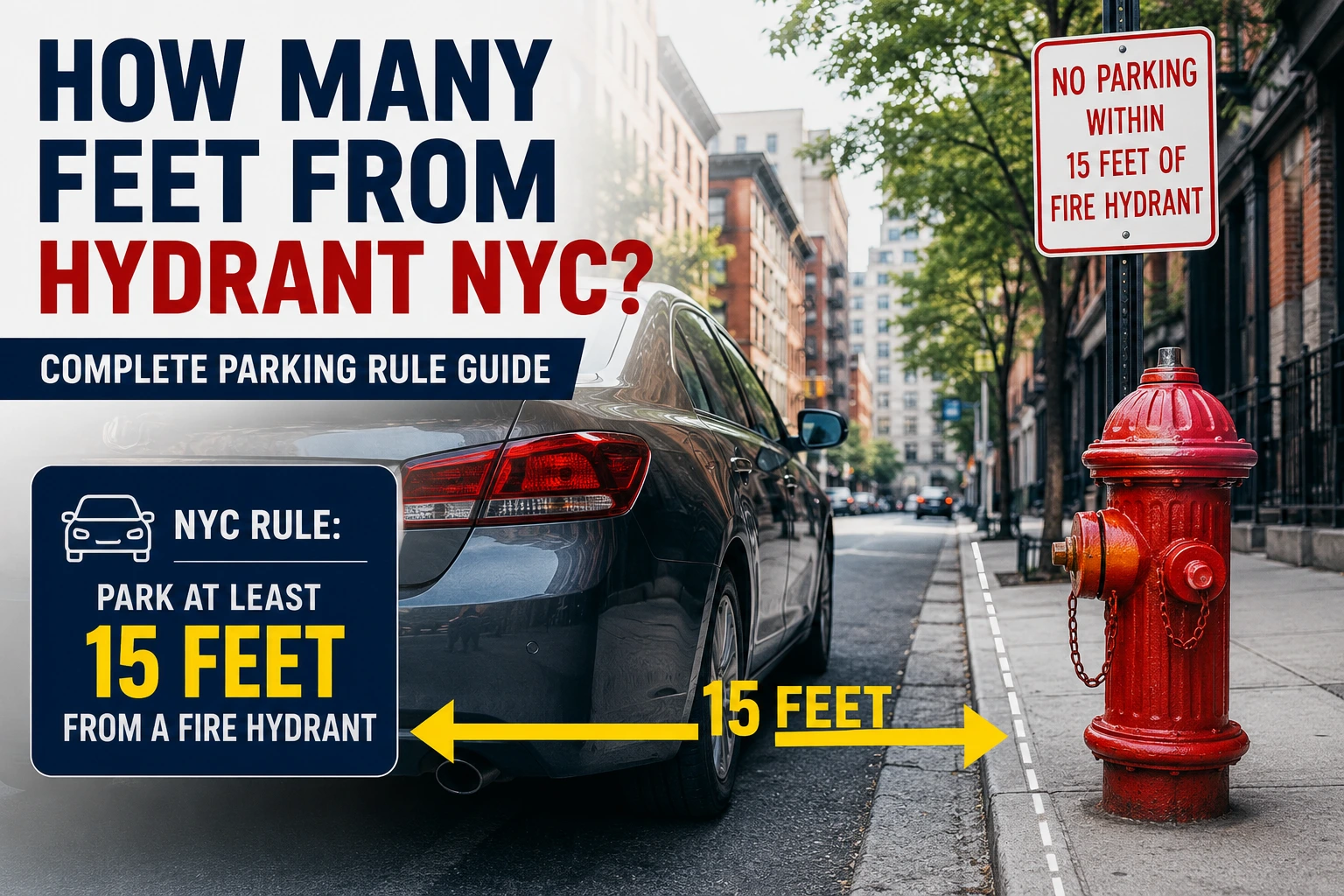
If you drive in New York City, understanding parking laws is essential. One of the most common parking violations in the city involves stopping too close to a fire hydrant. Many drivers search for “how many feet from hydrant NYC” because even a small mistake can lead to expensive tickets, towing fees, or delays during emergencies. New York City parking rules are strict, and fire hydrant regulations are heavily enforced to keep emergency access clear at all times. Whether you are a resident, tourist, delivery driver, or rideshare operator, knowing the exact distance can save you money and frustration.
Parking in NYC is already challenging because of crowded streets, alternate side parking rules, and limited spaces. Drivers often squeeze into tight spots without realizing they are violating hydrant clearance laws. Unfortunately, saying you “didn’t notice the hydrant” usually does not help when contesting a ticket. That is why learning the exact legal distance and understanding how enforcement works is important for every driver in the city.
Understanding NYC Fire Hydrant Parking Laws
Fire hydrants are critical safety devices used by firefighters during emergencies. If a hydrant is blocked by a parked vehicle, firefighters may lose valuable time during a fire rescue operation. NYC parking laws are designed to ensure hydrants remain accessible every second of the day.
The hydrant parking law in New York City comes from state traffic regulations and city parking enforcement policies. The rule is simple but strictly enforced. Drivers must maintain enough clearance for emergency crews to connect hoses and access water quickly.
Why Hydrant Clearance Matters
A blocked hydrant can seriously delay emergency response. During a building fire, every second matters. Firefighters need immediate access to hydrants without navigating around illegally parked cars.
In extreme situations, firefighters may even break vehicle windows or run hoses through vehicles blocking hydrants. This is legal during emergencies because public safety takes priority over vehicle protection.
Hydrant clearance also improves visibility on busy streets. Cars parked too close can obstruct views for pedestrians, cyclists, and other drivers.
NYC Legal Parking Distance
The official NYC rule states that drivers cannot park within 15 feet of a fire hydrant. This means there must be at least 15 feet of open space between your vehicle and the hydrant.
15 feet
This measurement applies from the hydrant itself to the nearest part of your vehicle. Parking enforcement officers carefully monitor hydrants throughout the city, especially in high-traffic neighborhoods.
How Many Feet From Hydrant NYC Drivers Must Park
The direct answer to “how many feet from hydrant NYC” is 15 feet. Drivers must leave at least 15 feet between their vehicle and the fire hydrant to comply with city law.
This distance applies regardless of:
- Time of day
- Weather conditions
- Traffic levels
- Residential or commercial areas
- Vehicle type
Many drivers think parking slightly closer is acceptable if they stay inside the car. However, NYC parking officers can still issue a ticket even if the driver remains nearby.
The Official NYC Rule
Under NYC traffic regulations:
- No vehicle may park within 15 feet of a fire hydrant
- The space must remain accessible at all times
- Violations may result in tickets or towing
Some streets may have painted curbs or markings showing hydrant zones, but not all areas do. Drivers are still responsible for judging the proper distance even without markings.
Exceptions and Visibility Rules
There is one limited exception in NYC. During daylight hours, a passenger vehicle may stop alongside a hydrant if:
- A licensed driver remains seated behind the wheel
- The vehicle can be moved immediately if necessary
However, this does not allow unattended parking. If the driver leaves the vehicle, the exception no longer applies.
Commercial vehicles and large trucks are generally monitored more strictly because they can block visibility and emergency access more severely.
Why NYC Enforces Fire Hydrant Parking Rules
New York City has one of the busiest fire departments in the world. The FDNY responds to thousands of emergencies every year. Hydrant access is essential for maintaining quick response times.
Emergency Response Times
Fires spread rapidly in dense urban environments like Manhattan, Brooklyn, Queens, the Bronx, and Staten Island. Even a delay of one minute can increase property damage and safety risks.
Blocked hydrants force firefighters to:
- Find alternate hydrants
- Move around obstacles
- Stretch hoses longer distances
- Waste valuable rescue time
That is why hydrant parking rules are treated seriously across NYC.
Public Safety Concerns
Hydrant laws are not only about firefighting. Clear hydrant zones also:
- Improve street visibility
- Reduce accident risks
- Protect pedestrians
- Help emergency vehicles maneuver safely
In crowded areas, illegally parked cars can create dangerous blind spots near intersections and sidewalks.
What Happens If You Park Too Close to a Hydrant in NYC
Parking too close to a hydrant in NYC can become expensive very quickly. Enforcement officers patrol regularly, and hydrant violations are among the most common parking tickets issued in the city.
Parking Tickets and Fines
The fine for parking within 15 feet of a hydrant in NYC is usually around $115, though penalties may vary slightly depending on location or updated city regulations.
Common penalties include:
| Violation | Possible Consequence |
|---|---|
| Parking within 15 feet | Parking ticket |
| Blocking hydrant access | Higher enforcement attention |
| Repeated offenses | Increased financial burden |
| Severe obstruction | Possible towing |
A single mistake can cost far more after late fees and towing charges are added.
Vehicle Towing Risks
In some situations, vehicles parked too close to hydrants may be towed immediately. This is more likely if:
- The vehicle severely blocks access
- Emergency crews need hydrant access
- The car creates a traffic hazard
Towing in NYC is expensive and inconvenient. Drivers may need to pay:
- Ticket fines
- Tow fees
- Storage fees
- Transportation costs to retrieve the vehicle
Common NYC Fire Hydrant Parking Mistakes
Even experienced NYC drivers make hydrant parking mistakes. Understanding these common errors can help you avoid costly tickets.
Misjudging Distance
Many drivers underestimate what 15 feet actually looks like. In crowded parking conditions, people often think they are far enough away when they are not.
A helpful trick is to estimate the length of a standard sedan. Most cars are roughly 14–16 feet long, so imagine a full car length between your vehicle and the hydrant.
Parking at Night or During Low Traffic
Some drivers assume parking enforcement is relaxed at night. In reality, hydrant laws apply 24/7. Parking officers and emergency personnel can still issue violations at any hour.
Ignoring Unpainted Curbs
Not all hydrant areas have painted curbs. Drivers sometimes assume a missing red curb means parking is legal. NYC law still requires the full 15-foot distance even without visual markings.
Following Other Parked Cars
Drivers often park near other vehicles without checking the hydrant distance themselves. Just because another car is parked there does not mean the space is legal.
Tips to Avoid NYC Hydrant Parking Tickets
Parking safely in NYC requires awareness and planning. These practical tips can help reduce your risk of getting fined.
Use Visual Distance Markers
Estimate 15 feet using:
- One full car length
- Three large sidewalk squares
- About five adult walking steps
If you are unsure, leave extra space. It is better to walk farther than pay a costly ticket.
Read Street Signs Carefully
Always check nearby parking signs because some streets include additional restrictions such as:
- No standing zones
- Loading zones
- Alternate side parking
- Temporary construction restrictions
Hydrant laws apply even if other parking signs allow parking nearby.
Use Parking Apps
Modern parking apps and GPS tools can help identify legal parking zones. Some apps warn drivers about hydrants, street cleaning schedules, and restricted areas.
However, never rely completely on technology. Always visually confirm the hydrant distance yourself.
Avoid Rushing
Many parking mistakes happen when drivers are stressed or in a hurry. Take a few extra seconds to measure the distance properly before leaving your car.
NYC Hydrant Parking Distance Comparison Table
| Situation | Legal or Illegal |
|---|---|
| 15 feet away from hydrant | Legal |
| 10 feet away from hydrant | Illegal |
| 5 feet away from hydrant | Illegal |
| Directly beside hydrant | Illegal |
| Stopped temporarily with driver inside during daylight | Limited exception |
| Parked overnight near hydrant | Illegal if under 15 feet |
Differences Between NYC and Other States
Many visitors assume parking laws are the same everywhere, but hydrant rules vary by state and city.
| Location | Required Distance |
|---|---|
| New York City | 15 feet |
| California | 15 feet |
| Texas | 15 feet |
| Florida | 15 feet |
| Chicago | 15 feet |
| Some smaller cities | 10 feet |
Because rules differ, tourists driving rental cars in NYC should review local regulations carefully.
Expert Tips for NYC Street Parking
Experienced NYC drivers often follow a few smart habits:
- Scan both ahead and behind before parking
- Leave extra space if uncertain
- Avoid “tight squeeze” parking spots
- Re-check distance after parallel parking
- Watch for hidden hydrants behind trees or poles
It is also smart to look at curb cuts and building entrances because hydrants are often positioned nearby.
The Real Cost of Ignoring Hydrant Rules
Some drivers risk hydrant tickets because parking is difficult in NYC. However, the long-term costs can become significant.
Potential expenses include:
- $115 or more per ticket
- Towing fees
- Storage fees
- Lost time
- Increased stress
- Insurance complications in repeated cases
Compared to these costs, parking a little farther away is usually the better choice.
9. FAQs
How many feet from hydrant NYC drivers must park?
Drivers in NYC must park at least 15 feet away from a fire hydrant to follow city parking laws.
What is the fine for parking too close to a hydrant in NYC?
The standard fine is usually around $115, though extra fees may apply if the vehicle is towed.
Can you stop next to a hydrant in NYC?
A passenger vehicle may temporarily stop beside a hydrant during daylight hours only if a licensed driver remains inside the vehicle.
Are hydrant parking rules enforced at night in NYC?
Yes, hydrant parking laws apply 24 hours a day, including nights, weekends, and holidays.
Can a car be towed for blocking a hydrant in NYC?
Yes, vehicles that block hydrant access may be ticketed and towed, especially during emergencies.
10. Conclusion
Understanding “how many feet from hydrant NYC” is essential for every driver in New York City. The law requires vehicles to remain at least 15 feet away from fire hydrants at all times unless a limited daytime stopping exception applies with the driver inside the vehicle. These rules exist to protect public safety and ensure firefighters can access hydrants quickly during emergencies. Parking too close can lead to expensive fines, towing, and unnecessary stress. By learning NYC hydrant parking laws, using careful distance judgment, and paying attention to street conditions, drivers can avoid tickets and park more confidently throughout the city.
Discover more
how many cubic feet in a yard of sand