
If you’re planning a construction or landscaping project, one of the most common questions you’ll ask is: how many cubic feet in a yard of sand?
The simple answer is:
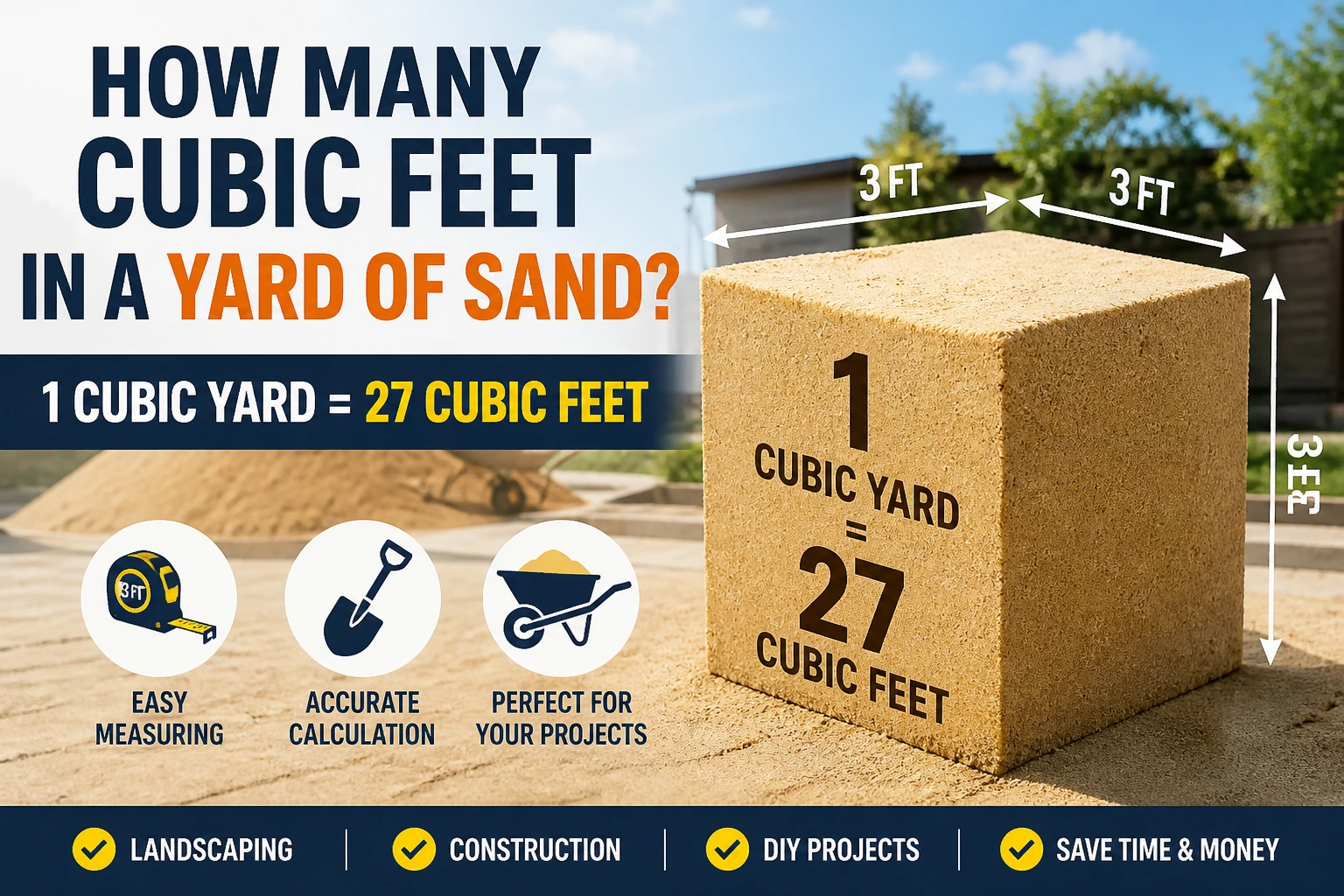
1 cubic yard of sand = 27 cubic feet
But understanding this conversion properly can save you time, money, and costly mistakes. Whether you’re laying a patio, filling a sandbox, or preparing a foundation, knowing how to convert cubic yards to cubic feet is essential.
Let’s break it down in the simplest way possible so you can confidently calculate your sand needs.
Understanding Cubic Yards and Cubic Feet
Before jumping into calculations, it’s important to understand what these units actually mean.
What Is a Cubic Yard?
A cubic yard is a unit of volume used in construction and landscaping.
- It measures 3 feet × 3 feet × 3 feet
- That equals a cube that is 3 feet long, wide, and high
What Is a Cubic Foot?
A cubic foot is a smaller unit of volume.
- It measures 1 foot × 1 foot × 1 foot
- Think of it as a small box
So basically, a cubic yard is made up of many cubic feet.
How Many Cubic Feet in a Yard of Sand (Exact Answer)
Here’s the exact conversion:
- 1 cubic yard = 27 cubic feet
This applies to all materials, including sand, gravel, soil, or concrete.
Why 27?
Because:
3 × 3 × 3 = 27
That’s it. Simple math.
Conversion Formula Explained
Let’s make this even easier to understand.
Simple Math Breakdown
To convert cubic yards to cubic feet:
Cubic Feet = Cubic Yards × 27
Examples:
- 1 yard = 27 cubic feet
- 2 yards = 54 cubic feet
- 5 yards = 135 cubic feet
Quick Conversion Table
| Cubic Yards | Cubic Feet |
|---|---|
| 1 | 27 |
| 2 | 54 |
| 3 | 81 |
| 5 | 135 |
| 10 | 270 |
This table is especially useful when ordering materials in bulk.
Why This Measurement Matters
You might wonder—why is this conversion so important?
Construction Projects
Builders use cubic yards when ordering materials like sand. But actual work measurements often require cubic feet.
For example:
- Mixing concrete
- Leveling foundations
- Filling trenches
Landscaping Uses
Landscapers frequently deal with cubic feet when spreading sand over an area.
Common uses include:
- Lawn leveling
- Paver base preparation
- Sandbox filling
Knowing both units helps you avoid overordering or running short.
How Much Area Does a Yard of Sand Cover?
Coverage depends on how deep you spread the sand.
Coverage Based on Depth
Here’s a simple guide:
| Depth | Coverage Area (1 Cubic Yard) |
|---|---|
| 1 inch | ~324 sq ft |
| 2 inches | ~162 sq ft |
| 3 inches | ~108 sq ft |
| 4 inches | ~81 sq ft |
Practical Examples
- A 1-yard pile of sand can cover a large patio area if spread thin
- The same sand will cover a smaller area if you need deeper layers
So always consider depth before calculating.
Weight of a Cubic Yard of Sand
Volume is one thing, but weight also matters.
Dry vs Wet Sand
- Dry sand: ~2,600–2,900 lbs per cubic yard
- Wet sand: ~3,000–3,200 lbs per cubic yard
Why the difference?
Water adds extra weight and changes density.
This is important when:
- Transporting sand
- Calculating load capacity
- Hiring delivery trucks
Step-by-Step: Calculate Sand for Your Project
Here’s a simple method anyone can follow:
Step 1: Measure Area
Measure length × width (in feet)
Step 2: Decide Depth
Convert inches to feet
Example: 3 inches = 0.25 feet
Step 3: Calculate Volume
Multiply:
Length × Width × Depth = Cubic Feet
Step 4: Convert to Cubic Yards
Divide by 27
Example:
- Area: 10 ft × 10 ft
- Depth: 0.25 ft
Volume = 10 × 10 × 0.25 = 25 cubic feet
Cubic yards = 25 ÷ 27 ≈ 0.93 yards
So you’ll need about 1 cubic yard of sand
Common Mistakes to Avoid
Even simple calculations can go wrong. Watch out for these:
- Forgetting to convert inches to feet
- Ordering sand without considering compaction
- Ignoring waste or spillage
- Mixing up square feet and cubic feet
These mistakes can lead to underestimating or overspending.
Expert Tips for Accurate Sand Estimation
Want to get it right the first time? Follow these tips:
- Always add 5–10% extra material for safety
- Round up instead of down when ordering
- Consider moisture content (wet sand weighs more)
- Use consistent units throughout calculations
These small adjustments can make a big difference.
Comparison Table: Cubic Yard vs Cubic Feet vs Tons
| Unit | Value |
|---|---|
| 1 Cubic Yard | 27 Cubic Feet |
| 1 Cubic Foot | 0.037 Cubic Yard |
| 1 Cubic Yard of Sand | ~1.3–1.5 Tons |
This table helps when suppliers use different units.
FAQs
1. How many cubic feet in a yard of sand?
There are exactly 27 cubic feet in one cubic yard of sand.
2. How much sand do I need for a 10×10 area?
It depends on depth. For 3 inches, you’ll need about 1 cubic yard.
3. Is sand measured by weight or volume?
Sand is usually sold by volume (cubic yards) but may also be priced by weight.
4. How many bags of sand equal one cubic yard?
A 50 lb bag is about 0.5 cubic feet. So you’ll need around 54 bags for 1 yard.
5. Does sand expand or shrink?
Yes. Sand can compact or expand depending on moisture and handling.
Conclusion
So, how many cubic feet in a yard of sand? The answer is simple: 27 cubic feet. But understanding how to use this number in real-world projects is what truly matters.
Whether you’re working on a DIY backyard project or a professional construction job, this conversion helps you estimate materials accurately, avoid waste, and stay within budget.
By using the formulas, tables, and tips shared in this guide, you can confidently calculate sand volume for any project. Always remember to account for depth, add a little extra, and double-check your measurements for the best results