
If you are planning a landscaping or gardening project, one of the most common questions you may ask is: how many cubic feet in 1 yard of mulch? Understanding mulch measurements helps you avoid buying too much or too little material. It also saves money, time, and effort when covering flower beds, garden paths, trees, or lawns.
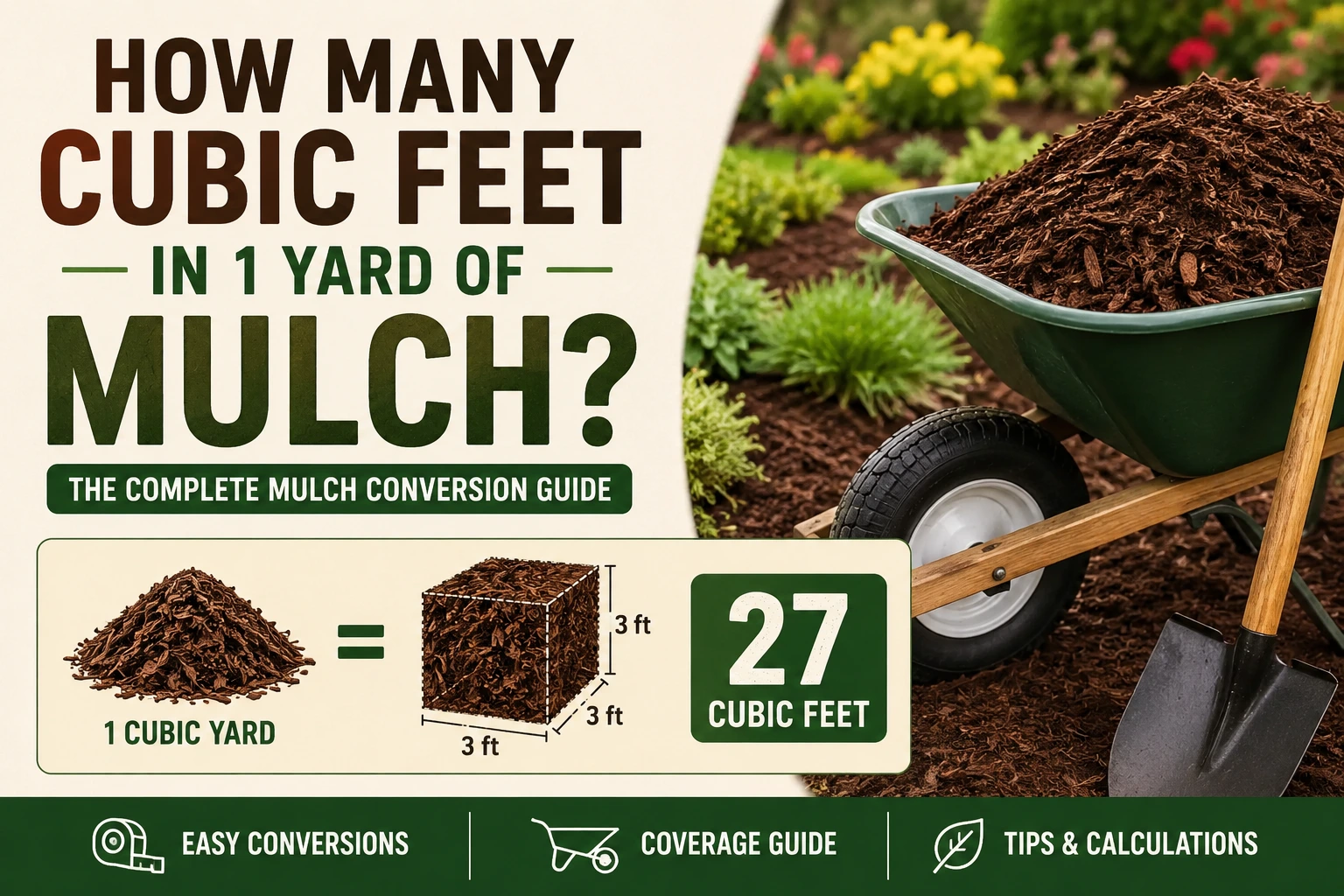
The simple answer is that 1 cubic yard of mulch equals 27 cubic feet. This standard conversion is used in landscaping, gardening, and construction projects across the United States.
1 cubic yard=27 cubic feet
However, there is much more to know if you want accurate mulch coverage calculations. In this guide, you will learn how mulch measurements work, how much area one yard covers, how to calculate mulch for your yard, and how bagged mulch compares to bulk mulch.
Understanding Mulch Measurements
Before calculating mulch coverage, it is important to understand the difference between cubic feet and cubic yards.
What Is a Cubic Foot?
A cubic foot is a unit of volume. It measures the space inside an area that is 1 foot long, 1 foot wide, and 1 foot high.
1 cubic foot=1ft×1ft×1ft
Mulch bags sold in garden centers are usually labeled in cubic feet. Common bag sizes include:
- 1 cubic foot
- 1.5 cubic feet
- 2 cubic feet
- 3 cubic feet
What Is a Cubic Yard?
A cubic yard is a larger unit of volume equal to a space measuring 3 feet long, 3 feet wide, and 3 feet high.
1 cubic yard=3ft×3ft×3ft
Landscaping suppliers often sell mulch in cubic yards because it is easier for larger projects.
How Many Cubic Feet in 1 Yard of Mulch?
The exact conversion is:
3×3×3=27
That means:
- 1 cubic yard = 27 cubic feet
- 2 cubic yards = 54 cubic feet
- 3 cubic yards = 81 cubic feet
This conversion applies to all mulch types, including:
- Wood mulch
- Cedar mulch
- Pine bark mulch
- Rubber mulch
- Compost mulch
- Dyed mulch
The material itself may weigh differently, but the volume conversion always stays the same.
Why Mulch Is Sold by Cubic Yard
Bulk mulch is usually sold by cubic yard because:
- It simplifies delivery pricing
- It works better for large projects
- It reduces packaging waste
- It costs less than buying multiple bags
Homeowners with larger flower beds or landscaping areas often save money by ordering mulch in cubic yards instead of bags.
Cubic Yard to Cubic Feet Conversion Chart
Here is a simple mulch conversion chart for quick reference.
| Cubic Yards | Cubic Feet |
|---|---|
| 0.5 yard | 13.5 cubic feet |
| 1 yard | 27 cubic feet |
| 1.5 yards | 40.5 cubic feet |
| 2 yards | 54 cubic feet |
| 3 yards | 81 cubic feet |
| 4 yards | 108 cubic feet |
| 5 yards | 135 cubic feet |
This chart is helpful when comparing bulk mulch to bagged mulch at garden stores.
How Much Area Does 1 Yard of Mulch Cover?
Coverage depends on how deep you spread the mulch. Most landscaping professionals recommend a mulch depth between 2 and 4 inches.
Coverage at 1 Inch Depth
At 1 inch deep, 1 cubic yard covers approximately:
- 324 square feet
Coverage at 2 Inches Depth
At 2 inches deep, 1 cubic yard covers approximately:
- 162 square feet
Coverage at 3 Inches Depth
At 3 inches deep, 1 cubic yard covers approximately:
- 108 square feet
Coverage at 4 Inches Depth
At 4 inches deep, 1 cubic yard covers approximately:
- 81 square feet
Here is a quick mulch coverage table.
| Mulch Depth | Coverage Per Cubic Yard |
|---|---|
| 1 inch | 324 sq ft |
| 2 inches | 162 sq ft |
| 3 inches | 108 sq ft |
| 4 inches | 81 sq ft |
For most flower beds, 2 to 3 inches is ideal.
How to Calculate Mulch Needed for Your Project
Knowing how many cubic feet in 1 yard of mulch is only part of the process. You also need to estimate how much mulch your project requires.
Step-by-Step Formula
Use this formula:
Mulch Needed (cubic yards)=324Length×Width×Depth
The depth should be entered in inches.
Real Example Calculations
Suppose your flower bed measures:
- 18 feet long
- 12 feet wide
- Desired mulch depth: 3 inches
First, calculate square footage:
18×12=216 square feet
Now divide by coverage at 3-inch depth:
108216=2 cubic yards
You would need approximately 2 cubic yards of mulch.
How Many Bags of Mulch Equal 1 Yard?
Many homeowners buy mulch in bags from home improvement stores. Since 1 cubic yard equals 27 cubic feet, you can calculate the number of bags needed.
1 Cubic Foot Bags
27÷1=27
You need:
- 27 bags of 1 cubic foot mulch
2 Cubic Foot Bags
27÷2=13.5
You need:
- About 14 bags of 2 cubic foot mulch
3 Cubic Foot Bags
27÷3=9
You need:
- 9 bags of 3 cubic foot mulch
Here is a simple comparison table.
| Bag Size | Bags Needed for 1 Cubic Yard |
|---|---|
| 1 cubic foot | 27 bags |
| 1.5 cubic feet | 18 bags |
| 2 cubic feet | 14 bags |
| 3 cubic feet | 9 bags |
Buying bulk mulch is usually cheaper if you need more than one cubic yard.
Why Proper Mulch Depth Matters
Applying the correct mulch depth is important for healthy landscaping.
Benefits of Correct Mulch Thickness
Proper mulch application can:
- Retain soil moisture
- Reduce weeds
- Improve soil temperature
- Protect plant roots
- Prevent erosion
- Improve landscape appearance
Most experts recommend:
- 2 inches for fine mulch
- 3 inches for coarse mulch
Problems With Too Much Mulch
Adding too much mulch can create issues such as:
- Root rot
- Mold growth
- Poor oxygen flow
- Pest problems
- Water runoff
Avoid piling mulch against tree trunks. This is called “mulch volcanoes” and can damage trees over time.
Common Mulch Types and Their Uses
Different mulch materials serve different landscaping needs.
| Mulch Type | Best Use |
|---|---|
| Hardwood mulch | Flower beds and landscaping |
| Cedar mulch | Insect resistance |
| Pine bark mulch | Decorative gardens |
| Rubber mulch | Playgrounds and pathways |
| Compost mulch | Vegetable gardens |
| Straw mulch | Garden rows and crops |
Each mulch type still follows the same cubic yard to cubic feet conversion.
Tips for Buying and Spreading Mulch
To get the best results from your mulch project, follow these expert tips.
Measure Carefully
Always measure your landscaping area before ordering mulch. Guessing often leads to waste or shortages.
Buy Slightly Extra
It is smart to order 5–10% extra mulch for uneven areas or settling.
Spread Evenly
Use a rake to maintain consistent depth across the entire area.
Install Weed Barrier Carefully
Weed barriers can help, but too much fabric may block nutrients and water.
Mulch at the Right Time
Spring and early summer are ideal for fresh mulch installation.
Common Mistakes When Measuring Mulch
Many homeowners make simple mistakes that affect mulch calculations.
Ignoring Depth
People often calculate only square footage and forget mulch depth.
Mixing Feet and Inches
Always convert correctly when using formulas.
Buying Too Few Bags
Bagged mulch often looks larger than it really is.
Forgetting Settling
Fresh mulch compresses over time, especially wood mulch.
Overmulching Trees
Too much mulch around trunks can trap moisture and damage bark.
Environmental Benefits of Mulch
Mulch offers more than just visual appeal. It also supports healthier ecosystems.
Benefits include:
- Reduced water evaporation
- Improved soil quality
- Lower soil erosion
- Reduced weed growth without chemicals
- Better root insulation during extreme temperatures
Organic mulch also breaks down slowly and enriches the soil naturally.
Bulk Mulch vs Bagged Mulch
Choosing between bulk and bagged mulch depends on project size.
| Feature | Bulk Mulch | Bagged Mulch |
|---|---|---|
| Cost | Lower for large jobs | Higher overall |
| Convenience | Delivery available | Easy transport |
| Waste | Less packaging | More plastic waste |
| Best For | Large yards | Small projects |
| Availability | Landscape suppliers | Retail stores |
If your project needs more than 2 cubic yards, bulk delivery is often the better choice.
9. FAQs
How many cubic feet in 1 yard of mulch exactly?
There are exactly 27 cubic feet in 1 cubic yard of mulch.
How many bags of mulch make 1 cubic yard?
It depends on bag size. You need 27 one-cubic-foot bags or about 14 two-cubic-foot bags.
How much area does 1 yard of mulch cover?
At 3 inches deep, 1 cubic yard covers about 108 square feet.
Is bulk mulch cheaper than bagged mulch?
Yes, bulk mulch is usually more cost-effective for larger landscaping projects.
What mulch depth is best for gardens?
Most gardens do best with 2 to 3 inches of mulch for moisture retention and weed control.
10. Conclusion
Understanding how many cubic feet in 1 yard of mulch makes landscaping projects much easier. The key conversion to remember is simple: 1 cubic yard equals 27 cubic feet. Once you know this, you can estimate mulch coverage, compare bulk mulch with bagged mulch, and calculate exactly how much material your project requires.
Whether you are refreshing flower beds, protecting trees, or improving garden appearance, accurate mulch calculations help you save money and avoid waste. Measure your area carefully, choose the right mulch depth, and use the conversion formulas in this guide to plan your next landscaping project with confidence.
Discover more
how many feet from hydrant nyc