
If you are planning a patio, driveway, walkway, or outdoor living area, one of the first questions you may ask is: “how many square feet does a pallet of pavers cover?”
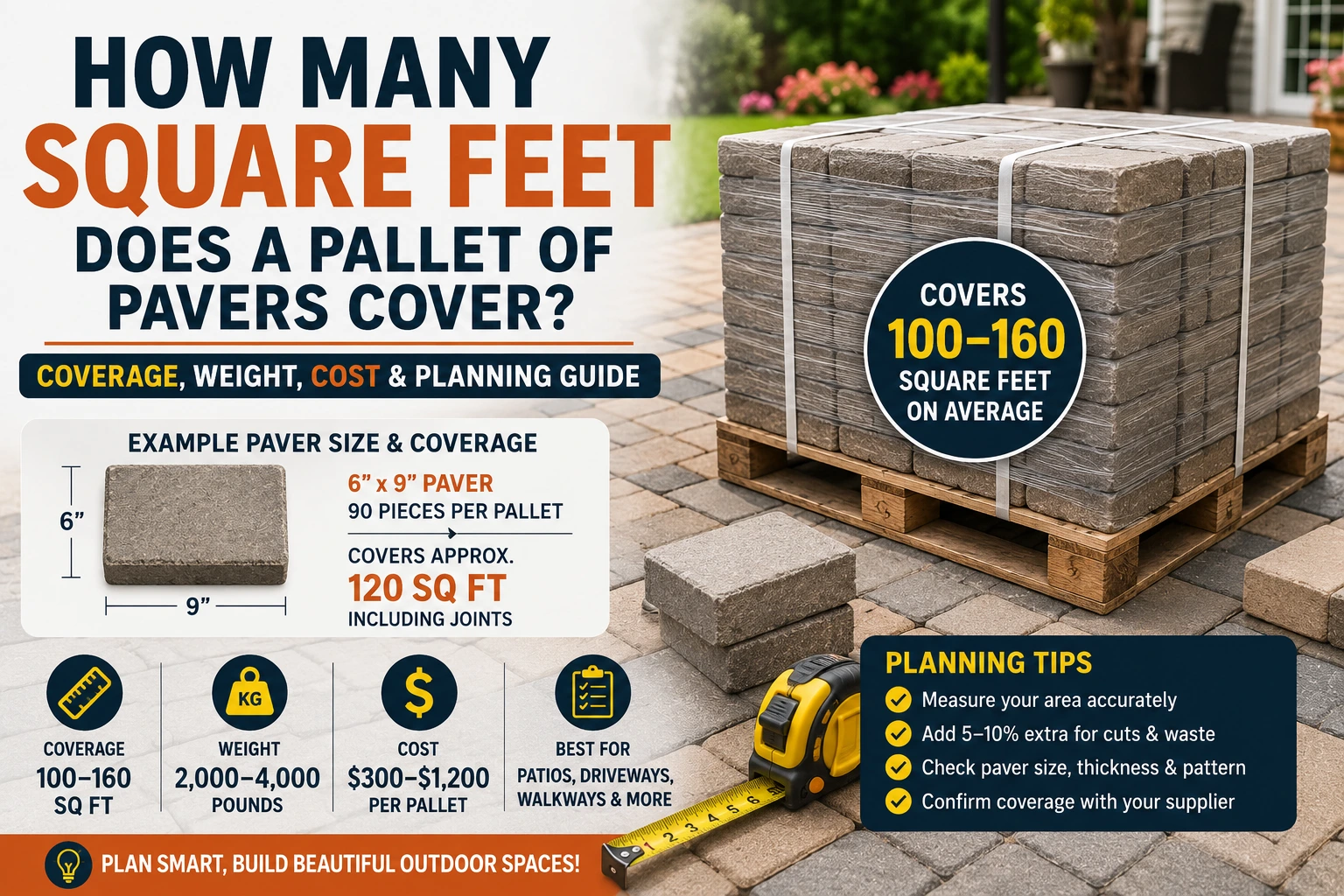
The answer depends on the size, thickness, and style of the pavers. However, most standard pallets of pavers cover between 80 and 160 square feet.
A common average is:
1 pallet of pavers≈100–160 square feet
Knowing the exact coverage helps you:
- Estimate project costs
- Avoid buying too much material
- Reduce installation delays
- Plan transportation properly
This complete guide explains paver pallet coverage, weight, pricing, calculations, and expert installation tips in simple language.
What Is a Pallet of Pavers?
A pallet of pavers is a bundled stack of paving stones packaged together for delivery and storage.
Pavers are commonly used for:
- Patios
- Driveways
- Walkways
- Pool decks
- Garden paths
- Outdoor kitchens
Manufacturers place pavers on wooden pallets and wrap them securely for transport.
Types of Pavers
Several kinds of pavers are sold by the pallet.
Popular options include:
- Concrete pavers
- Brick pavers
- Natural stone pavers
- Interlocking pavers
- Permeable pavers
Each type has different coverage and weight characteristics.
Standard Pallet Packaging
Pavers are packaged based on:
- Size
- Thickness
- Material
- Shape
Some pallets contain uniform pavers, while others include mixed sizes for decorative patterns.
How Many Square Feet Does a Pallet of Pavers Cover on Average?
The average pallet of pavers usually covers:
100–160 square feet
Many homeowners use this standard estimate:
1 standard pallet≈120 square feet
However, actual coverage depends on:
- Paver dimensions
- Thickness
- Pattern layout
- Waste allowance
- Manufacturer packaging
Standard Coverage Range
Here is a quick breakdown.
| Pallet Type | Approximate Coverage |
|---|---|
| Small pallet | 80–100 sq ft |
| Standard pallet | 100–160 sq ft |
| Large commercial pallet | 160–220 sq ft |
Always confirm coverage details before ordering.
Common Paver Sizes
Different paver sizes affect how many pieces fit on a pallet.
| Paver Size | Typical Use |
|---|---|
| 4×8 inches | Walkways |
| 6×6 inches | Patios |
| 6×9 inches | Driveways |
| 12×12 inches | Modern patios |
Larger pavers usually mean fewer pieces per pallet but similar overall coverage.
Paver Coverage Chart
This chart estimates how many pallets you may need for common project sizes.
| Project Size | Estimated Pallets Needed |
|---|---|
| 100 sq ft | 1 pallet |
| 200 sq ft | 2 pallets |
| 300 sq ft | 2–3 pallets |
| 500 sq ft | 4–5 pallets |
| 1,000 sq ft | 8–10 pallets |
These estimates assume each pallet covers approximately 120 square feet.
How to Calculate Paver Coverage
Calculating paver needs is easier when broken into simple steps.
Measure Your Area
Use a measuring tape to determine:
- Length
- Width
For irregular areas, divide the space into smaller sections.
Calculate Total Square Footage
Use this formula:
Square Feet=Length×Width
For example:
A patio measuring 20 feet by 15 feet equals:
20×15=300 square feet
Determine Pallets Needed
If one pallet covers 120 square feet:
300÷120=2.5 pallets
You would typically order 3 pallets.
Add Extra Material
Experts recommend adding:
- 5% extra for simple layouts
- 10–15% extra for cuts and curves
Extra material prevents shortages during installation.
Factors That Affect Paver Coverage
Not all paver pallets cover the same amount of space.
Several important factors influence actual coverage.
Paver Thickness
Thicker pavers weigh more and may reduce pallet coverage.
Typical thicknesses include:
| Thickness | Common Use |
|---|---|
| 1.5 inches | Patios |
| 2 inches | Walkways |
| 2.5–3 inches | Driveways |
Driveway pavers are usually heavier and thicker.
Pattern Style
Complex laying patterns create more waste.
Popular patterns include:
- Herringbone
- Basket weave
- Running bond
- Random layout
Decorative patterns often require extra cuts.
Joint Spacing
Spacing between pavers slightly changes coverage calculations.
Smaller joints allow tighter installation.
Waste Percentage
Breakage and cutting waste can impact material needs.
Always account for extra pieces.
Weight of a Pallet of Pavers
Pallet weight is another important consideration.
A standard pallet of pavers often weighs:
2000–4000 pounds
Weight varies based on:
- Material type
- Thickness
- Moisture content
- Quantity
Typical Weight Range
| Paver Type | Average Weight |
|---|---|
| Concrete pavers | 2,500–3,500 lbs |
| Brick pavers | 2,000–3,000 lbs |
| Natural stone | 3,000–4,000 lbs |
Heavy pallets usually require forklift delivery.
Delivery Considerations
Before delivery, check:
- Driveway access
- Weight restrictions
- Storage area
- Ground stability
Improper unloading may damage surfaces.
Cost of a Pallet of Pavers
Paver costs vary by material and style.
Average pallet prices range from:
$300–$1200 per pallet
Average Price by Material
| Paver Material | Typical Cost |
|---|---|
| Concrete | $300–$600 |
| Brick | $400–$800 |
| Natural stone | $700–$1,200 |
Premium textures and colors cost more.
Installation Costs
Professional installation may cost:
- $10–$30 per square foot
This may include:
- Excavation
- Base preparation
- Sand bedding
- Edge restraints
- Labor
Benefits of Buying Pavers by the Pallet
Buying pavers by the pallet offers several advantages.
Better Pricing
Bulk purchases usually reduce the cost per square foot.
Consistent Color Matching
Single pallets often have better color consistency.
Faster Project Completion
Having all materials onsite avoids delays.
Easier Transportation
Palletized materials simplify delivery and storage.
Reduced Waste
Pre-calculated quantities improve project accuracy.
Common Mistakes When Ordering Pavers
Avoiding these errors can save time and money.
Ordering Too Few Pavers
Shortages may delay projects or create color mismatches later.
Forgetting Waste Allowance
Always include extra material for cuts and breakage.
Ignoring Thickness Requirements
Thin pavers may crack under vehicle traffic.
Poor Measurements
Incorrect dimensions lead to inaccurate coverage estimates.
Choosing Style Before Planning
Some decorative patterns increase labor and waste significantly.
Expert Installation Tips
Professional installers recommend the following.
Prepare a Strong Base
A compacted gravel base improves durability.
Use Edge Restraints
Edge restraints prevent shifting over time.
Compact the Pavers Properly
Plate compactors help settle pavers evenly.
Use Polymeric Sand
This stabilizes joints and reduces weed growth.
Plan Drainage Carefully
Proper slope prevents water pooling.
Comparing Pavers vs Concrete Slabs
Many homeowners compare pavers with poured concrete.
| Pavers | Concrete Slab |
|---|---|
| Modular design | Solid surface |
| Easy repairs | Difficult repairs |
| Higher upfront cost | Lower upfront cost |
| Better appearance | Simpler look |
| Flexible movement | Can crack over time |
Pavers often provide longer-lasting visual appeal.
How Long Do Pavers Last?
Quality pavers can last:
- 25 to 50 years or more
Proper installation and maintenance greatly improve lifespan.
Frequently Asked Questions
1. How many square feet does a pallet of pavers cover?
Most pallets cover between 100 and 160 square feet.
2. How many pavers are on a pallet?
The number varies depending on paver size and thickness.
3. How much does a pallet of pavers weigh?
Most pallets weigh between 2,000 and 4,000 pounds.
4. How many pallets do I need for a 500 sq ft patio?
You typically need about 4 to 5 pallets depending on coverage.
5. Should I buy extra pavers?
Yes. Experts recommend ordering 5–15% extra for cuts and waste.
Conclusion
Understanding how many square feet does a pallet of pavers cover is essential when planning patios, driveways, walkways, and landscaping projects.
Most standard pallets cover:
100–160 square feet
However, exact coverage depends on paver size, thickness, layout pattern, and manufacturer packaging.
Before starting your project, carefully measure your area, add extra material for waste, and confirm coverage details with your supplier. Proper planning helps you save money, avoid delays, and achieve a professional-looking outdoor space that lasts for years.