

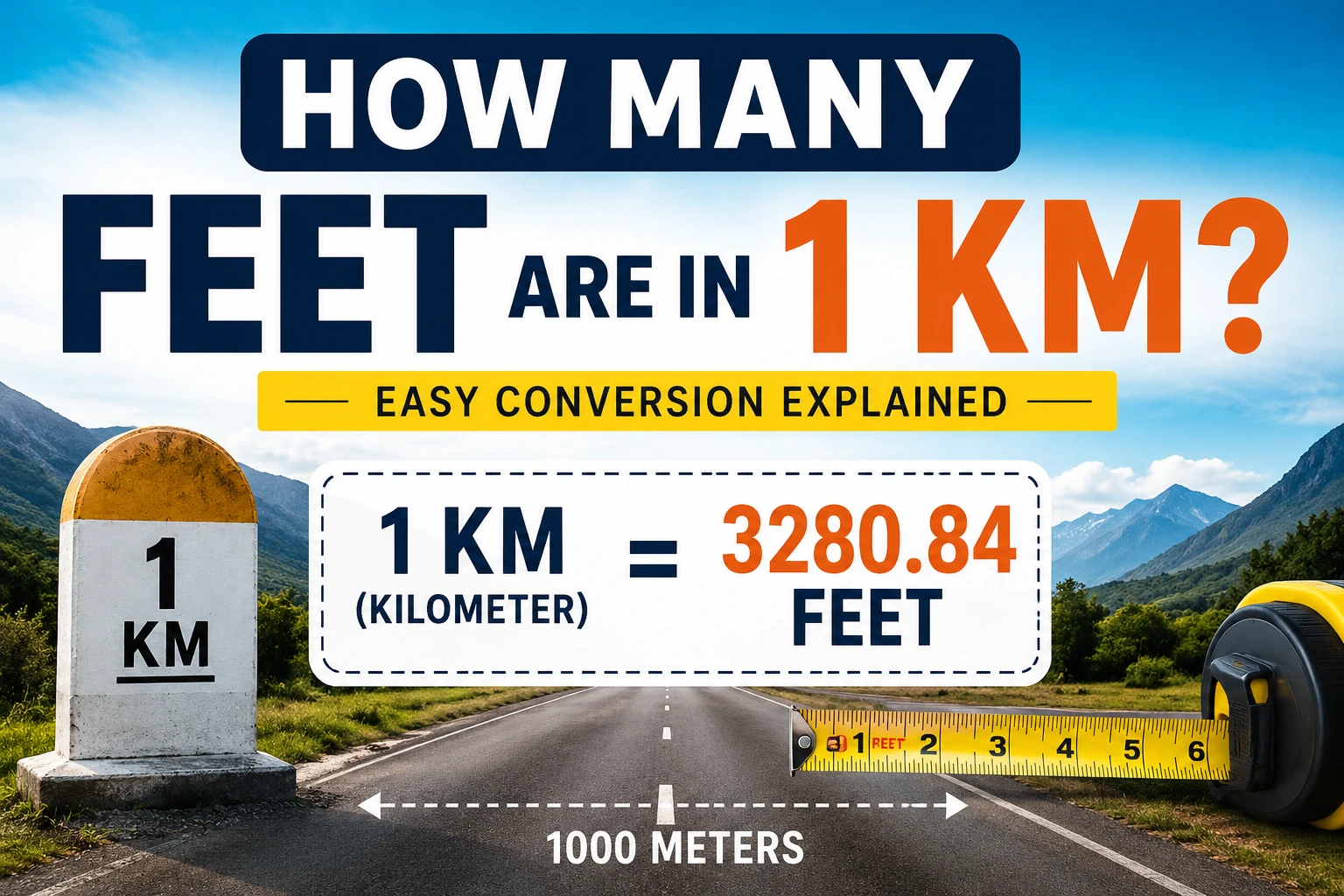
If you have ever wondered “how many feet are in 1 km,” you are not alone. People often need to convert kilometers into feet for travel, construction, fitness tracking, education, and many everyday situations.
The simple answer is:
1 kilometer=3280.84 feet
That means one kilometer contains exactly 3,280.84 feet.
This guide explains everything you need to know about kilometer-to-feet conversion in simple language. You will learn the conversion formula, practical examples, quick tips, and common mistakes to avoid.
Understanding Kilometers and Feet
Before learning the conversion process, it helps to understand what these measurement units actually mean.
What Is a Kilometer?
A kilometer is a unit of distance in the metric system. It is commonly used in most countries around the world.
One kilometer equals:
- 1,000 meters
- 100,000 centimeters
- 0.621 miles
Kilometers are often used to measure:
- Road distances
- Running routes
- Hiking trails
- Geographic distances
For example:
- A 5K race equals 5 kilometers.
- The distance between cities is often measured in kilometers.
What Is a Foot?
A foot is a unit of length in the imperial measurement system, mainly used in the United States and a few other countries.
One foot equals:
- 12 inches
- 0.3048 meters
Feet are commonly used for:
- Building measurements
- Height measurements
- Property dimensions
- Aviation and engineering
For example:
- A person may be 6 feet tall.
- A room may be 12 feet wide.
How Many Feet Are in 1 KM Exactly?
The exact conversion from kilometers to feet is:
1 km=3280.84 ft
This number comes from the relationship between meters and feet.
Since:
1 meter=3.28084 feet
And:
1 kilometer=1000 meters
You multiply:
1000×3.28084=3280.84
So, there are exactly 3,280.84 feet in one kilometer.
Quick Answer
If you only need a fast estimate, remember:
- 1 km ≈ 3,281 feet
This rounded number works well for everyday calculations.
Simple Formula to Convert KM to Feet
If you want to convert any kilometer value into feet, use this formula:
Feet=Kilometers×3280.84
Step-by-Step Conversion
Let’s convert 2 kilometers into feet.
Step 1: Write the formula
Feet=Kilometers×3280.84
Step 2: Insert the value
2×3280.84
Step 3: Solve the equation
6561.68 feet
Therefore:
- 2 km = 6,561.68 feet
Examples of Common Conversions
| Kilometers | Feet |
|---|---|
| 0.5 km | 1,640.42 ft |
| 1 km | 3,280.84 ft |
| 2 km | 6,561.68 ft |
| 5 km | 16,404.2 ft |
| 10 km | 32,808.4 ft |
These conversions are useful in sports, engineering, and travel.
KM to Feet Conversion Table
Here is a quick reference chart for common kilometer values.
| Kilometers (km) | Feet (ft) |
|---|---|
| 0.1 km | 328.08 ft |
| 0.25 km | 820.21 ft |
| 0.5 km | 1,640.42 ft |
| 1 km | 3,280.84 ft |
| 1.5 km | 4,921.26 ft |
| 2 km | 6,561.68 ft |
| 3 km | 9,842.52 ft |
| 4 km | 13,123.36 ft |
| 5 km | 16,404.2 ft |
| 8 km | 26,246.72 ft |
| 10 km | 32,808.4 ft |
Bookmarking a chart like this can save time when quick conversions are needed.
Real-World Examples of Kilometer to Feet Conversion
Understanding how many feet are in 1 km becomes more useful when applied to real-life situations.
Running and Fitness
Many races are measured in kilometers, especially outside the United States.
For example:
- A 5K race equals about 16,404 feet.
- A 10K race equals about 32,808 feet.
Runners who use GPS devices or treadmills may need conversions when switching between metric and imperial settings.
Construction and Engineering
Construction professionals often work with both metric and imperial systems.
Imagine a road project measuring 3 km.
Using the formula:
3×3280.84=9842.52 feet
The project length equals 9,842.52 feet.
This conversion helps architects, surveyors, and engineers communicate clearly across international teams.
Travel and Navigation
Road signs in many countries display distances in kilometers. Travelers from countries using feet or miles may need quick conversions.
For instance:
- 1 km is about 3,281 feet
- 5 km is about 16,404 feet
Knowing these estimates helps you better understand travel distances.
Why Different Measurement Systems Exist
Many people ask why kilometers and feet both exist. The reason lies in history and geography.
Metric System
The metric system was created in France during the late 1700s. It uses units based on powers of 10, making calculations easier.
Advantages include:
- Easy conversions
- Worldwide standardization
- Scientific accuracy
Most countries now use the metric system.
Imperial System
The imperial system developed in Britain and remains common in the United States.
It includes units such as:
- Feet
- Inches
- Yards
- Miles
Although less simple mathematically, the imperial system is deeply integrated into many industries and traditions.
Common Mistakes When Converting KM to Feet
Even simple conversions can lead to errors. Here are some common mistakes to avoid.
Using the Wrong Conversion Factor
Some people accidentally use yards instead of feet.
Remember:
- 1 km = 3,280.84 feet
- NOT 1,000 feet
Forgetting Decimal Places
Small decimal errors can create large measurement mistakes in engineering or construction projects.
Always double-check calculations.
Mixing Measurement Systems
Avoid combining metric and imperial units without converting properly.
For example:
- Don’t add meters directly to feet.
- Convert everything into one system first.
Rounding Too Early
Rounding numbers too soon can reduce accuracy.
For professional work:
- Use 3,280.84 feet instead of 3,281 feet
Tips to Remember Kilometer to Feet Conversions
Here are some easy memory tricks.
Remember the 3,280 Rule
One kilometer is approximately:
- 3,280 feet
This estimate works for quick mental math.
Use Smartphone Calculators
Most smartphones include built-in conversion tools.
Simply type:
- “1 km to feet”
The result appears instantly.
Learn Benchmark Distances
Memorizing a few common conversions helps:
- 1 km = 3,280 ft
- 5 km = 16,404 ft
- 10 km = 32,808 ft
These benchmarks make larger calculations easier.
Use Online Conversion Tools
Digital converters reduce human error and save time.
They are especially useful for:
- Surveying
- Mapping
- Engineering projects
- School assignments
Practical Uses of Kilometer-to-Feet Conversion
This conversion appears in many industries and daily activities.
Sports
Athletes and coaches compare training distances internationally.
Aviation
Pilots may use feet for altitude and kilometers for navigation distances.
Real Estate
Land measurements can involve both systems depending on the country.
Education
Students frequently solve metric-to-imperial conversion problems.
Hiking and Outdoor Activities
Trail signs may use kilometers while GPS devices show feet.
Understanding both systems improves navigation accuracy.
Is Feet Bigger Than Kilometers?
No. A kilometer is much larger than a foot.
To compare:
| Unit | Size |
|---|---|
| 1 foot | 0.3048 meters |
| 1 kilometer | 1,000 meters |
That is why one kilometer contains thousands of feet.
Quick Comparison Between KM and Feet
| Feature | Kilometer | Foot |
|—|—|
| System | Metric | Imperial |
| Symbol | km | ft |
| Common Use | Road distances | Building dimensions |
| Equal To | 1,000 meters | 12 inches |
| Worldwide Usage | Very common | Mostly US |
Frequently Asked Questions
1. How many feet are in 1 km exactly?
There are exactly 3,280.84 feet in 1 kilometer.
2. How do you convert kilometers into feet?
Multiply the kilometer value by 3,280.84.
3. Is 1 km longer than 1 mile?
No. One mile is longer than one kilometer.
- 1 mile = 1.609 km
4. Why do some countries use feet instead of kilometers?
Countries like the United States still commonly use the imperial system because of historical traditions and infrastructure standards.
5. What is the easiest way to remember the conversion?
Remember that:
- 1 km ≈ 3,280 feet
This quick estimate works for most situations.
Conclusion
Understanding how many feet are in 1 km is useful for travel, sports, education, engineering, and everyday measurements.
The exact conversion is:
1 km=3280.84 feet
By learning the simple formula and using conversion charts, you can quickly switch between metric and imperial systems with confidence.
Whether you are calculating race distances, planning construction projects, or simply satisfying curiosity, kilometer-to-feet conversion is a practical skill worth knowing.
Discover more