
If you are planning a lawn project, one of the first questions you may ask is: “how many sq feet in a pallet of sod?”
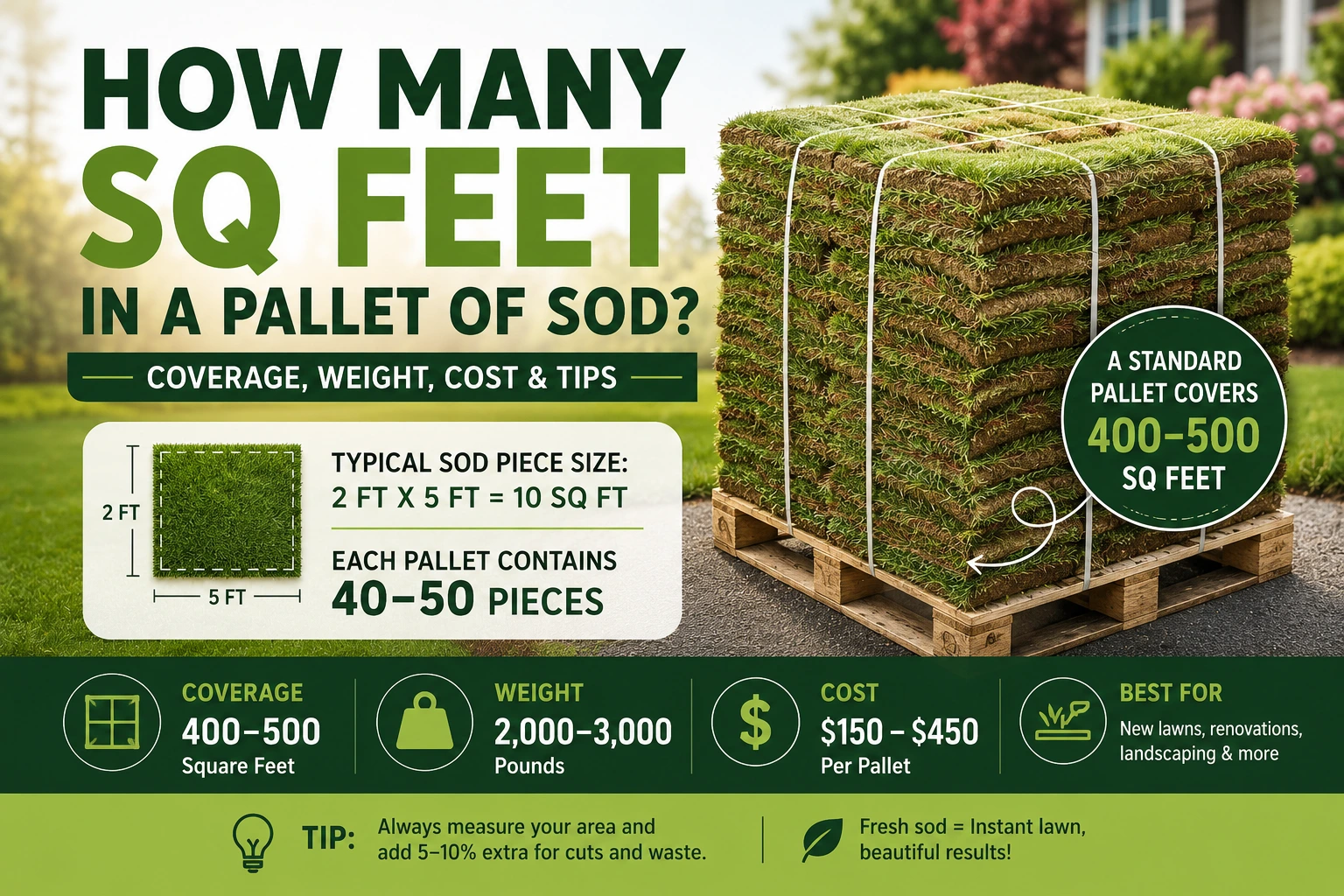
The answer depends on the type of sod, the farm, and the pallet size. However, most standard pallets of sod cover between 400 and 500 square feet.
A common average is:
1 pallet of sod≈450–500 square feet
Knowing the coverage of a sod pallet helps you avoid overspending, reduce waste, and plan your landscaping project accurately.
This guide explains everything you need to know about sod pallet square footage, including coverage charts, pricing, installation tips, and real-world examples.
What Is a Pallet of Sod?
A pallet of sod is a stack of pre-grown grass sections harvested from a sod farm. These sections include grass, roots, and soil held together in rolls or slabs.
Sod pallets are commonly delivered to:
- Residential homes
- Commercial properties
- Sports fields
- Landscaping projects
Instead of planting grass seed and waiting weeks for growth, sod gives you an instant lawn.
Standard Sod Pieces
Most sod pallets contain individual pieces called:
- Slabs
- Rolls
- Squares
The size of each piece varies by supplier.
Common sod piece dimensions include:
| Sod Piece Type | Average Size |
|---|---|
| Small Roll | 2 ft × 5 ft |
| Slab | 16 in × 24 in |
| Large Roll | 3 ft × 5 ft |
These pieces are stacked together on wooden pallets for transport.
Types of Sod Sold on Pallets
Different grass types may slightly affect pallet size and weight.
Popular sod varieties include:
- Bermuda grass
- Kentucky bluegrass
- St. Augustine grass
- Zoysia grass
- Fescue grass
Each type has different moisture levels, thickness, and density.
How Many Sq Feet in a Pallet of Sod on Average?
The average pallet of sod usually covers:
400–500 square feet
Most homeowners use the following estimate:
1 standard pallet≈450 square feet
However, exact coverage depends on:
- Sod farm standards
- Roll dimensions
- Grass type
- Soil moisture
- Regional practices
Standard Coverage Range
Here is a quick breakdown.
| Pallet Type | Approximate Coverage |
|---|---|
| Mini pallet | 200–250 sq ft |
| Standard pallet | 400–500 sq ft |
| Large commercial pallet | 500–700 sq ft |
Always confirm the exact coverage with your supplier before ordering.
Common Sod Pallet Sizes
Some suppliers package sod differently.
Typical pallet dimensions may include:
| Pallet Size | Coverage |
|---|---|
| 50 rolls | 450 sq ft |
| 60 slabs | 480 sq ft |
| Large rolls | 500+ sq ft |
Even though the physical pallet dimensions may vary, the square footage coverage remains the most important measurement.
Sod Pallet Coverage Chart
This chart helps estimate how many pallets you may need for your lawn.
| Lawn Size | Estimated Pallets Needed |
|---|---|
| 500 sq ft | 1 pallet |
| 1,000 sq ft | 2 pallets |
| 1,500 sq ft | 3–4 pallets |
| 2,000 sq ft | 4–5 pallets |
| 5,000 sq ft | 10–12 pallets |
These estimates assume each pallet covers approximately 450 square feet.
How to Calculate How Much Sod You Need
Calculating sod coverage is easier than many people think.
Measure Your Lawn
Use a tape measure to find:
- Length
- Width
If your yard has irregular shapes, divide it into smaller rectangles.
Multiply Length and Width
Use this simple formula:
Square Feet=Length×Width
For example:
A lawn measuring 30 feet by 20 feet equals:
30×20=600 sq ft
You would need approximately:
600÷450≈1.33 pallets
So you should order 2 pallets to ensure full coverage.
Add Extra Sod for Waste
Experts recommend adding:
- 5% extra for simple yards
- 10–15% extra for curved or irregular lawns
Extra sod helps cover:
- Trimming waste
- Mistakes
- Damaged pieces
Factors That Affect Sod Coverage
Not every pallet covers the same amount of area.
Several factors influence actual coverage.
Sod Type
Some grass types have thicker roots or denser soil layers.
For example:
- St. Augustine sod is often heavier
- Bermuda sod may be lighter
Soil Moisture
Wet sod weighs more and may compress differently during transport.
Freshly watered sod can significantly increase pallet weight.
Roll Size
Larger rolls reduce seams but may change coverage calculations.
Commercial projects often use oversized rolls.
Regional Differences
Sod farms across states or countries may use different pallet standards.
Always ask suppliers for:
- Exact square footage
- Roll count
- Piece dimensions
Weight of a Sod Pallet
Many buyers also ask about pallet weight.
A standard pallet of sod often weighs between:
2000–3000 pounds
The weight depends largely on water content.
Dry vs Wet Sod Weight
| Condition | Estimated Weight |
|---|---|
| Dry sod | 2,000–2,500 lbs |
| Wet sod | 3,000+ lbs |
Recently watered sod becomes much heavier.
Transportation Considerations
Because sod pallets are heavy, delivery trucks or trailers are usually required.
Before delivery, check:
- Driveway strength
- Access space
- Unloading area
Improper placement can damage concrete or landscaping.
Cost of a Pallet of Sod
The price of sod varies by region and grass type.
Average costs range between:
$150–$450 per pallet
Average Price Range
| Sod Type | Estimated Cost |
|---|---|
| Bermuda | $150–$300 |
| Fescue | $200–$400 |
| Zoysia | $300–$450 |
| St. Augustine | $250–$400 |
Prices may increase due to:
- Seasonal demand
- Delivery distance
- Premium grass varieties
Installation Costs
Professional sod installation may cost:
- $1 to $2 per square foot
This often includes:
- Soil preparation
- Sod laying
- Rolling
- Initial watering
Benefits of Buying Sod by the Pallet
Buying full pallets has several advantages.
Faster Installation
Large quantities speed up landscaping projects.
Better Lawn Appearance
Fresh sod creates an instant green lawn.
Weed Reduction
Healthy sod helps prevent weed growth.
Erosion Control
Sod stabilizes soil quickly after installation.
Cost Savings
Bulk purchases are often cheaper than buying individual rolls.
Common Mistakes When Ordering Sod
Avoid these common problems.
Ordering Too Little
Running short may lead to visible color differences if you reorder later.
Ignoring Waste Allowance
Always order extra for trimming and fitting.
Measuring Incorrectly
Small measuring mistakes can create major shortages.
Waiting Too Long to Install
Sod should be installed within 24 hours after delivery.
Poor Soil Preparation
New sod struggles on compacted or unhealthy soil.
Expert Tips for Installing Sod Successfully
Professional landscapers recommend the following steps.
Prepare the Soil Properly
Remove:
- Rocks
- Weeds
- Debris
Loosen soil for better root growth.
Water Immediately
New sod requires deep watering right after installation.
Stagger the Seams
Lay sod pieces like bricks to avoid visible lines.
Avoid Foot Traffic
Keep people and pets off fresh sod for several weeks.
Fertilize Carefully
Use starter fertilizer designed for new lawns.
How Long Does Sod Take to Root?
Most sod begins rooting within:
- 10 to 14 days
Full establishment may take:
- 4 to 6 weeks
Watering and weather conditions play a major role.
Is Sod Better Than Grass Seed?
Both options have benefits.
| Sod | Grass Seed |
|---|---|
| Instant lawn | Slower growth |
| Higher cost | Lower cost |
| Less erosion | More vulnerable |
| Fewer weeds | More maintenance |
Sod is ideal when you want immediate results.
Frequently Asked Questions
1. How many sq feet in a pallet of sod on average?
Most standard sod pallets cover between 400 and 500 square feet.
2. How many pallets of sod do I need for 1,000 sq ft?
You typically need about 2 standard pallets.
3. How much does a pallet of sod weigh?
A pallet usually weighs between 2,000 and 3,000 pounds depending on moisture levels.
4. How long can sod stay on a pallet?
Sod should ideally be installed within 24 hours after delivery.
5. Is it cheaper to buy sod by the pallet?
Yes. Buying full pallets is generally more cost-effective than purchasing small quantities.
Conclusion
Understanding how many sq feet in a pallet of sod helps you plan lawn projects accurately and avoid unnecessary costs.
Most standard pallets cover:
400–500 square feet
However, actual coverage depends on sod type, pallet size, moisture content, and supplier standards.
Before ordering sod, carefully measure your lawn, add extra material for waste, and confirm coverage details with your supplier. With proper planning and installation, fresh sod can quickly transform your outdoor space into a healthy, beautiful lawn.
Discover more