

Finding a parking spot on a busy street can be challenging, especially in crowded neighborhoods and city centers. However, one mistake that many drivers make is parking too close to a fire hydrant. While it may seem harmless if you’re only stopping for a few minutes, violating fire hydrant parking rules can result in expensive tickets, vehicle towing, or even interfere with emergency response efforts.
If you’ve ever wondered how many feet park from fire hydrant is considered legal, you’re not alone. The answer depends on local laws, but most places require drivers to leave a minimum distance between their vehicle and the hydrant. Knowing these rules helps you avoid fines while ensuring firefighters have immediate access to water during emergencies.
This guide explains the standard parking distance, why these laws exist, possible penalties, and practical tips to help you park safely and legally.
Why Fire Hydrant Parking Rules Matter
Fire hydrants are one of the most important pieces of public safety infrastructure. During a fire emergency, firefighters connect hoses directly to hydrants to obtain the water supply needed to control or extinguish flames.
Every second matters in an emergency. A vehicle parked too close to a hydrant can delay firefighters, making it harder to save lives and property.
Fire hydrant parking regulations exist to ensure:
- Firefighters have unrestricted access.
- Emergency response times remain fast.
- Fire hoses can be connected without obstacles.
- Public safety is protected.
- Drivers understand where parking is prohibited.
Even if emergency personnel manage to access the hydrant, your vehicle could still be damaged if a fire hose must be routed around or through it.
How Many Feet Park From Fire Hydrant?
The most common answer is:
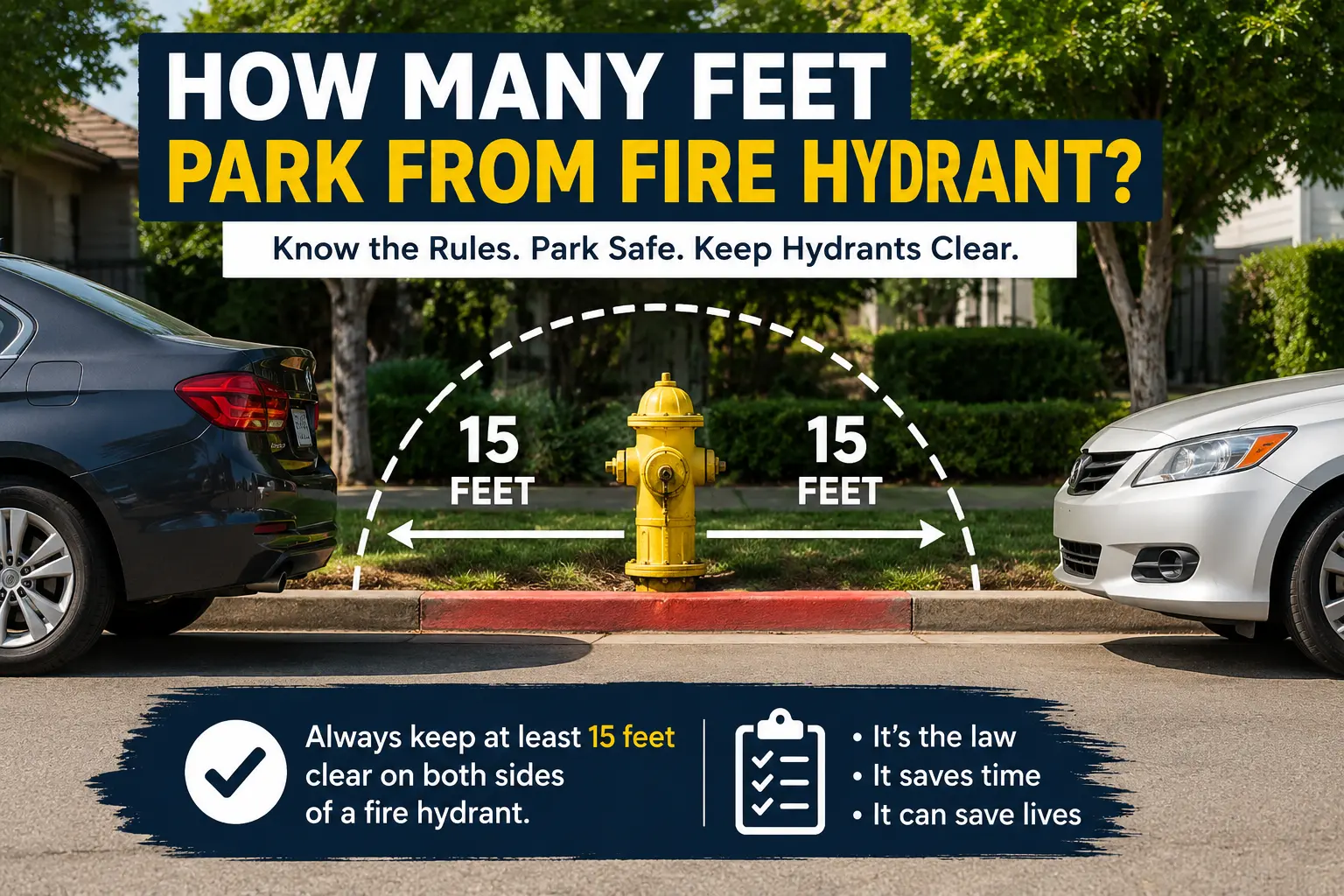
Drivers should park at least 15 feet away from a fire hydrant.
This is the standard rule in many U.S. states and cities. The distance is measured from the hydrant to the nearest part of your vehicle.
Imagine a circle extending approximately 15 feet around the hydrant. Your vehicle should remain completely outside that area.
Although 15 feet is the most widely used requirement, local traffic laws may specify different distances.
Always check:
- State traffic laws
- City parking ordinances
- Street signs
- Painted curb markings
Ignoring local regulations can lead to fines even if you believe you’ve left enough space.
Why Is the Standard Distance 15 Feet?
The 15-foot rule wasn’t chosen randomly.
It provides enough room for firefighters to:
- Quickly attach hoses.
- Move equipment safely.
- Open hydrant valves.
- Position multiple firefighters around the hydrant.
- Work efficiently without obstruction.
Without sufficient clearance, emergency crews may lose valuable minutes during a fire response.
Can the Distance Be Different?
Yes.
Although 15 feet is the standard in many jurisdictions, some locations require different minimum distances.
For example:
| Location | Typical Required Distance |
|---|---|
| Many U.S. States | 15 feet |
| Some Cities | 10 feet |
| Others | 20 feet |
| Certain Countries | Local regulations vary |
Because parking laws are established by state and local governments, it’s important to verify the rules where you’re driving.
If you’re traveling or moving to another city, don’t assume every location follows the same parking requirements.
Parking Distance Requirements by State
Fire hydrant parking laws vary across the United States. While most states follow the familiar 15-foot rule, others have unique regulations that drivers should know.
Here’s a quick comparison of common parking distances.
| State | Typical Distance |
|---|---|
| California | 15 feet |
| New York | 15 feet |
| Texas | 15 feet |
| Florida | 15 feet |
| Illinois | 15 feet |
| Washington | 15 feet |
| Pennsylvania | 15 feet |
| Massachusetts | 10 feet |
| Oregon | 15 feet (varies locally) |
| Nevada | Local regulations may vary |
Important: Always verify current parking laws through your local Department of Motor Vehicles (DMV) or municipal parking authority, as regulations can change.
States Following the 15-Foot Rule
Most American drivers learn the 15-foot rule during driver’s education because it’s the most commonly enforced standard.
This rule provides enough working space for:
- Fire engines
- Firefighters
- Rescue equipment
- Water hoses
- Emergency personnel
Cities adopting the 15-foot standard often combine it with additional parking restrictions near intersections, crosswalks, and emergency exits.
Areas with Different Requirements
Not every city uses identical parking rules.
Some municipalities:
- Require only 10 feet.
- Extend the distance to 20 feet.
- Mark hydrant zones with painted curbs.
- Install additional “No Parking” signs.
Because local ordinances override general assumptions, checking posted signs is always the safest approach.
What Happens If You Park Too Close to a Fire Hydrant?
Parking too close to a hydrant may seem like a minor mistake, but the consequences can be surprisingly serious.
Law enforcement officers and parking authorities actively monitor hydrant violations because blocked hydrants can delay emergency responders.
Possible penalties include:
- Parking citations
- Expensive fines
- Vehicle towing
- Court fees in some jurisdictions
- Insurance complications if damage occurs during an emergency
In severe situations where firefighters need immediate access, they may take extraordinary measures to reach the hydrant.
Parking Tickets
The most common penalty is receiving a parking ticket.
The amount varies by city, but fines often range from:
- $50
- $100
- $150
- $250
- More than $500 in heavily enforced urban areas
Large cities generally impose higher fines because hydrant access is considered critical to public safety.
Vehicle Towing
Many cities authorize immediate towing when a vehicle blocks access to a fire hydrant.
This means you’ll likely pay for:
- Parking violation
- Towing charges
- Storage fees
- Administrative costs
The total expense can easily exceed several hundred dollars, making it far more costly than paying for legal parking.
Emergency Damage to Vehicles
Many drivers are surprised to learn that firefighters are allowed to take immediate action if a parked vehicle blocks access to a fire hydrant during an emergency.
If there is no time to move the vehicle, firefighters may:
- Run a fire hose around the vehicle.
- Pass a hose underneath the vehicle if possible.
- In extreme cases, break the vehicle’s windows to route a hose through the car.
This action may sound dramatic, but protecting lives and property always takes priority over preventing damage to a vehicle. Depending on local laws and the circumstances, the vehicle owner may also be responsible for repair costs.
How to Measure the Correct Distance from a Fire Hydrant
Knowing the legal distance is one thing, but estimating it accurately while parking is another. Fortunately, you don’t need a measuring tape every time you park.
Use Visual References
You can estimate 15 feet by comparing it to familiar objects.
For example:
| Reference | Approximate Length |
|---|---|
| Standard sedan | 14–16 feet |
| Small SUV | 14–15 feet |
| Pickup truck | 17–20 feet |
| Three large walking steps | Around 15 feet |
If your car is about the same length as the required clearance, leaving one car-length between your vehicle and the hydrant is usually a safe estimate where the 15-foot rule applies.
Follow Curb Markings
Some cities make parking rules easier to follow by marking the curb near fire hydrants.
Look for:
- Red-painted curbs
- Yellow no-parking zones
- White curb markings
- “No Parking” signs
- Painted lines indicating the restricted area
Never park within a marked restricted zone, even if you believe you’re outside the required distance.
Use Parking Apps or Maps
Some parking apps display restricted parking areas or street regulations. While they can be helpful, always rely on posted signs and local laws as the final authority.
Common Fire Hydrant Parking Mistakes
Drivers often receive tickets because of simple misunderstandings. Avoid these common mistakes to reduce the risk of fines or towing.
Assuming Every State Has the Same Rule
Although 15 feet is common, not every state or city uses the same distance. Local ordinances may require more or less clearance.
Measuring from the Wrong Spot
The required distance is generally measured from the fire hydrant to the nearest part of your vehicle—not the center of your car or your tires.
Parking “Just for a Minute”
Many drivers think short stops are acceptable. In reality, parking restrictions apply regardless of how long you plan to leave your vehicle.
Ignoring Temporary Restrictions
Construction, road work, or emergency situations may create temporary no-parking zones near hydrants. Always check temporary signs before parking.
Blocking Visibility
Even if you’re technically outside the minimum distance, parking in a way that reduces visibility for firefighters or other drivers can still create safety concerns.
Fire Hydrant Parking Laws Around the World
Fire hydrant parking regulations vary from country to country. While the exact distance may differ, the goal is the same: ensure emergency responders have quick access to water.
| Country | General Rule |
|---|---|
| United States | Usually 15 feet (varies by state and city) |
| Canada | Varies by province and municipality |
| United Kingdom | Parking near hydrants may be restricted by local traffic regulations and road markings |
| Australia | Local road rules determine minimum distances |
| New Zealand | Local councils set parking restrictions |
If you’re driving in another country, review local parking laws before traveling to avoid unexpected penalties.
Practical Parking Tips
Following a few simple habits can help you stay compliant with parking laws and avoid unnecessary expenses.
- Leave extra space when parking near a fire hydrant.
- Read all parking signs carefully.
- Check curb colors and pavement markings.
- Avoid guessing if you’re unsure of the legal distance.
- Choose another parking space if one is available.
- Be especially cautious in busy downtown areas where parking enforcement is common.
- Remember that emergency access is more important than parking convenience.
Developing these habits will help protect public safety while saving you from costly tickets and towing fees.
Fire Hydrant Parking Distance at a Glance
Here’s a quick summary of the most important information.
| Topic | Key Information |
|---|---|
| Standard parking distance | 15 feet in many U.S. locations |
| Measured from | Fire hydrant to the nearest part of your vehicle |
| Penalties | Tickets, towing, storage fees |
| Emergency risk | Firefighters need immediate hydrant access |
| Local variations | Some cities require 10 or 20 feet |
| Best practice | Always check local signs and regulations |
Expert Tips for Safe Street Parking
Professional driving instructors and parking enforcement officers often recommend these best practices:
- Park farther away if you’re uncertain about the required distance.
- Never assume faded curb paint means parking is allowed.
- Review your local DMV handbook if you’re preparing for a driving test.
- Be aware that parking enforcement may vary between neighborhoods.
- Teach new drivers the importance of emergency access as part of safe driving habits.
Parking responsibly not only helps you avoid penalties but also supports emergency services when every second counts.
FAQs
How many feet should you park from a fire hydrant?
In many U.S. states and cities, you should park at least 15 feet away from a fire hydrant. However, some local jurisdictions require different distances, so always check local laws and posted signs.
Can you park next to a fire hydrant if you’re staying in the car?
Generally, no. Parking restrictions typically apply whether you remain inside the vehicle or leave it unattended. Local regulations determine any exceptions.
What happens if you park too close to a fire hydrant?
You may receive a parking ticket, have your vehicle towed, or, during an emergency, firefighters may take necessary action to access the hydrant, even if it results in vehicle damage.
How is the parking distance measured?
The distance is usually measured from the fire hydrant to the nearest part of your parked vehicle. Always ensure your entire vehicle remains outside the restricted area.
Do all states require a 15-foot distance?
No. While 15 feet is the most common rule, some states and municipalities require 10 feet, 20 feet, or another distance. Always follow local traffic laws.
Conclusion
Knowing how many feet park from fire hydrant is more than just learning a traffic rule—it’s an important part of responsible driving and public safety. In most locations across the United States, drivers should leave at least 15 feet of clearance between their vehicle and a fire hydrant. However, local regulations may differ, making it essential to pay attention to street signs, curb markings, and municipal parking laws.
Parking too close to a hydrant can lead to expensive fines, towing charges, and even vehicle damage during an emergency. More importantly, it can delay firefighters who rely on immediate access to hydrants to protect lives and property.
Whenever you’re unsure, choose a parking space farther away from the hydrant. A few extra steps are far better than paying costly penalties—or interfering with emergency responders. By understanding and following local parking regulations, you can park confidently, stay compliant with the law, and help keep your community safe.
Discover more