
If you’re planning a roof replacement or estimating roofing materials, one question comes up almost immediately: how many square feet is in a square of shingles?
The answer is simple, but understanding how roofers use this measurement can save you time, money, and frustration.
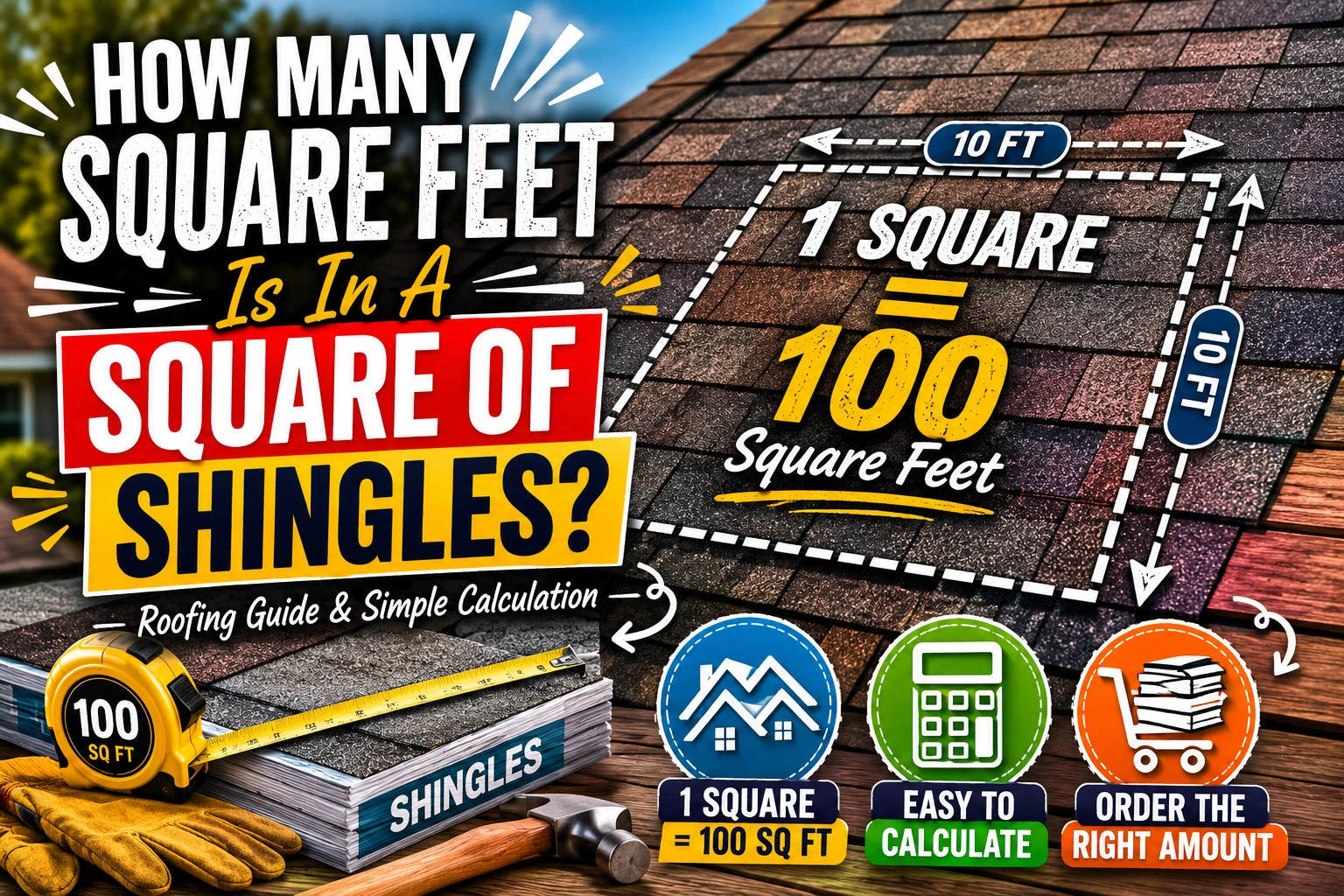
A square of shingles always covers 100 square feet of roof area. However, depending on roof pitch, waste, valleys, hips, dormers, and installation methods, you’ll usually need to purchase more than the exact number of squares your roof measures.
This guide explains everything you need to know about roofing squares, including calculations, bundle requirements, examples, charts, and professional tips.
What Is a Square of Shingles?
A roofing square is a standard unit used throughout the roofing industry.
Instead of talking about hundreds or thousands of square feet, contractors simply measure roofs in squares.
1 Roofing Square = 100 Square Feet
This measurement refers to the roof’s surface area—not the floor space inside your house.
For example:
| Roofing Squares | Square Feet Covered |
|---|---|
| 1 | 100 sq ft |
| 5 | 500 sq ft |
| 10 | 1,000 sq ft |
| 20 | 2,000 sq ft |
| 30 | 3,000 sq ft |
Using roofing squares makes estimating materials much faster.
How Many Square Feet Is in a Square of Shingles?
The direct answer is:
One square of shingles covers exactly 100 square feet.
No matter which manufacturer you buy from, a roofing square is always standardized.
For example:
- 1 square = 100 square feet
- 2 squares = 200 square feet
- 10 squares = 1,000 square feet
- 25 squares = 2,500 square feet
Although the measurement never changes, the number of bundles needed to create one square can vary depending on the product.
Why Roofers Use Roofing Squares
Roofing projects involve large surface areas.
Instead of saying:
“My roof is 2,700 square feet.”
Roofers often say:
“My roof is 27 squares.”
This simplifies:
- Material estimates
- Labor pricing
- Delivery orders
- Waste calculations
- Manufacturer specifications
It is the universal language of roofing.
How Many Bundles Are in One Square?
Most asphalt shingles come packaged in bundles.
For standard three-tab shingles:
- 3 bundles = 1 roofing square
For heavier architectural shingles:
- Usually 3 bundles
- Sometimes 4 bundles
- Premium products may require 5 bundles
Always check the manufacturer’s packaging before ordering.
Typical Bundle Coverage
| Bundle Type | Approximate Coverage |
|---|---|
| 1 Bundle | 33.3 sq ft |
| 2 Bundles | 66.6 sq ft |
| 3 Bundles | 100 sq ft |
How to Calculate Roofing Squares
Knowing roof dimensions allows you to estimate shingles accurately.
Measure Roof Length
Measure the roof from one end to the other.
Example:
40 feet
Measure Roof Width
Measure from ridge to eave.
Example:
30 feet
Calculate Total Area
Multiply:
Length × Width
Example:
40 × 30 = 1,200 square feet
Convert to Roofing Squares
Divide total square feet by 100.
Formula:
Roof Squares = Square Feet ÷ 100
Example:
1,200 ÷ 100 = 12 roofing squares
Roofing Squares Conversion Table
| Roof Area | Roofing Squares |
|---|---|
| 100 sq ft | 1 |
| 200 sq ft | 2 |
| 300 sq ft | 3 |
| 500 sq ft | 5 |
| 750 sq ft | 7.5 |
| 1,000 sq ft | 10 |
| 1,200 sq ft | 12 |
| 1,500 sq ft | 15 |
| 2,000 sq ft | 20 |
| 2,500 sq ft | 25 |
| 3,000 sq ft | 30 |
This table is useful when estimating roofing materials quickly.
Roofing Waste Factor Explained
Very few roofs are perfect rectangles.
Roofers usually order extra shingles to account for waste.
Typical waste allowances:
| Roof Type | Waste Factor |
|---|---|
| Simple Gable Roof | 5% |
| Hip Roof | 10% |
| Roof With Valleys | 10–15% |
| Complex Roof Design | 15–20% |
Example
Roof size:
2,000 square feet
Waste:
10%
Calculation:
2,000 × 1.10 = 2,200 square feet
You’ll need approximately:
22 roofing squares.
Example Roofing Calculations
Example 1
Roof:
1,450 square feet
Calculation:
1,450 ÷ 100
= 14.5 squares
Add 10% waste:
15.95
Round up to:
16 roofing squares
Example 2
Garage Roof
Dimensions:
24 × 20 feet
Area:
480 square feet
Squares:
480 ÷ 100
= 4.8
Round up:
5 squares
Example 3
Large Home
Roof Area:
3,250 square feet
Squares:
32.5
Add 10% waste:
35.75
Order:
36 roofing squares
Factors That Affect Shingle Coverage
Although one square always equals 100 square feet, several factors influence how much roofing material you’ll actually need.
Roof Pitch
Steeper roofs have more surface area than flat roofs.
A home with a high pitch requires more shingles than a flat roof with the same footprint.
Roof Complexity
Extra features increase material usage:
- Dormers
- Valleys
- Skylights
- Chimneys
- Multiple ridges
Shingle Style
Different products have different exposures.
Examples include:
- Three-tab shingles
- Architectural shingles
- Luxury shingles
Coverage per bundle may vary.
Installation Method
Some roofing systems require overlapping rows or starter strips, increasing material requirements.
Common Roofing Measurement Mistakes
Avoid these common errors when estimating shingles.
Measuring the House Instead of the Roof
Roof overhangs increase total roof area.
Always measure the roof itself whenever possible.
Ignoring Roof Pitch
A steep roof contains more surface area than its footprint suggests.
Forgetting Waste
Ordering exactly enough shingles usually leads to shortages.
Always include a waste allowance.
Mixing Units
Don’t confuse:
- Square feet
- Roofing squares
Remember:
100 square feet = 1 roofing square.
Tips for Ordering Roofing Materials
Professional roofers recommend these best practices.
- Measure twice before ordering.
- Add 5–15% extra for waste.
- Buy all shingles from the same manufacturing lot.
- Keep extra bundles for future repairs.
- Use manufacturer coverage charts.
- Consider local building codes.
- Order ridge caps and starter strips separately.
These small steps can prevent delays and ensure a smoother roofing project.
Roofing Squares vs Square Feet
Many homeowners confuse these two measurements.
| Roofing Square | Square Feet |
|---|---|
| Industry measurement | Area measurement |
| Equals 100 sq ft | Basic unit of area |
| Used for estimating materials | Used for measuring surfaces |
| Common among contractors | Common among homeowners |
Understanding the difference helps when discussing roofing estimates with contractors.
When Should You Buy Extra Shingles?
Buying slightly more than your calculated requirement is usually a smart decision.
Reasons include:
- Future storm repairs
- Color matching
- Installation mistakes
- Broken shingles
- Manufacturing variations
Even one extra bundle can save significant hassle later.
FAQ: How many square feet is in a square of shingles?
A roofing square always covers 100 square feet of roof surface. This is the standard measurement used throughout the roofing industry.
FAQ: How many bundles make one square?
Most standard asphalt shingles require three bundles to cover one roofing square. Some premium shingles may require four or five bundles.
FAQ: How do I calculate roofing squares?
Measure the roof’s total square footage and divide it by 100. The result is the number of roofing squares needed.
FAQ: Should I include waste when buying shingles?
Yes. Most professionals recommend adding 5% to 15% extra depending on your roof’s design and complexity.
FAQ: Does roof pitch affect roofing squares?
The size of one roofing square does not change, but a steeper roof has more surface area, meaning you’ll need more roofing squares than a flat roof with the same footprint.
Conclusion
Understanding how many square feet is in a square of shingles is one of the most important basics of roof planning. A roofing square always equals 100 square feet, making it easy to estimate materials, compare contractor quotes, and calculate project costs.
However, accurate roofing estimates involve more than dividing your roof area by 100. Roof pitch, valleys, waste, shingle type, and installation methods all affect the final amount of material you’ll need. By measuring carefully, adding an appropriate waste factor, and understanding the relationship between square feet and roofing squares, you can order the right amount of shingles and avoid costly shortages or excess materials.
Whether you’re replacing a small garage roof or estimating materials for an entire home, using roofing squares provides a reliable and industry-standard way to plan your project with confidence.
Discover more
how many cubic feet calculator