
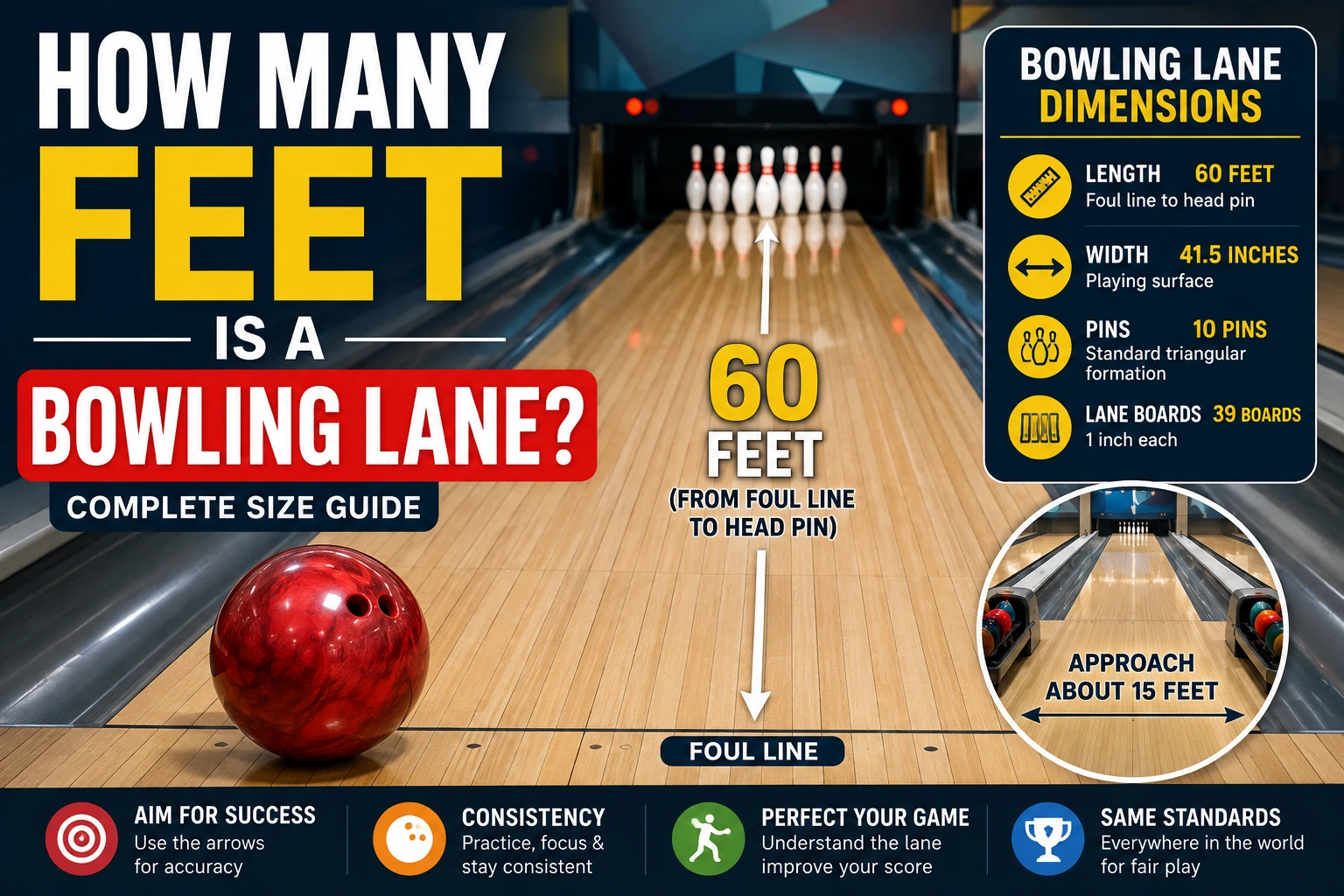
If you have ever wondered how many feet is a bowling lane, the official answer is 60 feet from the foul line to the head pin. This measurement is used in professional tournaments, local bowling centers, and recreational bowling alleys around the world. Knowing the exact dimensions of a bowling lane helps players understand the game, improve accuracy, and appreciate why consistency is so important in bowling.
Although many people think the entire bowling lane is just 60 feet long, there is more to the story. A bowling lane includes several sections, including the approach area, foul line, lane surface, gutters, and pin deck. Each part has a specific purpose and follows official standards.
In this guide, you will learn everything about bowling lane measurements, how each section is used, why the dimensions matter, and interesting facts that even experienced bowlers may not know.
How Many Feet Is a Bowling Lane
The official bowling lane measures:
60 feet from the foul line to the center of the head pin.
This measurement is the international standard for ten pin bowling and is followed by bowling centers worldwide.
Here is a quick overview.
| Bowling Measurement | Official Size |
|---|---|
| Foul line to head pin | 60 feet |
| Lane width | 41.5 inches |
| Number of boards | 39 |
| Pin spacing | 12 inches |
| Lane surface length | 60 feet |
The 60 foot distance remains the same whether you are bowling in the United States, Europe, Asia, or other countries that follow official bowling regulations.
Official Bowling Lane Dimensions
Many people assume that only the lane length matters, but every part of a bowling lane is carefully measured to ensure fair competition.
Lane Length
The most important measurement is the distance between the foul line and the head pin.
Official length: 60 feet
This distance has remained unchanged for decades because it provides the ideal balance between skill, ball speed, and lane conditions.
Professional bowlers spend years learning how their bowling ball reacts over this exact distance.
Lane Width
A standard bowling lane is approximately 41.5 inches wide.
The playing surface consists of 39 wooden or synthetic boards, each about one inch wide.
Experienced bowlers often use these boards as aiming references when throwing the ball.
Pin Deck
The pin deck is the section where the ten pins are placed.
It begins immediately after the end of the lane and provides enough space for the complete pin arrangement.
The pins are positioned in a triangular pattern with equal spacing to create a consistent target for every game.
Approach Area
Before reaching the foul line, bowlers use the approach area to build momentum.
The approach usually measures around 15 feet, although this area is separate from the official 60 foot lane measurement.
The approach gives players enough room to take several steps before releasing the ball.
H2 Bowling Lane Measurements Chart
The table below summarizes the most important bowling lane dimensions.
| Component | Measurement |
|---|---|
| Approach | About 15 feet |
| Foul line to head pin | 60 feet |
| Lane width | 41.5 inches |
| Number of lane boards | 39 |
| Distance between pins | 12 inches |
| Bowling pin height | 15 inches |
| Bowling pin weight | Approximately 3.5 pounds |
These measurements ensure every bowling center offers the same playing experience.
Whether you compete professionally or bowl for fun, the lane dimensions remain consistent.
Understanding Every Part of a Bowling Lane
Knowing the different sections of a bowling lane helps you understand why professional bowlers focus so much on accuracy and consistency.
Approach
The approach is where every shot begins.
Bowlers use this area to develop rhythm, balance, and speed before releasing the ball.
A smooth and controlled approach often leads to more accurate shots.
Foul Line
The foul line marks the point where the ball must be released.
If a player steps beyond this line while delivering the ball, the shot counts as a foul regardless of how many pins are knocked down.
This rule applies in both amateur and professional competitions.
Lane Surface
The lane surface is carefully maintained to provide a consistent playing experience.
Modern bowling lanes are usually made from high quality synthetic materials, although older bowling centers may still have traditional wooden lanes.
The surface is coated with lane oil, which affects how the bowling ball travels toward the pins.
Different oil patterns create different levels of difficulty, making strategy an important part of the game.
Directional Arrows
About 15 feet beyond the foul line, you will notice a series of arrows embedded in the lane.
Instead of aiming directly at the pins, experienced bowlers often target these arrows because they provide a more consistent reference point.
Using the arrows can improve accuracy and help players repeat successful shots more consistently.
Pin Deck
At the end of the lane is the pin deck, where the ten bowling pins are arranged in their official triangular formation.
Every strike, spare, and split occurs in this area, making it the ultimate target for every bowler.
The pin deck is designed to withstand repeated impacts while ensuring the pins are reset accurately after each frame.
Why Bowling Lane Length Matters
Many beginners ask why the official lane length is exactly 60 feet. The answer is simple. This distance creates a fair balance between skill, ball speed, accuracy, and lane conditions.
If the lane were shorter, bowlers would have less time to control the ball’s movement. If it were longer, the game would become much more difficult because the ball would lose speed before reaching the pins.
A standardized lane length allows players to compete fairly anywhere in the world. Whether you bowl at your local bowling center or compete in a professional tournament, the dimensions remain the same.
Here are some reasons why the official lane length is important.
- Creates equal playing conditions
- Helps maintain consistent tournament standards
- Allows players to practice with confidence
- Makes equipment performance predictable
- Supports accurate coaching and skill development
Because every official bowling lane follows the same measurements, bowlers can focus on improving their technique rather than adjusting to different lane sizes.
How Bowling Lane Measurements Affect Your Game
Understanding the dimensions of a bowling lane can improve your performance, especially if you are new to the sport.
Ball Speed
A bowling ball needs enough speed to travel 60 feet while maintaining enough energy to knock down all ten pins.
Throwing the ball too slowly may reduce pin action, while excessive speed can make it difficult to control accuracy.
Ball Hook
Many bowlers use a hook shot instead of rolling the ball straight.
The official lane length gives the ball enough distance to react with the lane oil and curve toward the pocket before reaching the pins.
Accuracy
Knowing that the lane is exactly 60 feet helps players develop a consistent release and targeting strategy.
Professional bowlers practice repeatedly on the same dimensions until their movements become natural.
Equipment Selection
Different bowling balls react differently depending on lane conditions.
Because every official lane has identical measurements, manufacturers can design bowling balls that perform consistently during league play and tournaments.
Interesting Bowling Lane Facts
Bowling has a long and fascinating history. Here are some interesting facts about bowling lane measurements.
Every Official Lane Has the Same Length
Whether you visit a bowling alley in the United States, Canada, Australia, Japan, or Europe, the official distance from the foul line to the head pin remains 60 feet.
There Are 39 Boards Across the Lane
The playing surface contains 39 narrow boards running the full length of the lane.
Professional bowlers often use these boards as aiming references rather than looking directly at the pins.
Lane Oil Changes Ball Movement
The oil pattern applied to the lane has a major effect on how the bowling ball travels.
Even though every lane measures the same length, different oil patterns create different playing conditions.
Bowling Pins Are Carefully Positioned
Each pin is placed 12 inches apart from the center of the adjacent pin.
This precise spacing helps create consistent pin action during every game.
The Bowling Ball Travels Farther Than 60 Feet
Although the official lane measures 60 feet, the ball actually travels farther because it begins its journey during the player’s approach before crossing the foul line.
Bowling Lane Measurements Compared With Other Distances
Many people find it easier to understand the size of a bowling lane by comparing it with familiar distances.
| Distance | Approximate Length |
|---|---|
| Standard bowling lane | 60 feet |
| Basketball court | 94 feet |
| Cricket pitch | 66 feet |
| Tennis court | 78 feet |
| School bus | About 35 feet |
| Two bowling lanes | About 120 feet |
These comparisons show that a bowling lane is longer than many people expect but still shorter than several other sports playing areas.
Common Myths About Bowling Lane Measurements
There are many misconceptions about bowling lane dimensions. Let’s clear up a few of the most common ones.
Myth One
The entire bowling alley is only 60 feet long.
This is incorrect.
The 60 foot measurement only covers the distance from the foul line to the head pin. The full bowling installation also includes the approach area, pin deck, ball return system, and machinery behind the pins.
Myth Two
Every bowling center has different lane sizes.
False.
Official bowling centers follow standardized measurements established by governing organizations.
Myth Three
The gutters are included in the lane width.
The lane width refers only to the playing surface. The gutters are separate areas located on each side of the lane.
Myth Four
Professional bowling lanes are longer than recreational lanes.
Professional tournaments also use the standard 60 foot lane. The challenge comes from oil patterns and lane conditions rather than different dimensions.
Tips for Beginner Bowlers
Understanding lane measurements is only one part of becoming a better bowler. These practical tips can help you improve your game.
- Focus on hitting the directional arrows instead of staring directly at the pins.
- Develop a consistent approach before increasing ball speed.
- Choose a bowling ball that matches your hand size and skill level.
- Practice your release so the ball follows the same path each time.
- Learn how different oil patterns affect ball movement.
- Watch experienced bowlers to improve your technique.
- Stay balanced after releasing the ball to improve accuracy.
With regular practice and a better understanding of how the 60 foot bowling lane works, most players can improve their scores over time.
Frequently Asked Questions
How many feet is a standard bowling lane?
A standard bowling lane is 60 feet long from the foul line to the center of the head pin. This measurement is recognized by official bowling organizations and is used in bowling centers worldwide. It ensures every player competes under the same conditions.
Does the 60 foot measurement include the approach area?
No. The official 60 foot measurement only covers the distance from the foul line to the head pin. The approach area, where bowlers take their steps before releasing the ball, is separate and is typically around 15 feet long.
How wide is a bowling lane?
A regulation bowling lane is approximately 41.5 inches wide and consists of 39 boards. These boards help experienced bowlers aim their shots more accurately and maintain consistency during play.
Why is every bowling lane the same length?
Standardized lane dimensions create fair competition for all players. Whether you bowl in a local league or an international tournament, the 60 foot lane allows bowlers to rely on the same distance, making skill and technique the deciding factors rather than different lane sizes.
Is a bowling lane longer than a cricket pitch?
No. A standard bowling lane measures 60 feet, while a cricket pitch measures 66 feet. Although both are similar in length, a cricket pitch is slightly longer.
Conclusion
If you have been asking how many feet is a bowling lane, the answer is straightforward. A regulation bowling lane measures 60 feet from the foul line to the center of the head pin. This standard has been maintained for decades and is followed by bowling centers and professional tournaments around the world.
Beyond the lane length, understanding other dimensions such as the 41.5 inch lane width, 39 lane boards, 15 foot approach area, and pin deck layout gives you a better appreciation of the game. These carefully designed measurements ensure fairness, consistency, and an enjoyable experience for players of all skill levels.
Whether you are a beginner learning the basics or an experienced bowler looking to refine your technique, knowing the official bowling lane dimensions can improve your understanding of the sport. The next time you step into a bowling alley, you’ll know that every shot travels the same 60 foot distance before reaching the pins, making precision, strategy, and practice the keys to success.
Discover more