

If you’re planning a new lawn, replacing damaged grass, or working on a landscaping project, one of the first questions you’ll ask is how many square feet are on a pallet of sod. Knowing the answer helps you estimate costs, avoid waste, and order the right amount of grass for your yard.
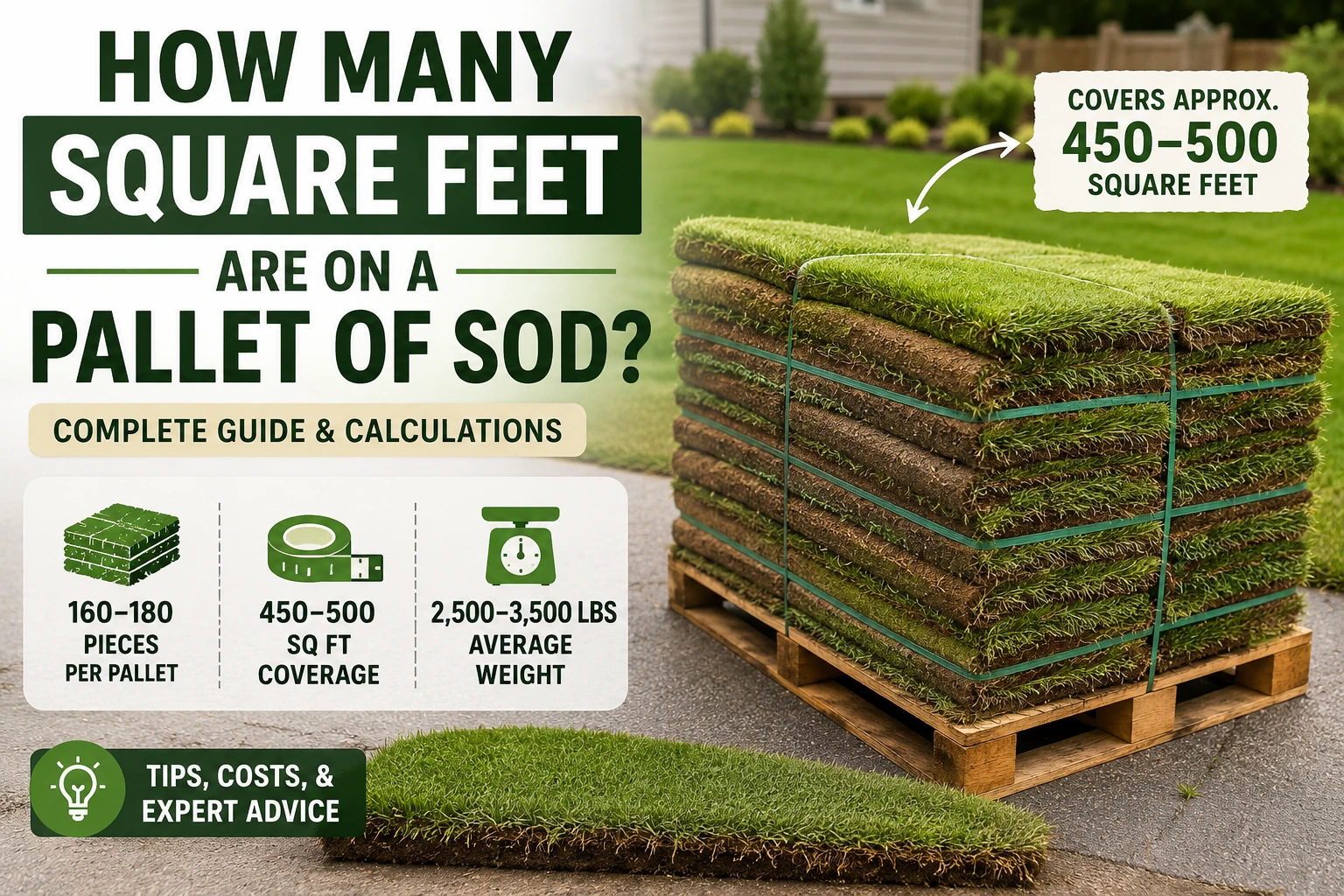
In most cases, a standard pallet of sod covers between 450 and 500 square feet. However, the exact coverage depends on the grass variety, sod farm, roll size, and your location. Some pallets contain slightly more or less sod, so it’s always a good idea to confirm the coverage with your supplier before placing an order.
This guide explains everything you need to know about sod pallet sizes, coverage calculations, costs, and expert tips to help you buy with confidence.
What Is a Pallet of Sod?
A pallet of sod is a stack of freshly harvested grass rolls or slabs that includes grass, roots, and a thin layer of soil. The pieces are harvested from commercial sod farms, stacked on wooden pallets, and delivered ready for installation.
Unlike grass seed, sod creates an instant lawn. Once installed and watered correctly, the roots begin attaching to the soil within a few weeks.
What Does Sod Mean?
Sod is mature grass that has already been grown by professionals. Instead of waiting months for grass seed to grow, homeowners can enjoy an established green lawn immediately after installation.
Benefits include:
- Instant curb appeal
- Reduced soil erosion
- Less weed growth
- Faster establishment
- Cleaner landscaping appearance
How Many Square Feet Are on a Pallet of Sod?
The answer depends on the supplier, but the industry standard is fairly consistent.
| Sod Pallet Type | Average Coverage |
|---|---|
| Small pallet | 400 sq ft |
| Standard pallet | 450 sq ft |
| Large pallet | 500 sq ft |
| Commercial pallet | Up to 600 sq ft |
For most residential projects, you can safely assume 450–500 square feet per pallet.
Many sod farms package their pallets so they are easy to transport while providing enough grass to cover a moderate-sized front yard.
Standard Sod Pallet Coverage
Most suppliers sell pallets containing:
- 165–180 individual sod pieces
- Approximately 450 square feet
- Total weight between 2,500 and 3,500 pounds
Because sod contains moisture and soil, its weight changes depending on when it was harvested and recent weather conditions.
Coverage by Grass Type
Different grass species may have slightly different pallet sizes.
| Grass Type | Typical Coverage |
|---|---|
| Bermuda | 450–500 sq ft |
| Kentucky Bluegrass | 450 sq ft |
| Tall Fescue | 450 sq ft |
| St. Augustine | 450 sq ft |
| Zoysia | 450–500 sq ft |
| Centipede | 450 sq ft |
Although the coverage is similar, roll sizes may differ depending on the farm.
Coverage by Region
Regional growing practices also affect pallet sizes.
For example:
- Southern states often package Bermuda and St. Augustine in larger rolls.
- Northern suppliers may use smaller slabs for Kentucky Bluegrass.
- Some local sod farms sell by square foot instead of standardized pallets.
Always ask your supplier exactly how many square feet are included.
Standard Sod Pallet Sizes
Understanding pallet dimensions makes it easier to estimate transportation and installation needs.
Number of Sod Pieces
Most pallets contain:
- 160–180 slabs
- 450–500 square feet
- Individual pieces measuring approximately 16 × 24 inches or similar sizes
Some farms produce larger “big rolls” for commercial landscaping, while residential projects usually receive smaller, easier-to-handle pieces.
Average Weight
A full pallet typically weighs:
| Condition | Approximate Weight |
|---|---|
| Freshly cut | 2,500–3,500 lbs |
| Wet after rain | Up to 4,000 lbs |
| Dry | Around 2,000–2,500 lbs |
This weight is one reason suppliers usually deliver sod using trucks equipped with forklifts.
Typical Dimensions
A standard pallet generally measures:
- Width: 40–48 inches
- Length: 48 inches
- Height: 24–30 inches
The exact dimensions vary by supplier, but these measurements fit most delivery vehicles and forklifts.
Sod Coverage Chart
The following table makes estimating coverage simple.
| Lawn Size | Pallets Needed |
|---|---|
| 250 sq ft | 1 pallet |
| 450 sq ft | 1 pallet |
| 500 sq ft | 1 pallet |
| 900 sq ft | 2 pallets |
| 1,350 sq ft | 3 pallets |
| 1,800 sq ft | 4 pallets |
| 2,250 sq ft | 5 pallets |
| 4,500 sq ft | 10 pallets |
Since sod cannot always be purchased in partial pallets, many homeowners order slightly more than their exact calculation.
How to Calculate How Much Sod You Need
Measuring your yard correctly helps prevent costly mistakes.
Measure Your Lawn
Use a measuring tape or measuring wheel to determine the length and width of every lawn section.
For simple rectangular yards:
Square Feet = Length × Width
Example:
- Length: 40 feet
- Width: 30 feet
40 × 30 = 1,200 square feet
For irregular-shaped lawns, divide the space into smaller rectangles or squares and calculate each section separately before adding the totals.
Subtract Areas Without Grass
Don’t include areas covered by:
- Driveways
- Sidewalks
- Patios
- Garden beds
- Decks
- Pools
- Storage sheds
Subtracting these features gives a more accurate estimate and prevents overordering.
Add Extra Sod for Waste
Even with careful measurements, you’ll likely need to trim some sod pieces around curved flower beds, trees, walkways, and landscape borders. That’s why professionals recommend ordering a little more than your calculated square footage.
A good rule of thumb is:
| Lawn Shape | Extra Sod to Order |
|---|---|
| Simple rectangular lawn | 5% extra |
| Lawn with curves | 8–10% extra |
| Complex landscape | 10–15% extra |
For example:
- Measured lawn = 1,000 sq ft
- Add 10% waste = 100 sq ft
- Total order = 1,100 sq ft
Ordering slightly more is usually less expensive than arranging a second delivery for a few missing pieces.
How Many Pallets Do You Need?
Once you know your lawn’s square footage, divide it by the coverage of one pallet.
Formula:
Number of Pallets = Total Lawn Square Feet ÷ Coverage Per Pallet
If one pallet covers 450 square feet, here are some examples.
Coverage Examples
| Lawn Size | Coverage per Pallet | Pallets Needed |
|---|---|---|
| 450 sq ft | 450 sq ft | 1 |
| 700 sq ft | 450 sq ft | 2 |
| 900 sq ft | 450 sq ft | 2 |
| 1,200 sq ft | 450 sq ft | 3 |
| 1,800 sq ft | 450 sq ft | 4 |
| 2,500 sq ft | 450 sq ft | 6 |
Always round up rather than down because partial pallets are not always available.
Quick Reference Table
| Yard Size | Recommended Order |
|---|---|
| Small front yard | 1 pallet |
| Medium suburban lawn | 2–3 pallets |
| Large residential yard | 4–6 pallets |
| Commercial property | 8+ pallets |
Factors That Affect Sod Coverage
Although most pallets cover around 450–500 square feet, several factors can change the actual amount you receive.
Grass Variety
Different grass species are harvested using different equipment.
For example:
- Bermuda often comes in smaller, tightly packed pieces.
- St. Augustine is commonly sold in larger slabs.
- Zoysia may have thicker root systems that slightly affect packaging.
Coverage remains similar, but the number and size of pieces can vary.
Farm Practices
Every sod farm has its own harvesting and packaging methods.
Some suppliers sell:
- 400-square-foot pallets
- 450-square-foot pallets
- 500-square-foot pallets
Always verify the coverage listed on your invoice before purchasing.
Moisture Content
Freshly watered sod weighs much more than dry sod. While this doesn’t change the square footage, it affects transportation, unloading, and handling.
Heavy pallets may require specialized equipment for delivery.
Roll Size
Residential sod is commonly cut into manageable slabs, while commercial projects may use large rolls that cover hundreds of square feet each.
Large rolls reduce installation time but require machinery to install.
Cost of One Pallet of Sod
The total price depends on grass type, location, season, and supplier.
Average Sod Prices
| Grass Type | Average Price per Pallet |
|---|---|
| Bermuda | $180–$300 |
| Tall Fescue | $200–$350 |
| Kentucky Bluegrass | $220–$400 |
| St. Augustine | $180–$350 |
| Zoysia | $250–$450 |
Premium or specialty grass varieties generally cost more because they require longer growing periods.
Delivery Costs
Many suppliers charge separately for delivery.
Typical delivery fees include:
- Local delivery: $50–$150
- Long-distance delivery: $150–$300+
Ordering multiple pallets at once may reduce the delivery cost per pallet.
Installation Costs
If you hire professionals, installation is usually priced by square foot.
Typical labor rates range from:
- $1–$2 per square foot, including preparation and installation.
DIY installation can save money but requires proper planning, watering, and timely installation.
Buying Tips Before Ordering Sod
Choosing quality sod is just as important as ordering the correct amount.
Measure Twice
Small measuring errors can become expensive on larger lawns.
Double-check every section before placing your order.
Ask About Coverage
Never assume every pallet covers exactly 500 square feet.
Ask the supplier:
- How many square feet are included?
- How many pieces are on the pallet?
- What are the dimensions of each piece?
Buy Fresh Sod
Fresh sod establishes faster.
Look for sod that has:
- Bright green color
- Dense root system
- Moist soil
- Minimal yellowing
- No foul odor
Avoid pallets that have been sitting in the sun for several days.
Install Immediately
Sod is a living product.
For the best results:
- Install within 24 hours of delivery.
- Water immediately after laying the sod.
- Keep the soil consistently moist during the first few weeks.
Prompt installation improves root establishment and reduces stress on the grass.
Common Mistakes When Buying Sod
Many first-time buyers make avoidable mistakes that lead to extra costs or poor lawn performance.
Here are some of the most common ones:
- Forgetting to subtract patios, driveways, and garden beds from measurements.
- Ordering exactly the calculated square footage without allowing for waste.
- Assuming every supplier sells identical pallet sizes.
- Waiting too long to install freshly delivered sod.
- Failing to prepare the soil before installation.
- Choosing a grass variety that isn’t suited to the local climate.
- Underestimating the amount of water new sod needs during establishment.
Avoiding these mistakes can help your lawn establish more quickly and look healthier from the start.
FAQs
How many square feet are on a standard pallet of sod?
A standard pallet of sod usually covers 450 to 500 square feet, although coverage varies slightly by supplier and grass type.
How many pieces of sod are on one pallet?
Most residential pallets contain 160 to 180 individual sod pieces, depending on the dimensions of each slab.
How do I calculate how many pallets of sod I need?
Measure your lawn’s square footage and divide it by the coverage of one pallet. Always round up and add 5–10% extra for cutting and waste.
Does every sod supplier sell the same pallet size?
No. Some suppliers sell pallets covering 400 square feet, while others package 450 or 500 square feet. Confirm the coverage before ordering.
Should I order extra sod?
Yes. Ordering an additional 5–10% helps account for trimming, irregular lawn shapes, and unexpected installation waste.
Conclusion
If you’ve been wondering how many square feet are on a pallet of sod, the answer is straightforward for most residential projects. A standard pallet typically covers 450 to 500 square feet, making it easy to estimate how many pallets you’ll need for your lawn.
Before ordering, carefully measure your yard, subtract non-grass areas, and include an extra 5–10% to account for trimming and waste. Since pallet sizes can vary by supplier and grass type, always verify the exact coverage before making a purchase.
By planning ahead and choosing fresh, high-quality sod, you’ll avoid unnecessary costs and enjoy a healthy, attractive lawn that establishes quickly. Whether you’re replacing a small patch of grass or installing an entirely new landscape, understanding pallet coverage is the first step toward a successful sod installation.
Discover more