

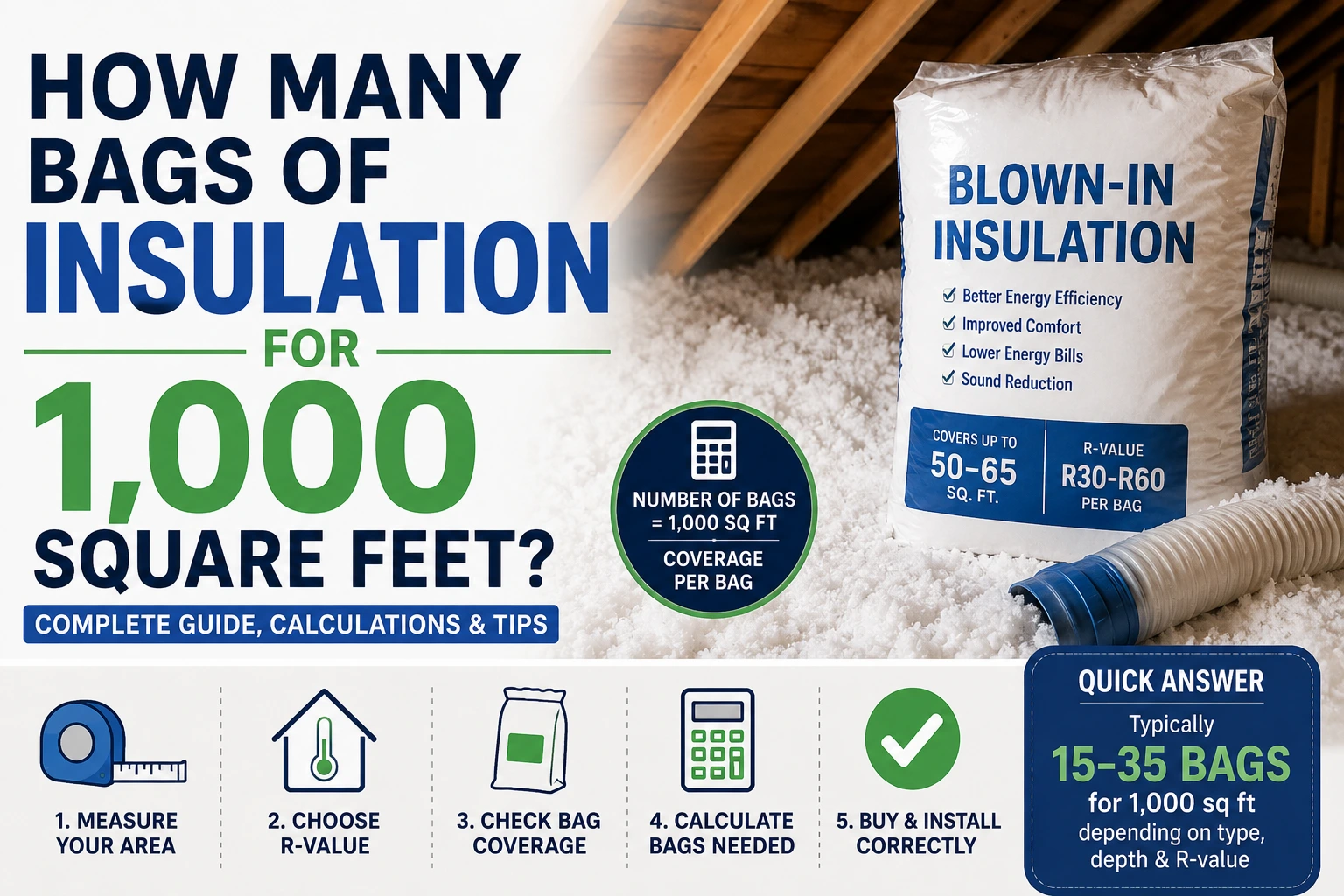
Insulating your home is one of the smartest ways to improve comfort and lower energy bills. Before buying materials, one question often comes up: how many bags of insulation for 1,000 square feet do you actually need?
The answer depends on several factors, including the insulation type, the desired R-value, the depth of insulation, and whether you’re adding insulation over an existing layer. A project that requires 15 bags in one home may need 30 or more bags in another.
This guide explains how to estimate insulation bags accurately, provides coverage charts, example calculations, and practical tips to help you avoid buying too much—or too little—material.
Why the Number of Bags Varies
There isn’t one universal answer because every insulation project is different.
The most important factors include:
- Type of insulation
- Recommended R-value
- Existing insulation level
- Manufacturer coverage per bag
- Installation depth
- Climate zone
Each of these affects how much material you’ll need.
Insulation Material
Different insulation materials have different densities and coverage rates.
The most common options include:
- Blown fiberglass
- Cellulose
- Mineral wool
- Loose-fill fiberglass
Each product lists its coverage on the packaging.
Desired R-Value
R-value measures insulation’s resistance to heat flow.
Higher R-values require more insulation thickness, which means more bags.
For example:
| Target R-Value | Bags Required |
|---|---|
| Lower R-value | Fewer bags |
| Medium R-value | Moderate bags |
| Higher R-value | More bags |
Existing Insulation
If your attic already has insulation, you’re only adding enough to reach the recommended level.
This often reduces the number of bags needed significantly.
How to Calculate Bags of Insulation for 1,000 Square Feet
A simple three-step process helps estimate your project.
Step 1: Measure the Area
Calculate the attic or floor area.
Example:
Length × Width
40 ft × 25 ft
= 1,000 square feet
Step 2: Choose Your Recommended R-Value
The recommended R-value depends on your climate.
Examples:
- Warm climates: R-30 to R-38
- Moderate climates: R-38 to R-49
- Cold climates: R-49 to R-60
Higher insulation levels improve energy efficiency but require more material.
Step 3: Check the Bag Coverage
Every insulation manufacturer includes a coverage chart.
Example:
One bag may cover:
- 65 sq ft
- 45 sq ft
- 35 sq ft
depending on insulation depth.
Use this formula:
Number of Bags = Total Square Feet ÷ Coverage per Bag
Coverage Chart for Common Insulation Types
The table below provides general estimates. Always verify the manufacturer’s specifications before purchasing.
| Insulation Type | Approximate Coverage per Bag | Estimated Bags for 1,000 sq ft |
|---|---|---|
| Blown Fiberglass (lower depth) | 65–75 sq ft | 14–16 bags |
| Blown Fiberglass (higher R-value) | 40–55 sq ft | 19–25 bags |
| Cellulose | 30–45 sq ft | 23–34 bags |
| Loose Fill Mineral Wool | 25–40 sq ft | 25–40 bags |
These numbers are estimates only and vary by product.
Example Calculations
Let’s look at a few practical examples.
Example 1: Fiberglass
Suppose one bag covers 50 square feet.
Calculation:
1,000 ÷ 50
= 20 bags
You would purchase approximately 20 bags.
Example 2: Cellulose
Suppose coverage is 35 square feet per bag.
Calculation:
1,000 ÷ 35
= 28.6 bags
Round up.
You’ll need 29 bags.
Example 3: High R-Value Installation
If the insulation depth increases and one bag covers only 30 square feet:
1,000 ÷ 30
= 33.3
Round up to 34 bags.
Recommended R-Values by Climate
Different regions have different insulation recommendations.
| Climate | Recommended Attic R-Value |
|---|---|
| Hot climates | R-30 to R-38 |
| Mixed climates | R-38 to R-49 |
| Cold climates | R-49 to R-60 |
| Very cold climates | R-60 or higher |
Higher R-values improve comfort and reduce heating or cooling costs.
Factors That Affect Bag Requirements
Several real-world conditions influence the final estimate.
Ceiling Shape
Cathedral ceilings require different installation depths than flat attics.
Settling
Cellulose insulation naturally settles over time.
Manufacturers account for this, but it’s important to follow their recommended installation depth.
Obstructions
Ductwork
Electrical wiring
Lighting fixtures
Roof framing
These reduce usable space and can affect material requirements.
Compression
Compressed insulation loses effectiveness.
Proper installation maintains the correct depth and R-value.
Waste
Professionals often purchase an extra 5–10% of material to account for waste and unexpected gaps.
Average Cost Estimate
The total project cost depends on insulation type and local prices.
Example estimate:
| Bags Needed | Average Cost per Bag | Estimated Material Cost |
|---|---|---|
| 15 bags | $40 | $600 |
| 20 bags | $40 | $800 |
| 25 bags | $40 | $1,000 |
| 30 bags | $40 | $1,200 |
Labor costs are additional if hiring an installer.
Benefits of Proper Insulation
Installing the correct amount of insulation provides several advantages.
Lower Energy Bills
Heating and cooling systems work less when insulation performs well.
Better Indoor Comfort
Rooms stay warmer in winter and cooler in summer.
Reduced Noise
Insulation absorbs sound between rooms and from outside.
Increased Home Value
Energy-efficient homes are attractive to buyers.
Less HVAC Wear
Heating and cooling equipment doesn’t need to run as frequently.
Common Mistakes to Avoid
Many DIY projects go wrong because of simple estimating errors.
Avoid these mistakes:
- Buying based only on square footage
- Ignoring manufacturer coverage charts
- Choosing the wrong R-value
- Compressing insulation
- Forgetting existing insulation
- Not measuring attic dimensions accurately
- Underestimating material waste
Taking accurate measurements before shopping can save both time and money.
Expert Tips Before Buying Insulation
Professionals recommend following these best practices.
Read Every Product Label
Coverage varies significantly between manufacturers.
Buy Slightly More Than Needed
Running out of insulation during installation slows the project.
Consider Rental Equipment
Many home improvement stores provide blower machine rentals when purchasing a minimum number of insulation bags.
Seal Air Leaks First
Before adding insulation:
- Seal cracks
- Close gaps
- Weatherstrip openings
Air sealing improves insulation performance.
Wear Safety Equipment
Loose-fill insulation creates dust.
Wear:
- Safety glasses
- Gloves
- Long sleeves
- Dust mask or respirator
FAQs
How many bags of insulation for 1,000 square feet are usually needed?
Most projects require between 15 and 35 bags, depending on insulation type, coverage per bag, and the target R-value.
How do I calculate insulation bags accurately?
Divide the total square footage by the manufacturer’s listed coverage per bag, then round up to the next whole bag.
Does insulation type affect the number of bags?
Yes. Fiberglass, cellulose, and mineral wool have different densities, so the number of bags varies even for the same area.
Should I remove old insulation before adding new insulation?
Not always. If the existing insulation is dry, clean, and in good condition, additional insulation can often be installed over it. Damaged or moldy insulation should be removed first.
Can I install blown insulation myself?
Yes. Many homeowners complete DIY installations using rental blower machines, although larger projects may benefit from professional installation.
Conclusion
Knowing how many bags of insulation for 1,000 square feet requires more than measuring your attic. The correct estimate depends on the insulation material, desired R-value, manufacturer coverage, existing insulation, and installation depth. While many projects fall between 15 and 35 bags, always rely on the product’s coverage chart for the most accurate calculation. Careful planning, precise measurements, and selecting the right insulation for your climate will improve energy efficiency, increase indoor comfort, and help you avoid unnecessary material costs. By following the steps and examples in this guide, you can confidently estimate the insulation needed for your next home improvement project.
Discover more