

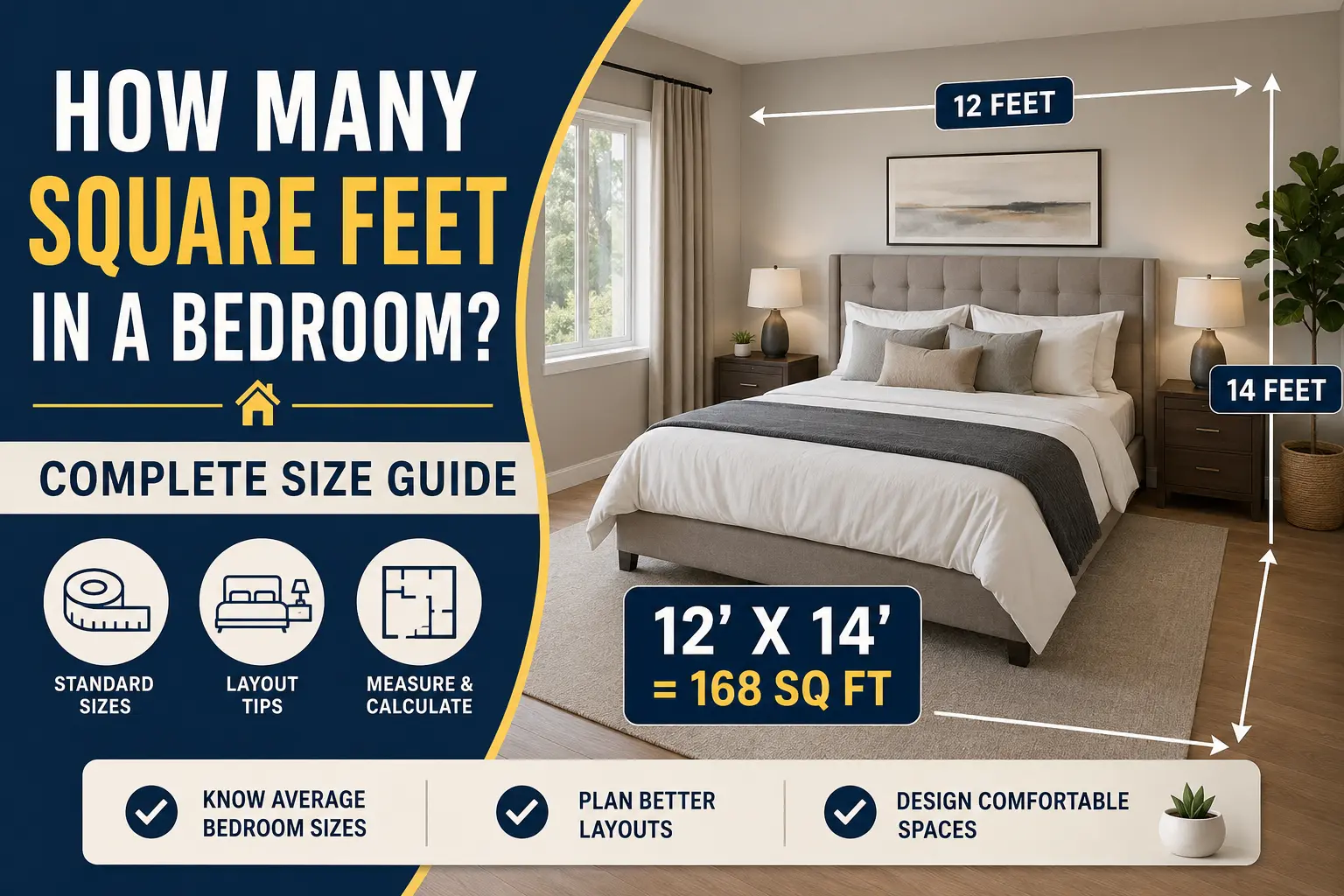
When planning a home, buying furniture, or renting an apartment, many people ask the same question: how many square feet in a bedroom? The answer depends on the type of bedroom, the home design, and local building standards. Some bedrooms are compact and functional, while others are large luxury spaces with sitting areas and walk-in closets.
Understanding bedroom square footage helps you choose the right furniture, improve room layout, and make smarter real estate decisions. Whether you are designing a master bedroom, guest room, or child’s bedroom, knowing standard dimensions can save time and money.
In most homes, a standard bedroom ranges from 100 to 200 square feet. Smaller rooms may be around 70 square feet, while master bedrooms often exceed 250 square feet.
What Does Square Footage Mean in a Bedroom?
Square footage refers to the total floor area inside a room. It is calculated by multiplying the room’s length by its width.
For example:
Square Feet=Length×Width
If a bedroom measures 10 feet by 12 feet:
10×12=120 square feet
That room contains 120 square feet of floor space.
Why Bedroom Size Matters
Bedroom size affects many important factors, including:
- Comfort and movement
- Furniture placement
- Home resale value
- Storage options
- Natural lighting
- Privacy and functionality
A room that is too small may feel cramped. A larger room provides flexibility but can cost more to furnish and heat.
Average Bedroom Sizes Explained
There is no single answer to how many square feet in a bedroom because bedroom types vary widely.
Standard Bedroom Size
A standard bedroom is usually around 10 feet by 10 feet or 10 feet by 12 feet.
Typical square footage:
- 100 to 120 square feet
This size is common in apartments, starter homes, and guest rooms.
Master Bedroom Dimensions
Master bedrooms are much larger because they often include:
- King-size beds
- Seating areas
- Large closets
- Attached bathrooms
Average master bedroom size:
- 200 to 300 square feet
Common dimensions include:
- 14 x 16 feet
- 15 x 18 feet
Guest Bedroom Size
Guest bedrooms are generally modest in size but comfortable enough for visitors.
Average guest bedroom:
- 100 to 150 square feet
Kids’ Bedroom Measurements
Children’s bedrooms are often smaller than master bedrooms.
Typical range:
- 80 to 120 square feet
These rooms are designed for:
- Single beds
- Study desks
- Toy storage
How to Calculate Bedroom Square Feet
Measuring a bedroom is simple if the room is rectangular.
Step-by-Step Formula
- Measure the room length
- Measure the room width
- Multiply both numbers
Example:
12×14=168 square feet
A 12-foot by 14-foot bedroom equals 168 square feet.
Measuring Irregular Bedrooms
Some bedrooms include:
- Closets
- Angled walls
- Small alcoves
In these cases:
- Divide the room into smaller rectangles
- Calculate each section separately
- Add the totals together
Common Bedroom Dimensions and Square Footage Table
| Bedroom Dimensions | Square Feet | Bedroom Type |
|---|---|---|
| 8 x 10 | 80 sq ft | Small bedroom |
| 10 x 10 | 100 sq ft | Standard bedroom |
| 10 x 12 | 120 sq ft | Average bedroom |
| 11 x 12 | 132 sq ft | Medium bedroom |
| 12 x 12 | 144 sq ft | Comfortable bedroom |
| 12 x 14 | 168 sq ft | Large bedroom |
| 14 x 16 | 224 sq ft | Master bedroom |
| 15 x 18 | 270 sq ft | Luxury master bedroom |
This table helps homeowners quickly estimate bedroom size categories.
Minimum Bedroom Size Requirements
Many countries and states have building codes that define legal bedroom requirements.
Basic Minimum Size
In many areas, a bedroom must contain at least:
70 square feet
Additionally:
- No wall should be less than 7 feet long
Ceiling Height Rules
Bedrooms usually require:
- At least 7-foot ceiling height across most of the room
Window and Exit Standards
Legal bedrooms typically need:
- A window for ventilation
- Emergency escape access
- Natural light
These rules improve safety and livability.
Small vs Medium vs Large Bedrooms
Bedroom sizes can generally be divided into three categories.
Small Bedrooms
Size:
- 70 to 100 square feet
Common features:
- Twin bed
- Compact furniture
- Limited storage
Best for:
- Kids
- Guest rooms
- Studio apartments
Medium Bedrooms
Size:
- 100 to 200 square feet
These rooms can usually fit:
- Queen-size beds
- Dressers
- Nightstands
- Work desks
This is the most common bedroom category in modern homes.
Large Bedrooms
Size:
- 200+ square feet
Large bedrooms may include:
- Sitting areas
- Walk-in closets
- Entertainment centers
Luxury homes often feature oversized bedrooms.
Best Furniture Layout Based on Bedroom Size
Furniture placement matters as much as square footage.
Small Bedroom Setup
For small bedrooms:
- Use wall-mounted shelves
- Choose storage beds
- Avoid oversized furniture
- Keep walkways open
Ideal furniture:
- Twin or full-size bed
- Small dresser
- Narrow desk
Medium Bedroom Arrangement
A medium-sized bedroom offers more flexibility.
You can include:
- Queen-size bed
- Two nightstands
- Wardrobe
- Desk or vanity
Maintain at least:
- 2 to 3 feet of walking space
Large Bedroom Ideas
Large bedrooms allow creative layouts.
Popular additions:
- Reading corners
- Lounge chairs
- TV units
- Fireplace walls
However, avoid leaving large empty spaces that make the room feel cold.
Factors That Affect Bedroom Square Footage
Several factors influence bedroom size.
Apartment vs House Bedrooms
Apartment bedrooms are often smaller due to limited floor plans.
Average apartment bedroom:
- 90 to 120 square feet
House bedrooms:
- 120 to 250+ square feet
Modern vs Older Homes
Older homes sometimes have:
- Smaller bedrooms
- Lower ceilings
Modern homes usually prioritize:
- Open layouts
- Larger master suites
Luxury Bedroom Trends
Luxury homes now feature:
- Oversized bedrooms
- Spa-style bathrooms
- Dressing rooms
- Private balconies
These bedrooms may exceed:
- 400 square feet
Common Mistakes When Measuring Bedroom Space
Many homeowners make simple measuring errors.
Including Closets Incorrectly
Some people count closets as bedroom space while others do not. Real estate rules vary by location.
Ignoring Wall Angles
Irregular walls can reduce usable floor space.
Forgetting Furniture Clearance
A room may technically fit furniture but still feel crowded.
Always leave enough space for:
- Walking
- Door openings
- Drawer access
Measuring Only Carpet Area
Full bedroom measurements should include the entire usable floor area.
Tips to Make a Small Bedroom Feel Bigger
Even a small bedroom can feel spacious with smart design choices.
Use Light Colors
White and neutral tones reflect more light.
Add Mirrors
Mirrors create the illusion of depth and openness.
Choose Multi-Functional Furniture
Examples include:
- Beds with drawers
- Foldable desks
- Storage benches
Reduce Clutter
Minimal furniture improves movement and comfort.
Maximize Vertical Space
Install:
- Tall shelves
- Hanging organizers
- Wall hooks
These tricks help smaller bedrooms feel more functional.
Bedroom Size Comparison With Other Rooms
Bedrooms are usually smaller than living rooms but larger than bathrooms.
| Room Type | Average Square Feet |
|---|---|
| Bathroom | 40–100 sq ft |
| Small Bedroom | 70–100 sq ft |
| Standard Bedroom | 100–150 sq ft |
| Living Room | 200–350 sq ft |
| Master Bedroom | 200–300 sq ft |
| Garage | 240–400 sq ft |
This comparison helps homeowners better visualize bedroom space within a home layout.
FAQs
What is the average size of a bedroom?
The average bedroom is usually between 100 and 200 square feet depending on the type of home and room purpose.
Is 100 square feet enough for a bedroom?
Yes. A 100-square-foot bedroom can comfortably fit a bed, small dresser, and nightstand.
What is the minimum legal size for a bedroom?
In many areas, the minimum legal bedroom size is 70 square feet with at least one window and proper ceiling height.
How do I calculate bedroom square footage?
Multiply the room’s length by its width.
Example:
11×12=132 square feet
Is a 12×12 bedroom considered large?
A 12×12 bedroom equals 144 square feet, which is considered a comfortable medium-sized bedroom.
Conclusion
Understanding how many square feet in a bedroom helps you design comfortable living spaces, choose furniture correctly, and evaluate property value more effectively. Most standard bedrooms range from 100 to 150 square feet, while master bedrooms are usually much larger.
The ideal bedroom size depends on your needs, lifestyle, and available space. Smaller bedrooms work well with smart layouts and storage solutions, while larger rooms provide flexibility and luxury. By measuring carefully and planning furniture placement properly, you can make any bedroom more functional and comfortable regardless of its square footage.
Discover more
a quarter acre is how many square feet