
How Many Square Feet Does a Ton of Gravel Cover?
If you are planning a driveway, walkway, patio, or landscaping project, one of the most common questions is: how many square feet does a ton of gravel cover?
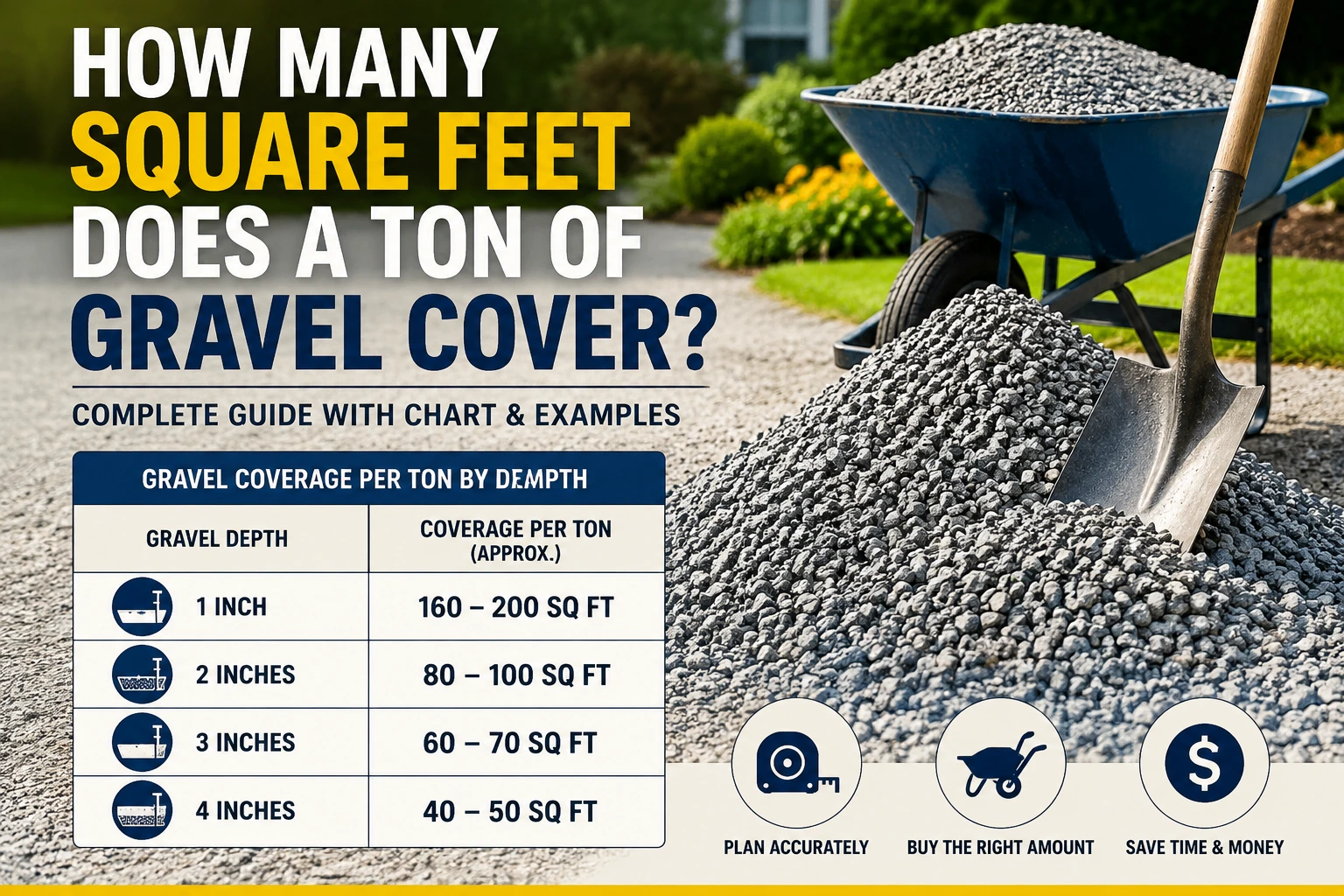
The answer depends mainly on the depth of the gravel layer. In general, one ton of gravel covers approximately 80 to 100 square feet at a depth of 2 inches. If the gravel layer is thinner, it covers more area. If it is thicker, it covers less.
Understanding gravel coverage helps you:
- Avoid buying too much material
- Prevent project delays
- Save money
- Get accurate landscaping estimates
Whether you are working on a small garden path or a large driveway, knowing how gravel coverage works is essential for successful planning.
Understanding Gravel Coverage
Before calculating gravel needs, it is important to understand what gravel coverage actually means.
What Does Gravel Coverage Mean?
Gravel coverage refers to the amount of area a certain quantity of gravel can cover at a specific depth.
For example:
- A thin layer spreads farther
- A deep layer covers less ground
This is why depth plays the biggest role in determining coverage.
Why Coverage Depends on Depth
Think about spreading butter on bread. A thin layer covers more bread, while a thick layer covers less. Gravel works the same way.
Here are common gravel depths:
- 1 inch for decorative landscaping
- 2 inches for walkways and patios
- 3–4 inches for driveways
The thicker the gravel, the fewer square feet one ton will cover.
Different Types of Gravel
Coverage can also vary slightly depending on gravel type.
Common options include:
- Pea gravel
- Crushed stone
- River rock
- Decorative gravel
- Quarry process gravel
Each material has a slightly different weight and density.
How Many Square Feet Does a Ton of Gravel Cover at Different Depths?
Here is the most important part of the calculation.
1-Inch Depth
At a depth of 1 inch, one ton of gravel covers approximately:
1 ton≈160−200 square feet at 1 inch depth
This depth works best for:
- Decorative garden areas
- Mulch replacement
- Light foot traffic zones
2-Inch Depth
At 2 inches deep, coverage becomes:
1 ton≈80−100 square feet at 2 inch depth
This is the most common depth for:
- Walkways
- Small patios
- Landscape borders
3-Inch Depth
At 3 inches deep, one ton covers less area:
1 ton≈60−70 square feet at 3 inch depth
This depth is often recommended for:
- Driveways
- Heavy traffic areas
- Parking spaces
Gravel Coverage Chart
| Gravel Depth | Approximate Coverage Per Ton |
|---|---|
| 1 inch | 160–200 sq ft |
| 2 inches | 80–100 sq ft |
| 3 inches | 60–70 sq ft |
| 4 inches | 40–50 sq ft |
This chart provides a quick estimate for most residential projects.
Formula to Calculate Gravel Coverage
You can estimate gravel needs using a simple formula.
Basic Gravel Formula
The basic formula is:
Area Covered=DepthVolume
Most homeowners use online gravel calculators, but understanding the math helps improve accuracy.
Step-by-Step Example
Suppose you want to cover a driveway:
- Length = 20 feet
- Width = 10 feet
- Depth = 2 inches
First, calculate total area:
20×10=200 square feet
At 2 inches deep, one ton covers around 80–100 square feet.
So you would need approximately:
100200=2 tons approximately
Calculating Area in Square Feet
To calculate square footage:
Square Feet=Length×Width
Always measure carefully before ordering gravel.
Factors That Affect Gravel Coverage
Many people assume all gravel covers the same amount of space, but several factors change the results.
Gravel Size
Larger gravel pieces leave more empty spaces between stones.
Examples:
- Pea gravel packs tightly
- River rock leaves gaps
- Crushed stone compacts better
Because of this, coverage can vary slightly.
Moisture and Compaction
Wet gravel weighs more than dry gravel.
Compacted gravel also covers less area because the stones settle tightly together.
Surface Type
Uneven surfaces need more gravel than flat surfaces.
For example:
- Sloped driveways require extra material
- Soft soil may absorb gravel
- Rough terrain increases depth needs
Waste and Spillage
Some gravel is always lost during:
- Transportation
- Dumping
- Spreading
- Raking
Most contractors recommend ordering 5–10% extra material.
Real-Life Examples of Gravel Coverage
Here are practical examples to help you estimate your project.
Driveways
A standard single-car driveway may measure:
- 10 feet wide
- 20 feet long
Total area:
10×20=200 square feet
At 3 inches deep, you may need around 3 tons of gravel.
Walkways
A garden walkway might be:
- 3 feet wide
- 15 feet long
Total coverage area:
3×15=45 square feet
One ton is usually more than enough.
Patios
Small backyard patios often require:
- 2-inch gravel depth
- Compact gravel base
A 100-square-foot patio typically needs around 1 ton of gravel.
Garden Landscaping
Decorative gravel for flower beds often uses only a 1-inch layer, allowing one ton to cover a much larger area.
Gravel Coverage by Gravel Type
Different gravel materials affect coverage and appearance.
Pea Gravel
Pea gravel is smooth and decorative.
Best for:
- Gardens
- Playgrounds
- Decorative paths
Coverage is usually moderate because stones settle tightly.
Crushed Stone
Crushed stone compacts well and provides excellent stability.
Ideal for:
- Driveways
- Parking areas
- Base layers
River Rock
River rock is larger and more decorative.
It usually covers slightly less area because of larger stone sizes.
Decorative Gravel
Decorative gravel comes in different colors and textures.
Popular for:
- Landscaping
- Water features
- Modern outdoor designs
Common Mistakes When Estimating Gravel
Many gravel projects fail because of simple estimation errors.
Ignoring Depth
People often calculate square footage but forget gravel depth.
Depth changes everything.
Forgetting Extra Material
Always order slightly more gravel than calculated.
Extra material helps cover:
- Uneven areas
- Future touch-ups
- Spillage
Incorrect Measurements
Even small measuring errors can lead to major shortages.
Measure:
- Length accurately
- Width carefully
- Depth consistently
Expert Tips for Buying Gravel
Here are professional tips to improve your project.
Order Extra Gravel
Most experts recommend:
- 5–10% extra for small projects
- 10–15% extra for large projects
Use Weed Barriers
Landscape fabric underneath gravel helps:
- Prevent weeds
- Improve drainage
- Extend gravel life
Choose the Right Depth
Recommended depths:
- 1 inch for decoration
- 2 inches for pathways
- 3–4 inches for driveways
Choosing the correct depth improves durability.
Benefits of Using Gravel
Gravel remains one of the most popular landscaping materials for good reason.
Affordable
Gravel costs less than:
- Concrete
- Pavers
- Asphalt
Easy Installation
Most gravel projects require minimal tools.
Excellent Drainage
Water flows easily through gravel surfaces.
Attractive Appearance
Decorative gravel enhances:
- Gardens
- Driveways
- Outdoor living spaces
Quick Gravel Estimation Table
| Project Type | Recommended Depth | Coverage Per Ton |
|---|---|---|
| Flower beds | 1 inch | 160–200 sq ft |
| Walkways | 2 inches | 80–100 sq ft |
| Patios | 2 inches | 80–100 sq ft |
| Driveways | 3–4 inches | 40–70 sq ft |
This table provides a quick planning reference for common projects.
FAQs
1. How many square feet does a ton of gravel cover at 2 inches deep?
A ton of gravel usually covers about 80–100 square feet at a depth of 2 inches.
2. How much gravel do I need for a 200-square-foot driveway?
At 2 inches deep, you typically need about 2 tons of gravel for 200 square feet.
3. Does gravel size affect coverage?
Yes. Larger gravel pieces leave more gaps, which can slightly reduce coverage.
4. How deep should gravel be for a driveway?
Most driveways require 3–4 inches of gravel for durability and proper support.
5. Should I order extra gravel?
Yes. Ordering 5–10% extra helps cover waste, uneven areas, and future maintenance.
Conclusion
Understanding how many square feet does a ton of gravel cover is essential for planning landscaping, driveway, patio, and construction projects accurately. In most cases, one ton of gravel covers about 80–100 square feet at a 2-inch depth, but the exact amount depends on gravel type, depth, and surface conditions.
By using proper calculations, measuring carefully, and choosing the right gravel depth, you can avoid costly mistakes and ensure your project looks professional and lasts longer. Whether you are creating a decorative garden path or building a durable driveway, accurate gravel estimation saves both time and money.
Keep the coverage charts and formulas handy, order slightly more material than needed, and always consider the intended use of the area before choosing your gravel depth.
Discover More: