
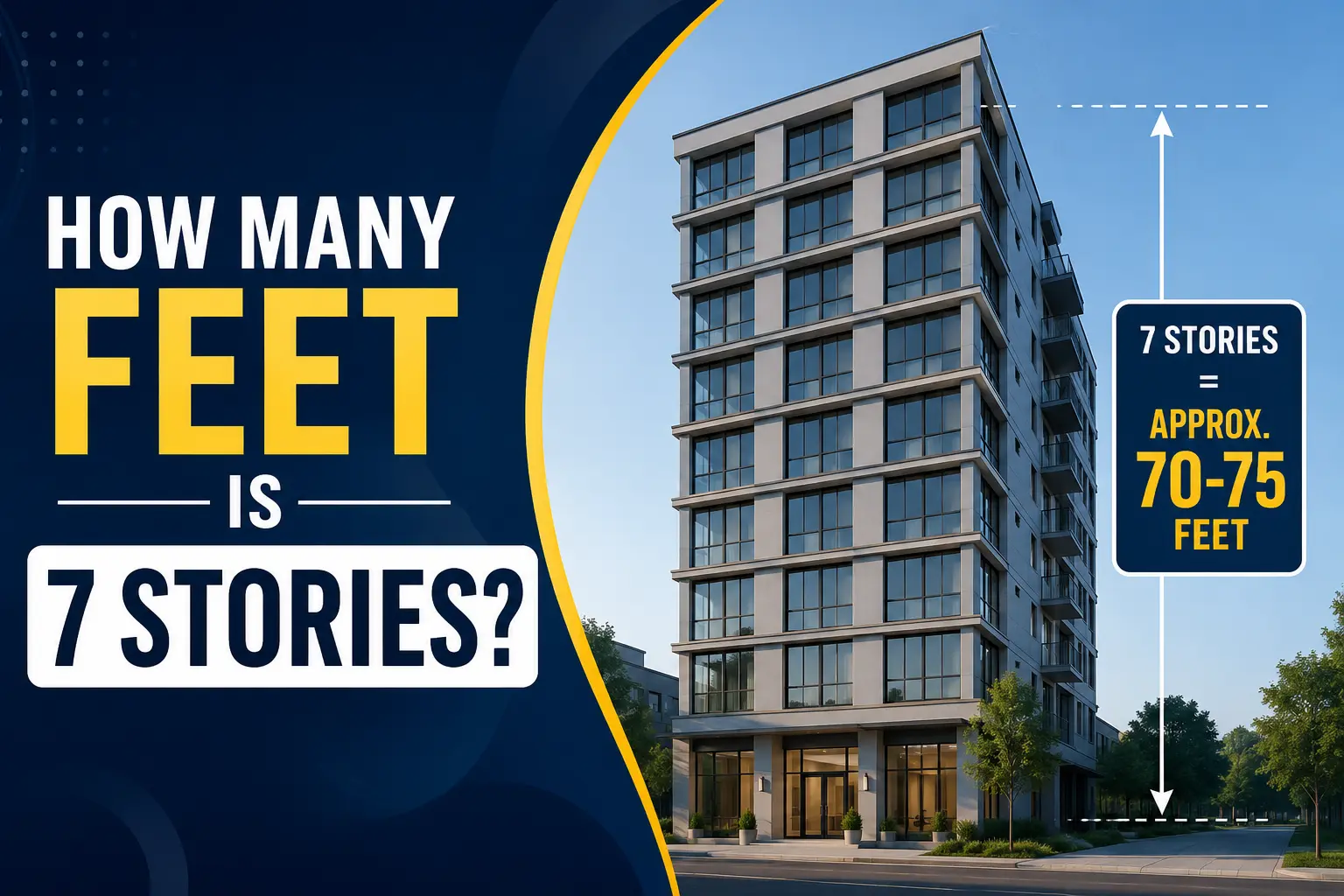
If you have ever looked at a mid-rise building and wondered, “how many feet is 7 stories?” you are not alone. This is one of the most common building measurement questions asked by students, property buyers, construction workers, and even writers trying to describe realistic structures.
The simple answer is that a 7-story building is usually between 70 and 100 feet tall. However, the exact height depends on the type of building, ceiling heights, roof structures, and whether the building is residential or commercial.
In most cases:
- Residential buildings average about 10 feet per story
- Commercial buildings average about 12 to 15 feet per story
That means a standard 7-story building is often around:
- 70 feet tall for residential buildings
- 84 to 105 feet tall for commercial buildings
Understanding story height is useful for construction planning, architecture, real estate comparisons, safety regulations, and even city zoning rules. In this guide, you will learn exactly how building stories convert into feet, what affects building height, and how to estimate heights accurately.
Understanding Building Story Height
Before calculating how many feet is 7 stories, it helps to understand what a “story” actually means in construction and architecture.
What Counts as One Story?
A story, also called a floor, is the space between one floor level and the next. In buildings, a story includes:
- Floor structure thickness
- Ceiling space
- Utility and wiring space
- Interior ceiling height
Many people assume one story equals exactly 10 feet, but this is only an average estimate.
Average Floor Height in Buildings
Different buildings use different floor-to-floor heights depending on their purpose.
Here are the common averages:
| Building Type | Average Height Per Story |
|---|---|
| Residential apartments | 9–10 feet |
| Hotels | 10–12 feet |
| Office buildings | 12–15 feet |
| Hospitals | 14–18 feet |
| Luxury buildings | 12–20 feet |
Because of these differences, the total height of 7 stories can vary significantly.
How Many Feet Is 7 Stories on Average?
The average height of 7 stories depends on the type of structure being measured.
Residential Building Height
Most apartment buildings and condos use approximately 10 feet per story.
Calculation:
7×10=70
So, a standard residential 7-story building is usually around 70 feet tall.
However, newer apartment buildings with higher ceilings may reach 75 to 80 feet.
Commercial Building Height
Commercial buildings typically need extra space for:
- HVAC systems
- Lighting systems
- Larger ceilings
- Raised floors
- Fire safety systems
These buildings often average 12 to 15 feet per story.
Calculation using 12 feet per story:
7×12=84
Calculation using 15 feet per story:
7×15=105
So, commercial 7-story buildings usually range from 84 to 105 feet tall.
Mixed-Use Structures
Mixed-use buildings combine apartments, offices, restaurants, or retail spaces.
In these buildings:
- Ground floors are often taller
- Residential upper floors may be shorter
- Mechanical spaces increase total height
A mixed-use 7-story structure often reaches 80 to 95 feet.
Quick Conversion Chart for Building Stories to Feet
Here is a useful comparison chart showing approximate building heights.
| Stories | Residential Height | Commercial Height |
|---|---|---|
| 1 story | 10 feet | 12–15 feet |
| 2 stories | 20 feet | 24–30 feet |
| 3 stories | 30 feet | 36–45 feet |
| 5 stories | 50 feet | 60–75 feet |
| 7 stories | 70 feet | 84–105 feet |
| 10 stories | 100 feet | 120–150 feet |
| 20 stories | 200 feet | 240–300 feet |
This chart helps estimate building height quickly without detailed architectural plans.
Factors That Affect the Height of a 7-Story Building
Even though averages are useful, several factors can change the total height of a building.
Ceiling Height
Ceiling height is one of the biggest factors.
Typical ceiling heights:
- Budget apartments: 8–9 feet
- Modern homes: 9–10 feet
- Luxury condos: 10–12 feet
- Offices: 11–15 feet
Higher ceilings increase the total building height quickly.
Mechanical Floors
Commercial buildings often contain mechanical levels that hold:
- Air conditioning systems
- Water tanks
- Electrical systems
- Elevator equipment
These floors may add several extra feet to the total height.
Roof Design
Roof style also matters.
A building with:
- Flat roofing stays shorter
- Decorative roofing becomes taller
- Penthouse designs add height
- Equipment on rooftops increases elevation
Building Type
Different structures follow different standards.
For example:
- Hotels prioritize comfort and larger rooms
- Hospitals require larger utility systems
- Office buildings need extra infrastructure
- Apartments usually use smaller floor heights
Residential vs Commercial 7-Story Buildings
Many people are surprised at how different 7-story buildings can look in height.
Apartment Buildings
Residential apartment buildings usually appear more compact because:
- Ceiling heights are lower
- Mechanical systems are smaller
- Utility spaces are limited
Average height:
- 70–80 feet
Hotels
Hotels generally have:
- Larger lobbies
- Event spaces
- Decorative architecture
Average height:
- 80–95 feet
Office Buildings
Office structures often look much taller because each floor includes:
- Suspended ceilings
- Wiring systems
- HVAC ducts
- Larger open spaces
Average height:
- 90–105 feet
Real-World Examples of 7-Story Buildings
To better understand how many feet is 7 stories, it helps to compare real-world examples.
Example 1: Apartment Building
A modern 7-story apartment complex may include:
- Ground-level parking
- Six residential floors
- Rooftop utility area
Typical height:
- Around 72 to 78 feet
Example 2: Hotel
A mid-range hotel with:
- High ceilings
- Large lobby
- Conference rooms
Typical height:
- Around 85 to 95 feet
Example 3: Office Building
A downtown office building may include:
- Raised flooring
- Tall ceilings
- Mechanical systems
Typical height:
- 95 to 105 feet
How Architects Calculate Building Height
Architects do not simply multiply the number of floors by 10. They use detailed calculations.
Floor-to-Floor Measurement
This measurement includes:
- Ceiling space
- Structural slabs
- Utility systems
- Mechanical areas
For example:
- A room ceiling may be 9 feet
- Floor structure may add 1.5 feet
- Utilities may require another 1 foot
Total:
- 11.5 feet per story
Structural Components
Architectural calculations also include:
- Roof structures
- Elevator shafts
- Stair towers
- Parapets
- Decorative features
This is why two buildings with the same number of stories can look very different in height.
Common Mistakes When Estimating Story Height
People often estimate building height incorrectly.
Here are the most common mistakes.
Assuming Every Story Is 10 Feet
This rule works only for rough residential estimates.
Commercial buildings are usually much taller.
Ignoring Roof Structures
Rooftop equipment can add:
- 5 feet
- 10 feet
- Sometimes even more
Forgetting Mechanical Floors
Mechanical systems increase height significantly in larger buildings.
Comparing Buildings by Appearance
Glass facades, roof designs, and architectural styles can make buildings appear taller or shorter than they really are.
Why Knowing Building Height Matters
Understanding how many feet is 7 stories can be useful in many situations.
Construction and Architecture
Builders need accurate measurements for:
- Structural safety
- Zoning laws
- Fire codes
- Elevator planning
Real Estate
Property buyers often compare:
- Building size
- Floor elevation
- City views
- Investment potential
Emergency Planning
Fire departments use building height to determine:
- Equipment requirements
- Ladder reach
- Rescue planning
Writing and Design
Authors, filmmakers, and game designers often need realistic building dimensions.
Expert Tips for Estimating Building Height
Here are some practical ways to estimate height quickly.
Use the 10-Foot Rule for Apartments
For residential buildings:
Height≈Stories×10
Use the 12–15 Foot Rule for Offices
For commercial buildings:
Height≈Stories×12 to 15
Check Window Spacing
Window rows often help estimate floor height visually.
Compare to Known Objects
Traffic lights are usually around 18 feet tall. Comparing nearby structures can help estimate building height.
Frequently Asked Questions
How many feet tall is a 7-story building?
A 7-story building is usually between 70 and 105 feet tall depending on whether it is residential or commercial.
Is every story exactly 10 feet?
No. Residential stories average around 10 feet, while commercial floors may range from 12 to 15 feet or more.
How tall is a 7-story apartment building?
Most 7-story apartment buildings are around 70 to 80 feet tall.
How tall is a 7-story office building?
Office buildings are typically taller and may reach 90 to 105 feet.
Can two 7-story buildings have different heights?
Yes. Ceiling size, roof design, mechanical systems, and building purpose all affect total height.
Conclusion
So, how many feet is 7 stories? In most cases, a 7-story building stands between 70 and 105 feet tall. Residential structures usually stay closer to 70 feet, while commercial and office buildings can exceed 100 feet because of taller ceilings and additional mechanical space.
Although the common estimate is 10 feet per story, real building heights vary based on architecture, construction standards, roof design, and intended use. Understanding these differences helps you estimate heights more accurately whether you are studying architecture, buying property, planning construction, or simply satisfying curiosity.
The next time you see a mid-rise building, you will have a much better idea of exactly how tall 7 stories really are.
Discover more