

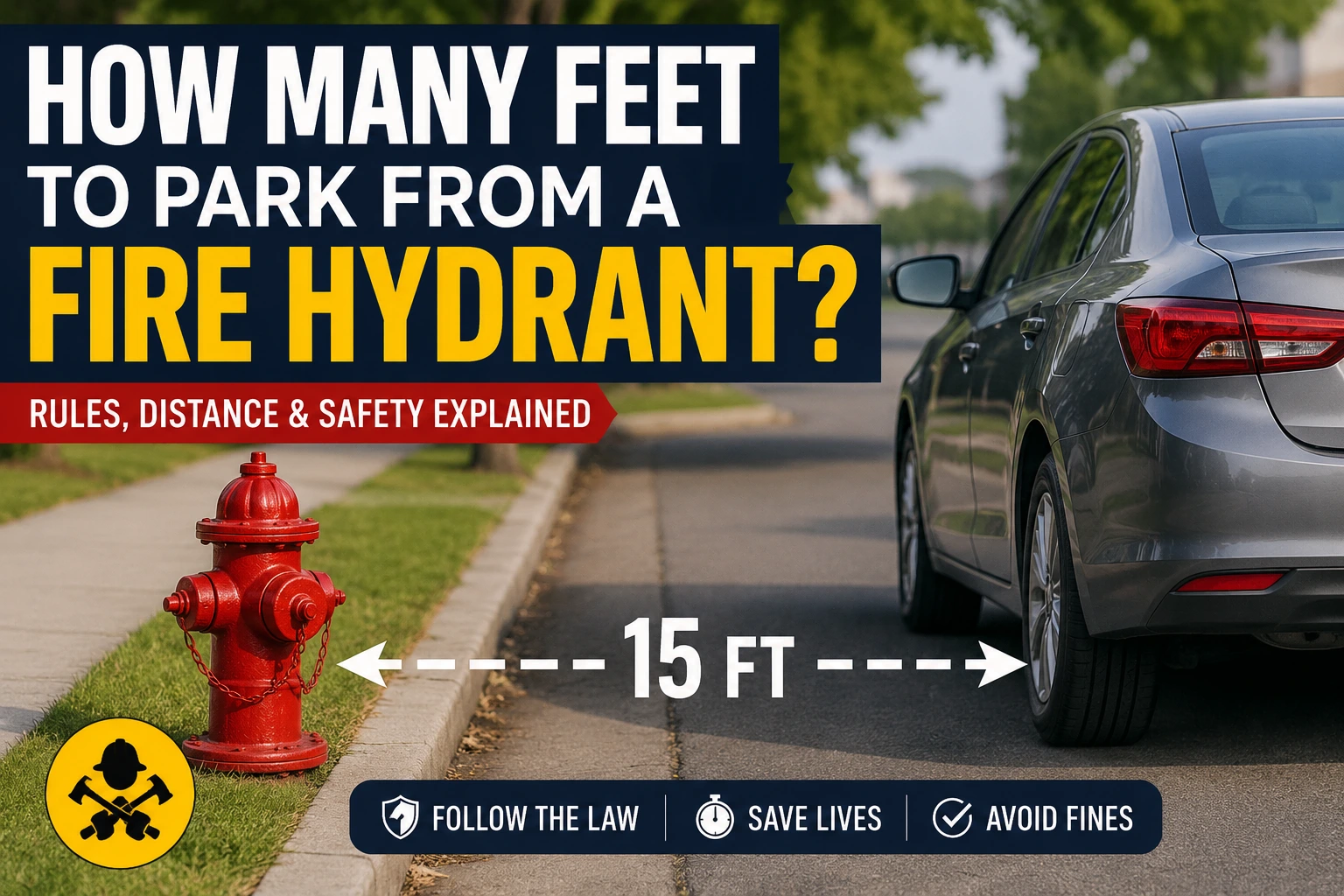
Parking seems simple until you encounter a fire hydrant. Many drivers wonder exactly how many feet to park from a fire hydrant and whether the rule changes depending on where they live.
Parking too close to a fire hydrant can result in expensive fines, towing fees, and even safety risks during emergencies. Firefighters rely on immediate access to hydrants when responding to fires, and blocked hydrants can delay lifesaving efforts.
In this guide, you’ll learn the standard parking distance, why these laws exist, common mistakes drivers make, and practical tips to avoid violations.
Understanding Fire Hydrant Parking Rules
Fire hydrants are critical pieces of emergency infrastructure. They provide firefighters with quick access to water during fires and other emergencies.
When a hydrant is blocked by a parked vehicle, emergency crews may lose valuable time trying to connect hoses and access water supplies.
Why Fire Hydrants Need Clear Access
Every second matters during a fire emergency. Firefighters often need space around a hydrant to:
- Connect large hoses
- Position emergency equipment
- Move freely around the hydrant
- Access water immediately
A vehicle parked too close can interfere with all these tasks.
The Purpose of Parking Restrictions
Fire hydrant parking laws are designed to:
- Protect public safety
- Improve emergency response times
- Reduce property damage during fires
- Prevent injuries and fatalities
- Ensure firefighters have unobstructed access
How Many Feet to Park From a Fire Hydrant?
The most commonly used rule in the United States is:
Park at least 15 feet away from a fire hydrant.
This means your vehicle should be no closer than 15 feet from either side of the hydrant unless local laws state otherwise.
Many driver education programs and DMV handbooks teach the 15-foot rule because it is widely adopted across cities and states.
Standard Distance Rule
| Parking Situation | Minimum Distance |
|---|---|
| Typical U.S. requirement | 15 feet |
| Some local jurisdictions | 10–20 feet |
| Directly beside hydrant | Not allowed |
| Blocking hydrant access | Illegal |
Always check local regulations because some municipalities establish different distances.
Why the Distance Matters
A fire engine crew needs room to:
- Connect hydrant hoses
- Open hydrant valves
- Maneuver equipment safely
- Work quickly under emergency conditions
The 15-foot clearance zone provides this working space.
Fire Hydrant Parking Laws by State and City
Although 15 feet is common, parking laws are generally determined by state or local governments.
Some cities may require:
- 10 feet of clearance
- 15 feet of clearance
- 20 feet of clearance
Because parking enforcement is local, drivers should always verify regulations in the city where they park.
Examples of Common Regulations
| Area Type | Common Distance Requirement |
|---|---|
| Major cities | 15 feet |
| Residential zones | 15 feet |
| Commercial districts | 15 feet |
| Special local ordinances | 10–20 feet |
Why Local Rules May Differ
Communities sometimes adjust parking distances based on:
- Road width
- Traffic density
- Fire department needs
- Historical safety concerns
- Urban planning requirements
When signs are present, they typically override assumptions.
What Happens if You Park Too Close to a Fire Hydrant?
Many drivers underestimate the consequences of violating hydrant parking rules.
The penalties can be significant.
Parking Tickets
The most common consequence is receiving a parking citation.
Depending on the jurisdiction, fines may range from:
- $50
- $100
- $250
- More than $500 in some cities
Repeated violations may lead to higher penalties.
Vehicle Towing
Many municipalities authorize immediate towing when a vehicle blocks a fire hydrant.
If your car is towed, you may have to pay:
- Towing fees
- Storage charges
- Administrative fees
- Parking fines
The total cost can quickly become several hundred dollars.
Liability During Emergencies
In rare cases, parking too close to a hydrant can create additional legal issues if emergency access is obstructed during a fire response.
Public safety concerns make these violations more serious than ordinary parking mistakes.
How to Measure the Distance Correctly
A common challenge for drivers is estimating 15 feet accurately.
Practical Parking Tips
To judge distance more effectively:
- Leave more space than you think you need.
- Use painted curb markings when available.
- Look for posted signs.
- Compare distance to vehicle length.
A typical passenger car is approximately 14 to 16 feet long.
This means the required distance is roughly equivalent to one average car length.
Common Measuring Mistakes
Drivers often:
- Measure from the bumper instead of the entire vehicle.
- Ignore mirrors or vehicle overhangs.
- Assume partial obstruction is acceptable.
- Misjudge distance in crowded areas.
When in doubt, move farther away.
Common Fire Hydrant Parking Mistakes Drivers Make
Even experienced drivers occasionally violate hydrant parking rules.
Here are some of the most common errors.
Assuming the Rule Doesn’t Apply at Night
Parking restrictions near hydrants apply regardless of time of day unless explicitly stated otherwise.
Parking Just Beyond the Hydrant
Many drivers believe being slightly past a hydrant is acceptable.
However, enforcement officers measure actual distance, not appearance.
Ignoring Painted Curbs
Some cities use curb markings to identify no-parking zones around hydrants.
Ignoring these markings often results in tickets.
Following Other Vehicles
A common mistake is assuming another parked vehicle is positioned legally.
The first vehicle may already be violating parking regulations.
Always assess the hydrant distance yourself.
Safety Reasons Behind Fire Hydrant Parking Laws
Understanding the safety purpose behind the rule helps drivers appreciate why enforcement is often strict.
Faster Emergency Response
Every minute counts during a fire.
Clear hydrant access allows firefighters to begin suppression efforts immediately.
Reduced Property Damage
Quick access to water can reduce:
- Home damage
- Business losses
- Vehicle destruction
- Infrastructure damage
Protection of Human Life
Most importantly, unobstructed hydrants help firefighters save lives.
Parking restrictions exist because delayed access can affect emergency outcomes.
Fire Hydrant Parking Rules for Driving Tests
If you’re preparing for a driver’s license exam, knowing hydrant parking regulations is essential.
Many written exams include questions about:
- Fire hydrant parking distance
- Emergency vehicle access
- Parking violations
- Safe roadside parking
A common test question asks:
“How many feet should you park from a fire hydrant?”
The expected answer is usually:
15 feet.
However, always study your state’s driver’s handbook because local requirements can vary.
Driving Test Tip
Remember this simple rule:
One car length away from the hydrant equals approximately 15 feet.
This memory aid helps many students answer exam questions correctly.
Quick Reference Parking Distance Chart
The following chart provides a useful overview.
| Object | Typical Minimum Distance |
|---|---|
| Fire hydrant | 15 feet |
| Stop sign | Varies by state |
| Railroad crossing | Varies by state |
| Crosswalk | Varies by state |
| Intersection | Varies by state |
Always consult local laws for exact requirements.
Expert Tips for Avoiding Parking Violations
Professional driving instructors often recommend the following strategies.
Leave Extra Space
Instead of parking exactly 15 feet away, allow additional clearance whenever possible.
Read Local Signs
Signs may specify parking restrictions that differ from general state guidelines.
Check Before Leaving Your Vehicle
Before walking away:
- Look for hydrants.
- Check curb markings.
- Verify distance.
- Review posted regulations.
Use Parking Apps
Some parking apps and city maps identify restricted parking zones and can help reduce violations.
Think Like a Firefighter
Ask yourself:
“Could emergency crews easily access this hydrant if they arrived right now?”
If the answer is uncertain, move your vehicle.
Frequently Asked Questions
How many feet to park from a fire hydrant in most states?
Most states and cities require drivers to park at least 15 feet away from a fire hydrant, although local laws may vary.
Can I park directly across from a fire hydrant?
In many locations, yes, provided you are not blocking traffic or violating other parking regulations. Always verify local rules.
What is the fine for parking too close to a fire hydrant?
Fines vary by city and state. They can range from around $50 to several hundred dollars depending on local enforcement policies.
Can my car be towed for blocking a fire hydrant?
Yes. Many jurisdictions allow immediate towing when a vehicle obstructs hydrant access.
Is the fire hydrant parking rule on driving tests?
Yes. Questions about hydrant parking distances frequently appear on written driving exams and permit tests.
10. Conclusion
Understanding how many feet to park from a fire hydrant is an important part of responsible driving. While local regulations can vary, the most widely recognized rule is to park at least 15 feet away from a fire hydrant. This distance ensures firefighters have the space they need to access water quickly during emergencies.
Parking too close can lead to tickets, towing, and unnecessary safety risks. By learning local parking laws, measuring distance carefully, and leaving extra clearance when possible, drivers can avoid costly violations while helping keep communities safe. Remember: when it comes to fire hydrants, a little extra space can make a big difference.
Discover more