

If you have ever searched for roofing costs or talked to a roofing contractor, you have probably heard the term “roofing square.” Many homeowners get confused by this term because it sounds different from regular square feet measurements used in homes and construction.
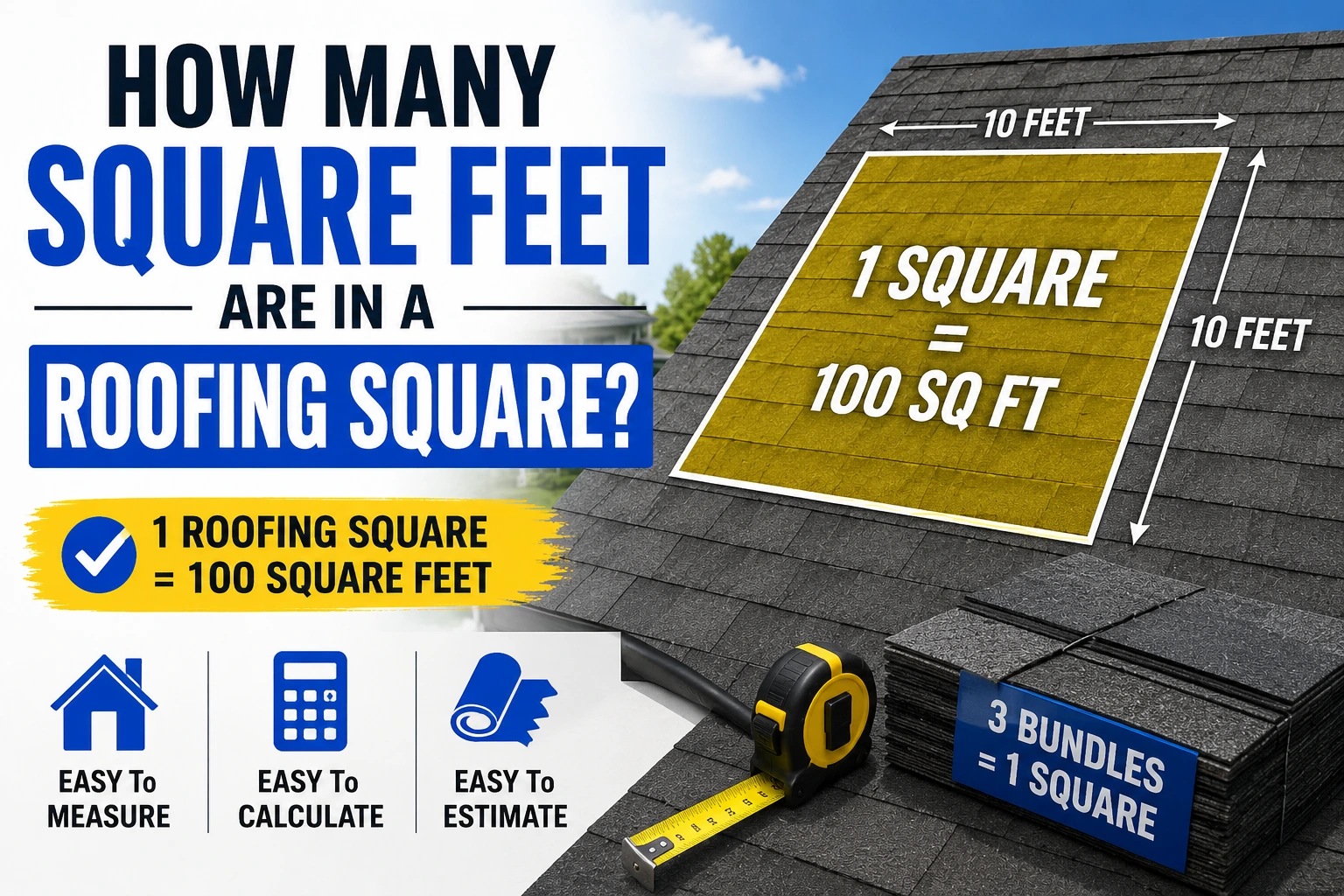
The simple answer is that one roofing square equals 100 square feet of roof area.
However, there is much more to understand if you want accurate roofing estimates, material calculations, or replacement costs. Roof pitch, waste factors, and roofing materials all affect the final numbers.
In this guide, you will learn exactly how many square feet are in a roofing square, why roofers use this measurement, how to calculate roofing squares correctly, and how roofing estimates work in real life.
What Is a Roofing Square?
A roofing square is a standard unit of measurement used in the roofing industry. Instead of measuring roofs only in square feet, contractors often measure them in “squares.”
One roofing square covers:
1 roofing square=100 square feet
This system makes it easier for roofers to estimate materials, labor, and project costs quickly.
For example:
- A 2,000-square-foot roof equals 20 roofing squares
- A 1,500-square-foot roof equals 15 roofing squares
- A 3,200-square-foot roof equals 32 roofing squares
Why Roofers Use Roofing Squares
Roofing projects involve large surface areas. Saying “25 roofing squares” is much simpler than saying “2,500 square feet.”
Roofers also use squares because:
- Shingles are packaged based on roofing squares
- Material suppliers estimate products this way
- Labor pricing is often calculated per square
- It simplifies roofing quotes
Roofing Square vs Regular Square Footage
Many people confuse house square footage with roofing square footage. These are not always the same.
A home may have:
- 2,000 square feet of floor space
- But 2,400 square feet of roof area
This happens because roofs include:
- Overhangs
- Slopes
- Multiple roof sections
- Dormers and valleys
How Many Square Feet Are in a Roofing Square?
The roofing industry standard is simple:
1 roofing square=100 square feet
This measurement applies to nearly all roofing materials, including:
- Asphalt shingles
- Metal roofing
- Tile roofing
- Wood shakes
- Synthetic roofing materials
Standard Roofing Measurement
Roofers calculate roofing squares by dividing total roof square footage by 100.
The formula looks like this:
Roofing Squares=100Total Roof Area
For example:
- 2,000 square feet ÷ 100 = 20 roofing squares
- 1,250 square feet ÷ 100 = 12.5 roofing squares
Understanding Roofing Squares with Examples
Real-world examples make roofing measurements easier to understand.
Small Residential Roof Example
Suppose a small home has:
- Roof area: 1,200 square feet
Calculation:
1200÷100=12 roofing squares
This roof requires approximately 12 roofing squares of material before adding waste.
Medium Roof Example
A medium-sized suburban home may have:
- Roof area: 2,400 square feet
Calculation:
2400÷100=24 roofing squares
Large Commercial Roof Example
A commercial building with:
- Roof area: 10,000 square feet
Calculation:
10000÷100=100 roofing squares
How to Calculate Roofing Squares
Learning to calculate roofing squares can help you:
- Estimate roofing costs
- Compare contractor quotes
- Buy materials accurately
- Avoid overpaying
Step 1 Measure Roof Length and Width
Measure each roof section separately.
You need:
- Length
- Width
- Roof pitch if applicable
For flat roofs, calculations are easier.
Step 2 Calculate Total Square Footage
Multiply length by width.
Example:
40×30=1200 square feet
Step 3 Divide by 100
Convert total square footage into roofing squares.
1200÷100=12 roofing squares
Step 4 Add Waste Factor
Roofers usually add:
- 10% waste for simple roofs
- 15% to 20% for complex roofs
Waste accounts for:
- Cutting shingles
- Roof valleys
- Starter rows
- Mistakes and damaged materials
Example:
12×1.10=13.2 roofing squares
You would likely order 14 squares.
Roofing Squares Conversion Table
| Roof Area (Sq Ft) | Roofing Squares |
|---|---|
| 100 | 1 |
| 500 | 5 |
| 1,000 | 10 |
| 1,500 | 15 |
| 2,000 | 20 |
| 2,500 | 25 |
| 3,000 | 30 |
| 4,000 | 40 |
This chart helps homeowners quickly estimate roofing needs.
How Many Shingle Bundles Are in a Roofing Square?
Most asphalt shingles are sold in bundles.
Typically:
- 3 bundles = 1 roofing square
So if your roof needs:
- 20 roofing squares
- You may need around 60 bundles of shingles
Asphalt Shingles
Standard three-tab shingles usually require:
- 3 bundles per square
Architectural shingles may vary slightly depending on thickness.
Premium Roofing Materials
Premium materials often use different packaging:
- Slate roofing
- Cedar shakes
- Clay tiles
These may not follow the same bundle count.
Metal Roofing and Tile Roofing
Metal roofing is usually sold by:
- Panels
- Linear feet
- Square coverage ratings
Tile roofs are often measured individually.
Why Roofing Squares Matter
Understanding roofing squares can save homeowners money and prevent major estimating mistakes.
Material Estimation
Roofing squares help determine:
- Shingle quantities
- Underlayment needs
- Ice barrier coverage
- Flashing materials
Labor Costs
Many roofing contractors price labor:
- Per roofing square
- Instead of per hour
For example:
- $350 labor per square
- 20-square roof
- Total labor = $7,000
Roofing Quotes
Understanding squares helps homeowners compare quotes accurately.
One contractor may quote:
- 18 squares
Another may quote:
- 22 squares
Knowing how measurements work helps identify errors or inflated estimates.
Preventing Material Waste
Ordering too few materials causes delays.
Ordering too much increases project costs unnecessarily.
Accurate square calculations balance both problems.
Common Roofing Measurement Mistakes
Roof measurement errors are very common among DIY homeowners.
Forgetting Roof Pitch
Steeper roofs require more materials.
A roof with a sharp slope has more surface area than a flat roof footprint.
Ignoring Waste
Many beginners forget to include waste percentages.
This often causes:
- Material shortages
- Project delays
- Extra delivery fees
Measuring Only the House Footprint
The house footprint is not the same as roof area.
Overhangs and slopes increase total roofing square footage.
Misunderstanding Roofing Terminology
Some people confuse:
- Roofing square
- Square foot
- Bundle coverage
Always verify measurements carefully.
Roofing Square vs Roof Pitch
Roof pitch affects the total surface area of a roof.
A steeper roof needs:
- More shingles
- More labor
- More safety equipment
How Slope Changes Material Needs
Imagine two homes with:
- Same house footprint
- Different roof slopes
The steeper roof will have:
- More actual square footage
- More roofing squares
Steep Roof Example
A home footprint may measure:
- 2,000 square feet
But after adjusting for pitch:
- Actual roof area becomes 2,300 square feet
Calculation:
2300÷100=23 roofing squares
Practical Roofing Estimate Example
Let’s walk through a realistic roof replacement estimate.
Full Roof Replacement Scenario
Suppose a homeowner has:
- Roof area: 2,100 square feet
- Medium roof complexity
- Asphalt shingles
Step 1:
2100÷100=21 roofing squares
Step 2: Add 10% waste
21×1.10=23.1 roofing squares
The contractor may order:
- 24 roofing squares
Estimated Material Breakdown
Approximate materials:
- 72 bundles of shingles
- Underlayment rolls
- Ridge caps
- Flashing
- Nails
- Ice barrier protection
Expert Tips for Accurate Roofing Measurements
Professionals use several strategies for better accuracy.
Tips include:
- Measure each roof section separately
- Use aerial roof measurement tools
- Double-check calculations
- Add waste percentages
- Consider roof pitch carefully
- Account for valleys and dormers
You can also:
- Use roofing apps
- Hire professional estimators
- Request detailed roofing reports
When to Hire a Roofing Professional
DIY measuring works for basic estimates, but professionals are better for:
- Complex roof designs
- Multi-story homes
- Commercial roofs
- Insurance claims
- Major roof replacements
Professional roofers use:
- Drones
- Satellite measurements
- Roofing software
- Safety equipment
They can provide:
- Accurate square counts
- Material estimates
- Labor projections
- Permit guidance
FAQs
How many square feet are in a roofing square?
One roofing square equals 100 square feet of roof area.
How many bundles of shingles are in a roofing square?
Most asphalt shingle roofs require 3 bundles per roofing square.
How do I calculate roofing squares?
Divide total roof square footage by 100.
Does roof pitch affect roofing squares?
Yes. Steeper roofs have more surface area and require more roofing materials.
Is house square footage the same as roof square footage?
No. Roofs are usually larger because of slope, overhangs, and roof design.
Conclusion
Understanding how many square feet are in a roofing square is essential for estimating roofing materials, labor costs, and project budgets accurately.
The key measurement to remember is simple:
1 roofing square=100 square feet
However, accurate roofing calculations also require understanding roof pitch, waste factors, and roofing material coverage.
Whether you are replacing a roof, comparing contractor estimates, or planning a DIY project, knowing how roofing squares work can help you avoid costly mistakes and make smarter decisions.
Disover more
how many square feet is 5000 cubic feet