

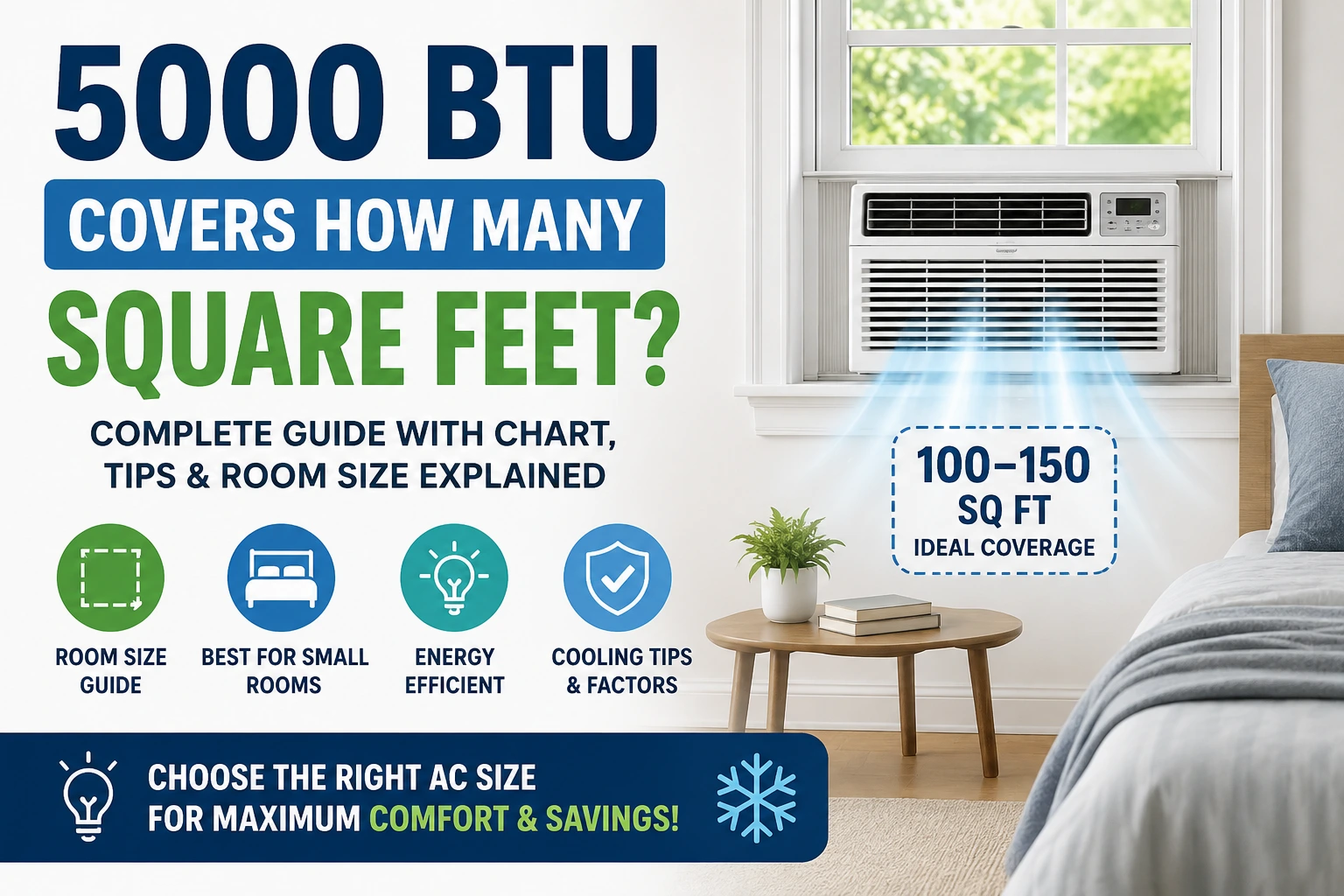
When shopping for a small air conditioner, one of the most common questions people ask is: 5000 BTU covers how many square feet? Choosing the right AC size is important because an undersized unit struggles to cool the room, while an oversized one wastes electricity and money.
In general, a 5000 BTU air conditioner can cool approximately 100 to 150 square feet effectively. This makes it ideal for small bedrooms, home offices, studio corners, dorm rooms, and compact living spaces.
However, room size is not the only thing that matters. Ceiling height, sunlight, insulation, room layout, and the number of people inside also affect cooling performance. In this guide, you will learn exactly how much space a 5000 BTU AC can handle, how to calculate your room size, and whether this AC size is the right choice for your needs.
What Does BTU Mean in Air Conditioners?
BTU stands for British Thermal Unit. It measures how much heat an air conditioner can remove from a room per hour.
The higher the BTU rating:
- The larger the room the AC can cool
- The more cooling power the unit provides
- The higher the potential energy usage
A 5000 BTU air conditioner is considered a small-capacity cooling unit. It is designed for compact rooms rather than large open spaces.
Think of BTU like engine power in a car. A small engine works well for city driving, but it struggles with heavy loads. Similarly, a 5000 BTU AC works best in small rooms and may not cool larger areas effectively.
5000 BTU Covers How Many Square Feet?
A 5000 BTU air conditioner typically covers:
- 100 to 150 square feet under normal conditions
- Up to 175 square feet in well-insulated rooms
- Around 90 to 120 square feet in hot or sunny spaces
Most manufacturers and energy guidelines recommend using a 5000 BTU unit for small rooms only.
Standard Coverage Range
Here is a general breakdown:
| BTU Rating | Recommended Room Size |
|---|---|
| 5000 BTU | 100–150 sq ft |
| 6000 BTU | 150–250 sq ft |
| 8000 BTU | 250–350 sq ft |
| 10000 BTU | 350–450 sq ft |
This means a 5000 BTU AC is usually suitable for:
- Small bedrooms
- Compact offices
- Tiny apartments
- Nursery rooms
- Dorm rooms
Cooling Chart by Room Size
| Room Dimensions | Square Feet | 5000 BTU Suitable? |
|---|---|---|
| 10 x 10 | 100 sq ft | Yes |
| 10 x 12 | 120 sq ft | Yes |
| 12 x 12 | 144 sq ft | Yes |
| 12 x 15 | 180 sq ft | Borderline |
| 15 x 15 | 225 sq ft | No |
If your room is larger than 150 square feet, you may need a stronger air conditioner.
Best Room Types for a 5000 BTU Air Conditioner
A 5000 BTU AC works best in small enclosed spaces. Let’s look at the most suitable room types.
Bedrooms
Small bedrooms are the perfect match for a 5000 BTU window AC. It provides enough cooling for sleeping comfortably during warm nights without consuming too much electricity.
A small bedroom with:
- One or two occupants
- Standard ceiling height
- Limited sunlight
can cool efficiently with this AC size.
Home Offices
Remote workers often use 5000 BTU units in compact offices. If your workspace is under 150 square feet, the AC can maintain a comfortable temperature while keeping energy costs lower.
Dorm Rooms
College dorms are usually compact spaces. A 5000 BTU air conditioner is often enough for:
- One bed
- A desk
- Small storage area
Many dorm residents choose these units because they are affordable and easy to install.
Small Apartments
Studio apartments or tiny living spaces may benefit from a 5000 BTU AC if the cooling area is limited. However, open-concept layouts may require a larger unit.
Factors That Affect 5000 BTU Cooling Performance
Even if your room falls within the recommended size range, several factors can impact performance.
Ceiling Height
Rooms with higher ceilings contain more air volume. A 5000 BTU AC may struggle in rooms with ceilings above 8 feet.
For example:
- Standard ceiling: normal performance
- Vaulted ceiling: reduced cooling efficiency
Sun Exposure
Rooms receiving direct sunlight heat up faster.
If your room faces:
- West-facing windows
- Large glass doors
- Continuous afternoon sunlight
you may need additional BTUs.
Sunny rooms often require:
- 10–20% more cooling capacity
- Curtains or blinds
- Better insulation
Number of People
Every person generates body heat. A small room with several occupants may feel warmer than expected.
A 5000 BTU AC works best with:
- One or two people
- Minimal crowding
Insulation Quality
Poor insulation allows cold air to escape and hot air to enter.
Common issues include:
- Old windows
- Gaps around doors
- Thin walls
Good insulation helps a 5000 BTU unit perform much better.
Electronics and Appliances
Computers, TVs, gaming systems, and kitchen appliances all produce heat.
A home office filled with electronics may require a larger AC than a simple bedroom.
5000 BTU Room Size Chart
Here is a more detailed chart showing recommended room sizes and cooling suitability.
| Room Size | Cooling Performance |
|---|---|
| 80 sq ft | Excellent |
| 100 sq ft | Excellent |
| 120 sq ft | Very Good |
| 150 sq ft | Good |
| 175 sq ft | Moderate |
| 200+ sq ft | Poor |
For maximum comfort, staying below 150 square feet is recommended.
Is a 5000 BTU Air Conditioner Enough for Your Room?
Many buyers worry about choosing the wrong size. Here is how to tell whether a 5000 BTU unit is right for you.
Signs It Is the Right Size
- Room cools within 15–20 minutes
- Temperature stays consistent
- Humidity feels controlled
- Electricity usage remains reasonable
Signs It Is Too Small
- AC runs continuously
- Room never feels cool enough
- High humidity remains
- Energy bills increase unexpectedly
Signs It Is Too Large
Although less common with small units, an oversized AC can:
- Turn on and off frequently
- Waste electricity
- Cool unevenly
- Leave humidity behind
Window AC vs Portable AC: 5000 BTU Comparison
Not all 5000 BTU air conditioners perform equally.
| Feature | Window AC | Portable AC |
|---|---|---|
| Cooling Efficiency | Higher | Lower |
| Installation | Window required | Flexible |
| Noise Level | Quieter | Louder |
| Energy Use | More efficient | Less efficient |
| Mobility | Fixed | Portable |
Window AC units generally cool better because the hot components remain outside the room.
Portable AC units are more flexible but may deliver lower real-world cooling performance.
How to Measure Your Room Correctly
Before buying an AC, measure your room accurately.
Step-by-Step Guide
- Measure room length
- Measure room width
- Multiply the numbers
For example:
- Length = 10 feet
- Width = 12 feet
10×12=120
The room size equals 120 square feet.
Simple Formula
Use this formula:
Room Area=Length×Width
This calculation helps determine whether a 5000 BTU unit fits your space.
Energy Efficiency and Electricity Usage
One reason many people choose 5000 BTU units is energy savings.
Typical power consumption:
- Around 400–600 watts per hour
- Lower electricity cost than larger AC units
Estimated monthly cost depends on:
- Daily usage hours
- Electricity rates
- Energy efficiency rating
Energy-saving tips include:
- Keeping doors closed
- Cleaning filters regularly
- Using curtains during hot afternoons
- Setting moderate temperatures
Many modern 5000 BTU units also include:
- Sleep mode
- Eco mode
- Programmable timers
These features help reduce electricity usage further.
Common Mistakes When Choosing AC Size
Many people make sizing mistakes when buying an air conditioner.
Ignoring Room Conditions
A 150-square-foot room with heavy sunlight may need more than 5000 BTU.
Forgetting Ceiling Height
Tall ceilings increase cooling demand significantly.
Buying Based Only on Price
Cheaper units may lack efficiency and durability.
Using One AC for Multiple Rooms
A 5000 BTU unit is not designed for cooling several connected rooms.
Blocking Airflow
Furniture or curtains blocking the AC reduce performance.
Expert Tips to Improve Cooling Efficiency
You can make a 5000 BTU AC perform better with a few simple adjustments.
Keep the Filter Clean
Dirty filters reduce airflow and cooling power. Clean filters every few weeks during summer.
Seal Air Leaks
Use weather stripping around windows and doors to prevent cool air loss.
Use Fans Together
Ceiling fans help distribute cool air more evenly.
Close Curtains During Peak Sunlight
Reducing direct sunlight lowers indoor heat gain.
Choose the Right Installation Spot
Install window units where airflow is not blocked by furniture or walls.
FAQs
How many square feet does a 5000 BTU AC cool effectively?
A 5000 BTU air conditioner typically cools 100 to 150 square feet effectively under normal conditions.
Is 5000 BTU enough for a bedroom?
Yes, a 5000 BTU AC is usually enough for a small bedroom under 150 square feet.
Can a 5000 BTU AC cool two rooms?
Generally, no. These units work best in one small enclosed room only.
Does insulation affect AC performance?
Yes. Good insulation improves cooling efficiency, while poor insulation makes the AC work harder.
What happens if my room is too large for 5000 BTU?
The AC may run constantly, struggle to cool the room, and increase energy costs.
Conclusion
If you are wondering 5000 BTU covers how many square feet, the simple answer is around 100 to 150 square feet for most rooms. This makes a 5000 BTU air conditioner ideal for small bedrooms, dorm rooms, home offices, and compact living spaces.
However, room conditions matter just as much as square footage. Sunlight exposure, insulation quality, ceiling height, and electronics can all affect cooling performance. Measuring your room correctly and understanding these factors helps you choose the right air conditioner size.
For small spaces, a 5000 BTU unit offers an affordable, energy-efficient cooling solution. But if your room exceeds 150 square feet or receives heavy sunlight, upgrading to a larger BTU rating may provide better comfort and efficiency.
Discover more
how many square feet are in a roofing square