

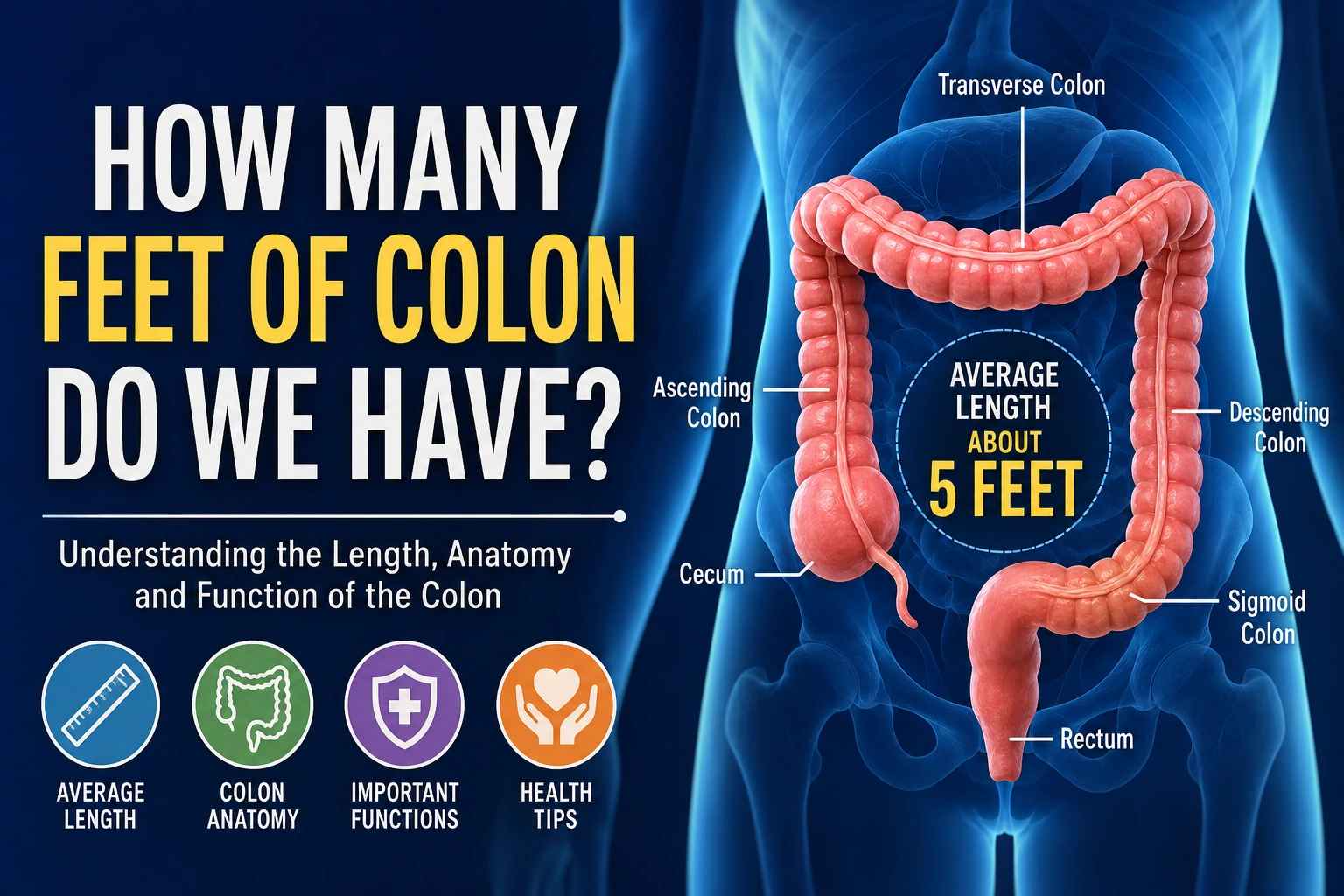
If you have ever wondered how many feet of colon do we have, the simple answer is that the average adult colon measures about 5 feet long. While many people think the colon is much longer, it is actually just one part of the large intestine. Despite its relatively modest length, the colon performs several essential jobs that help keep your digestive system healthy.
The colon absorbs water, stores waste, supports beneficial bacteria, and prepares stool for elimination. Understanding its size, structure, and function can help you appreciate why maintaining colon health is so important.
In this guide, you will learn how long the colon is, why it varies between people, what each section does, and how to keep your digestive system functioning at its best.
What Is the Colon?
The colon is the largest portion of the large intestine. It connects the small intestine to the rectum and plays a major role in processing waste after nutrients have been absorbed.
Food first travels through your stomach and small intestine, where most digestion and nutrient absorption occur. The remaining material then enters the colon, where water and electrolytes are absorbed before waste leaves the body.
The colon is muscular and flexible, allowing it to move waste slowly while beneficial bacteria break down certain substances that your body cannot digest.
Difference Between the Colon and Large Intestine
Many people use these terms interchangeably, but they are not exactly the same.
The large intestine includes:
- Cecum
- Colon
- Rectum
- Anal canal
The colon is simply the longest section of the large intestine.
How Many Feet of Colon Do We Have?
The average human colon is approximately 5 feet or 1.5 meters long.
When combined with the rectum, the large intestine measures about 5 to 6 feet in total.
Although this measurement is considered average, some healthy adults naturally have slightly shorter or longer colons.
Average Colon Length in Adults
Here is a quick overview.
| Measurement | Average Length |
|---|---|
| Colon | About 5 feet |
| Rectum | About 6 inches |
| Entire large intestine | Around 5.5 feet |
| Small intestine | Around 20 feet |
Compared with the small intestine, the colon is much shorter but significantly wider.
Does Colon Length Vary?
Yes. Colon length differs based on several factors including:
- Genetics
- Age
- Body size
- Sex
- Individual anatomy
Some people naturally have a longer colon without experiencing any health problems.
Parts of the Colon
The colon has four main sections that each contribute to digestion.
Ascending Colon
The ascending colon begins on the right side of the abdomen.
Its main job is absorbing water and salts from digested food.
Transverse Colon
This section crosses the upper abdomen from right to left.
It continues water absorption while bacteria help ferment remaining dietary fiber.
Descending Colon
The descending colon travels downward on the left side of the abdomen.
It stores waste as it becomes more solid.
Sigmoid Colon
The sigmoid colon has an S shaped curve leading into the rectum.
It temporarily stores stool before a bowel movement.
Rectum
Although technically separate from the colon, the rectum stores stool until it leaves the body.
Colon Length Comparison Table
| Digestive Organ | Average Length | Primary Function |
|---|---|---|
| Esophagus | 10 inches | Moves food to stomach |
| Stomach | 10 to 12 inches | Begins digestion |
| Small intestine | About 20 feet | Nutrient absorption |
| Colon | About 5 feet | Water absorption and waste formation |
| Rectum | About 6 inches | Stool storage |
This comparison helps explain why digestion takes several hours even though the colon is much shorter than the small intestine.
Why Is the Colon So Long?
Although five feet may sound long, the colon needs enough space to complete several important tasks.
These include:
- Absorbing water
- Recycling electrolytes
- Allowing healthy bacteria to digest fiber
- Forming stool
- Moving waste gradually toward the rectum
A shorter colon would leave less time for water absorption, increasing the risk of diarrhea and dehydration.
What Does the Colon Do?
The colon performs much more than simply storing waste.
Absorbs Water
One of its primary jobs is removing water from digested food.
Without this process, the body would lose excessive fluids every day.
Forms Stool
As water leaves the remaining food, waste gradually becomes solid stool.
The colon compacts this material before elimination.
Supports Gut Bacteria
The colon contains trillions of beneficial bacteria.
These microorganisms help:
- Digest fiber
- Produce vitamins
- Support the immune system
- Protect against harmful bacteria
A balanced gut microbiome contributes to overall health.
Protects Digestive Health
The colon produces mucus that lubricates waste, making bowel movements smoother and reducing irritation.
Can Your Colon Become Longer?
In certain situations, the colon may appear longer or become unusually stretched.
One example is a condition called a redundant colon.
A redundant colon has additional loops or twists that increase its overall length.
Many people with this condition never experience symptoms.
Others may develop:
- Constipation
- Bloating
- Abdominal discomfort
- Slower bowel movements
A doctor may identify this during a colonoscopy or imaging study.
Does Colon Length Affect Digestion?
For most healthy people, colon length has very little effect on digestion.
However, an unusually long colon may slow stool movement.
This can increase the chance of:
- Chronic constipation
- Gas
- Bloating
- Difficulty passing stool
On the other hand, people who have portions of the colon surgically removed can often continue living healthy lives because the remaining colon adapts over time.
Common Colon Conditions
Understanding colon health is just as important as knowing its length.
Constipation
Constipation occurs when stool moves too slowly through the colon.
Symptoms include:
- Hard stools
- Infrequent bowel movements
- Straining
Increasing fiber and water intake often helps.
Diverticulosis
Small pouches can develop in the colon wall with age.
Most people have no symptoms.
If these pouches become infected, the condition is called diverticulitis.
Colon Polyps
Polyps are growths inside the colon.
Most are harmless.
However, some can develop into colorectal cancer over time.
Routine screening helps detect them early.
Colorectal Cancer
Colorectal cancer usually begins as small polyps.
Early detection through screening greatly improves treatment outcomes.
Warning signs include:
- Blood in stool
- Unexplained weight loss
- Persistent bowel habit changes
- Ongoing abdominal pain
Inflammatory Bowel Disease
Crohn’s disease and ulcerative colitis cause chronic inflammation of the digestive tract.
These conditions require medical management but can often be controlled successfully.
How to Keep Your Colon Healthy
Healthy daily habits help your colon function properly regardless of its length.
Consider these simple practices.
- Eat plenty of fruits and vegetables.
- Choose whole grains.
- Consume enough dietary fiber.
- Drink adequate water.
- Exercise regularly.
- Avoid smoking.
- Limit processed foods.
- Reduce excessive red and processed meat intake.
- Maintain a healthy weight.
- Schedule recommended colorectal cancer screenings.
These habits support digestion and may reduce the risk of several colon diseases.
Common Myths About Colon Length
Many misconceptions exist about the colon.
Myth: Everyone has exactly the same colon length.
Fact: Colon length naturally varies from person to person.
Myth: A longer colon is unhealthy.
Fact: Many people with longer colons have no symptoms at all.
Myth: Colon cleansing is necessary for everyone.
Fact: A healthy colon naturally removes waste without routine cleansing products.
Myth: Only older adults develop colon problems.
Fact: Digestive disorders can occur at any age, although some become more common with aging.
Expert Tips for Better Colon Health
Doctors and nutrition experts generally recommend focusing on long term healthy habits rather than quick fixes.
Some practical advice includes:
- Eat at regular times each day.
- Increase fiber gradually.
- Stay physically active.
- Drink enough fluids.
- Do not ignore persistent digestive symptoms.
- Discuss screening with your healthcare provider based on your age and family history.
These simple habits support healthy bowel function throughout life.
Frequently Asked Questions
How many feet of colon do we have?
The average adult colon is about 5 feet long, while the entire large intestine measures approximately 5.5 to 6 feet including the rectum.
Is the colon longer than the small intestine?
No. The small intestine is much longer, averaging around 20 feet, while the colon averages only about 5 feet.
Can a person have a longer colon than average?
Yes. Some people naturally have a longer or redundant colon. Many never experience symptoms, although some may develop constipation or bloating.
Why does the colon absorb water?
The colon removes water and electrolytes from digested food, helping maintain hydration while forming solid stool.
Does colon length change with age?
The basic length usually remains similar throughout adulthood, although the colon may become more flexible or develop extra loops as people age.
Conclusion
If you have been asking how many feet of colon do we have, the answer is straightforward. The average adult colon is about 5 feet long, making it one of the most important organs in the digestive system despite being much shorter than the small intestine.
Its primary responsibilities include absorbing water, supporting beneficial gut bacteria, forming stool, and helping remove waste efficiently. While colon length varies slightly between individuals, this variation is usually normal and does not affect overall health. By eating a fiber rich diet, staying hydrated, exercising regularly, and following recommended screening guidelines, you can support lifelong colon health and maintain a healthy digestive system.
Discover more
how many feet of garland for 7ft tree