
f you’re planning a landscaping project, filling raised garden beds, or ordering topsoil, you’ve probably wondered how many cubic feet is a yard of soil. Understanding this conversion helps you buy the correct amount of soil, avoid overspending, and prevent multiple trips to the garden center.
The answer is simple:
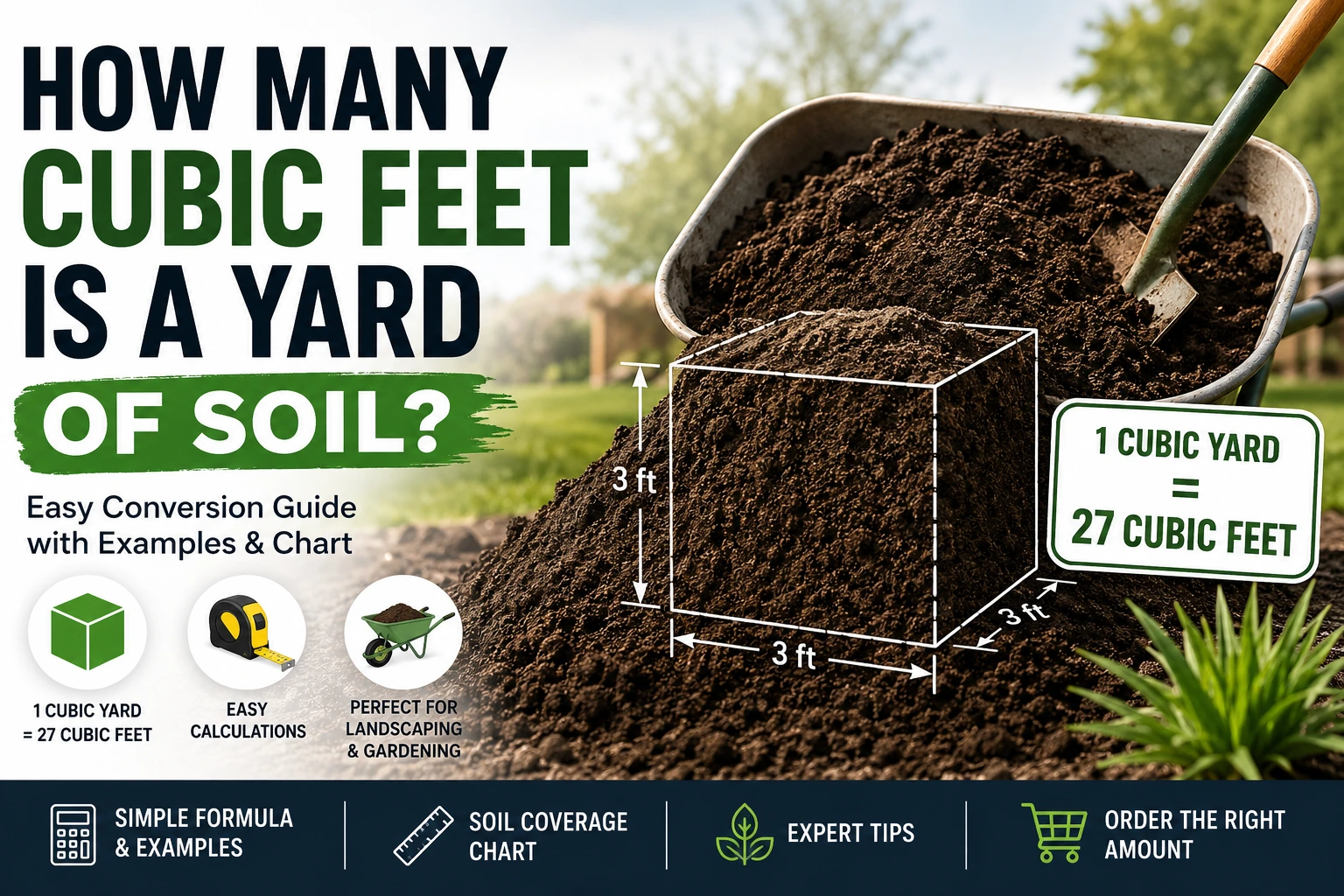
One cubic yard of soil equals 27 cubic feet.
This standard conversion is used by landscaping suppliers, garden centers, and construction companies worldwide. Once you know this number, calculating the amount of soil needed for your project becomes much easier.
This guide explains everything you need to know, including formulas, examples, coverage charts, and expert tips.
Understanding Soil Measurements
Before ordering soil, it’s helpful to understand the units used to measure volume.
What Is a Cubic Foot?
A cubic foot is a unit of volume.
Imagine a box that measures:
- 1 foot long
- 1 foot wide
- 1 foot high
The volume inside that box equals 1 cubic foot.
This measurement is commonly used for:
- Potting soil
- Compost
- Small bags of mulch
- Decorative stone
What Is a Cubic Yard?
A cubic yard is a much larger unit of volume.
It measures:
- 3 feet long
- 3 feet wide
- 3 feet high
Because each side is three feet long:
3 × 3 × 3 = 27 cubic feet
That means:
| Measurement | Equivalent |
|---|---|
| 1 Cubic Yard | 27 Cubic Feet |
| 2 Cubic Yards | 54 Cubic Feet |
| 3 Cubic Yards | 81 Cubic Feet |
| 5 Cubic Yards | 135 Cubic Feet |
How Many Cubic Feet Is a Yard of Soil?
The answer never changes.
Simple Conversion Formula
1 Cubic Yard = 27 Cubic Feet
Formula:
Cubic Feet = Cubic Yards × 27
Examples:
- 1 yard = 27 cubic feet
- 2 yards = 54 cubic feet
- 4 yards = 108 cubic feet
- 6 yards = 162 cubic feet
Whether you’re buying topsoil, compost, fill dirt, or garden soil, the conversion remains the same because it’s based on volume rather than weight.
Quick Conversion Chart
| Cubic Yards | Cubic Feet |
| 0.5 | 13.5 |
| 1 | 27 |
| 1.5 | 40.5 |
| 2 | 54 |
| 2.5 | 67.5 |
| 3 | 81 |
| 4 | 108 |
| 5 | 135 |
| 10 | 270 |
Bookmark this chart for future landscaping projects.
Why Soil Is Sold by the Cubic Yard
Most landscaping suppliers sell bulk soil by the cubic yard because it is easier to measure large quantities.
Benefits include:
- Easier pricing
- Faster delivery
- Less packaging waste
- Better for large landscaping jobs
- More accurate volume measurements
Small gardening projects often use bags measured in cubic feet, while larger projects typically require cubic yards.
How to Calculate Soil Volume
Knowing the conversion is only part of the process. You also need to calculate how much soil your project requires.
Step 1: Measure Length
Measure the length of the area in feet.
Example:
12 feet
Step 2: Measure Width
Measure the width.
Example:
8 feet
Step 3: Measure Depth
Measure the desired soil depth.
For example:
6 inches
Convert inches to feet.
6 inches = 0.5 feet
Step 4: Calculate Cubic Feet
Formula:
Length × Width × Depth
Example:
12 × 8 × 0.5
= 48 cubic feet
Convert cubic feet into cubic yards.
48 ÷ 27
= 1.78 cubic yards
Round up and order 2 cubic yards.
Examples of Soil Calculations
Here are some real-life examples.
Garden Bed Example
Dimensions:
- 10 ft long
- 5 ft wide
- 8 inches deep
Depth:
8 inches = 0.67 feet
Calculation:
10 × 5 × 0.67
= 33.5 cubic feet
33.5 ÷ 27
= 1.24 cubic yards
Order approximately 1.5 cubic yards.
Lawn Repair Example
Area:
20 ft × 15 ft
Depth:
3 inches (0.25 feet)
Calculation:
20 × 15 × 0.25
= 75 cubic feet
75 ÷ 27
= 2.78 cubic yards
You’ll need about 3 cubic yards.
Flower Bed Example
Dimensions:
15 ft × 4 ft
Depth:
4 inches (0.33 feet)
Calculation:
15 × 4 × 0.33
= 19.8 cubic feet
19.8 ÷ 27
= 0.73 cubic yards
Ordering 1 cubic yard is recommended.
How Much Area Does One Yard of Soil Cover?
Coverage depends entirely on depth.
| Soil Depth | Coverage from One Cubic Yard |
| 1 inch | About 324 square feet |
| 2 inches | About 162 square feet |
| 3 inches | About 108 square feet |
| 4 inches | About 81 square feet |
| 6 inches | About 54 square feet |
| 12 inches | About 27 square feet |
A thicker soil layer covers less area because more volume is used in depth.
Soil Coverage Chart
Use this quick reference when planning landscaping projects.
| Project | Average Soil Needed |
| Raised garden bed | 1–3 cubic yards |
| Vegetable garden | 2–6 cubic yards |
| Lawn leveling | 1–5 cubic yards |
| Flower beds | 1–2 cubic yards |
| Tree planting | 0.5–1 cubic yard |
| Large landscaping project | 5–20+ cubic yards |
Different Types of Soil Sold by the Yard
Several soil types are commonly sold in bulk.
Topsoil
Ideal for:
- New lawns
- Garden beds
- Landscaping
Garden Soil
Often enriched with compost.
Perfect for:
- Vegetables
- Flowers
- Raised beds
Fill Dirt
Used for:
- Grading
- Filling holes
- Construction projects
Not recommended for planting.
Compost
Rich in nutrients.
Great for:
- Improving soil quality
- Organic gardening
- Mixing into existing soil
Screened Soil
Filtered to remove:
- Rocks
- Roots
- Large debris
Excellent for landscaping and seeding.
Expert Tips Before Ordering Soil
Professional landscapers recommend following these best practices:
- Always round your order up slightly.
- Measure carefully before buying.
- Account for soil settling over time.
- Use quality topsoil for planting projects.
- Order all soil at once to ensure consistent color and texture.
- Confirm delivery access for dump trucks.
- Ask suppliers whether soil is screened or unscreened.
Buying a little extra is often cheaper than paying for a second delivery.
Common Mistakes to Avoid
Many DIY gardeners make these mistakes:
Measuring in Inches Without Converting
Always convert inches into feet before calculating volume.
Forgetting to Round Up
Running short halfway through a project delays progress and may increase delivery costs.
Confusing Weight with Volume
A cubic yard always equals 27 cubic feet, but the weight varies depending on moisture content and soil type.
Ignoring Soil Settling
Fresh soil often settles after watering or rainfall. Adding a small extra amount helps maintain the desired level.
Buying the Wrong Soil Type
Choose soil based on your project. Garden soil works well for planting, while fill dirt is intended for structural use.
Frequently Asked Questions
How many cubic feet is one yard of soil?
One cubic yard contains 27 cubic feet of soil.
How many bags of soil equal one cubic yard?
If each bag contains 2 cubic feet, you’ll need about 14 bags to equal one cubic yard (27 ÷ 2 = 13.5, rounded up).
Does one yard of topsoil always equal 27 cubic feet?
Yes. Regardless of the soil type, one cubic yard always equals 27 cubic feet because it is a standard unit of volume.
How much area will one cubic yard of soil cover?
Coverage depends on depth. At a depth of 3 inches, one cubic yard covers approximately 108 square feet.
Is cubic yard the same as square yard?
No. A cubic yard measures volume, while a square yard measures area. They are different units and cannot be used interchangeably.
Conclusion
Understanding how many cubic feet is a yard of soil is essential for planning any gardening or landscaping project. The key conversion is simple: 1 cubic yard equals 27 cubic feet. With this knowledge, you can accurately estimate soil requirements, compare bagged and bulk soil, and avoid buying too much or too little.
Whether you’re filling raised beds, leveling a lawn, planting flowers, or tackling a large landscaping job, using the correct measurements will save both time and money. Measure your project carefully, use the formulas and charts provided, and always consider ordering a little extra to account for settling. By mastering this basic conversion, you’ll be well prepared for any soil project with confidence.
Discover more