
If you’re planning a painting project, one of the first questions you’ll likely ask is: how many square feet will 1 quart of paint cover?
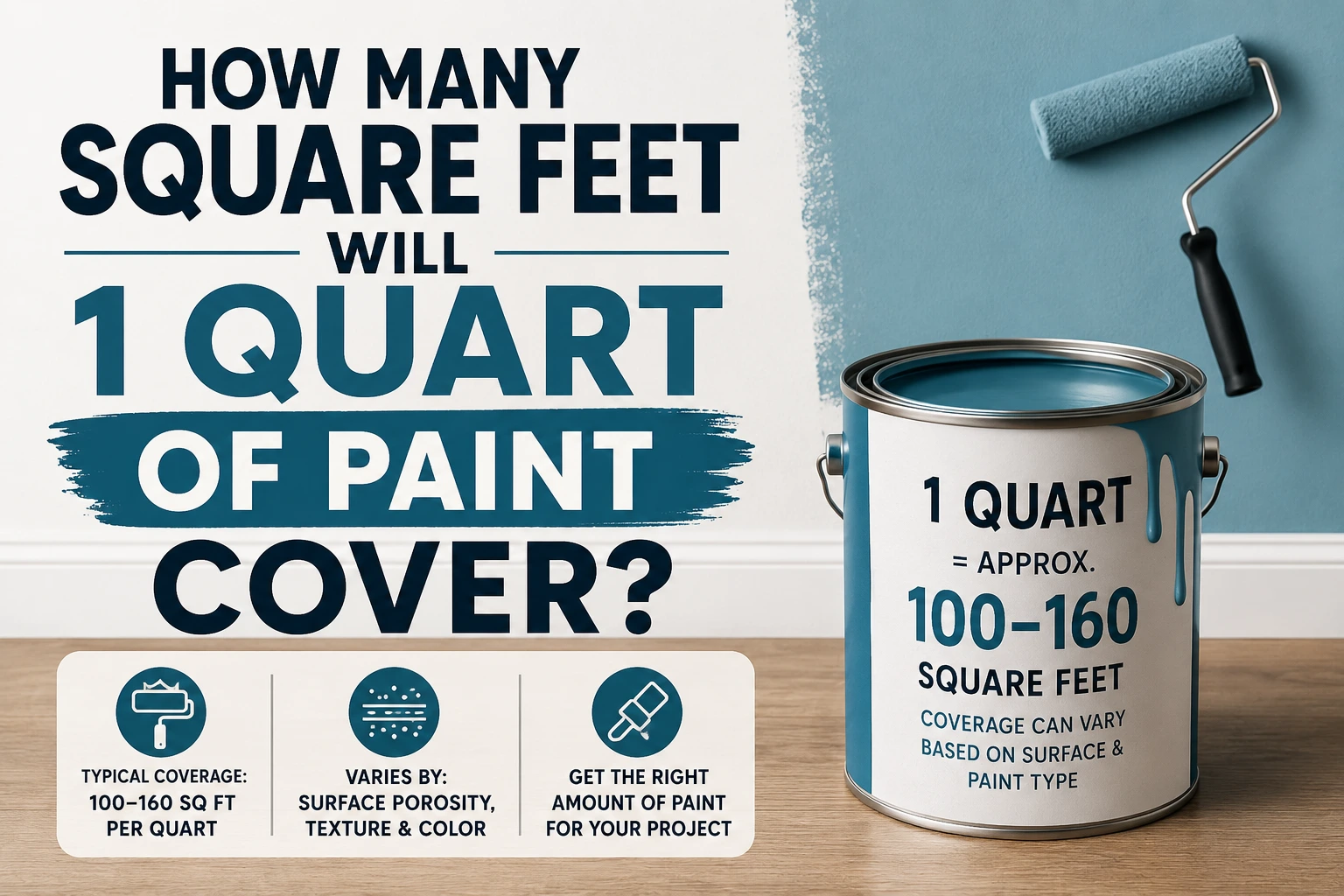
The short answer is that 1 quart of paint typically covers between 90 and 100 square feet with one coat, depending on the type of paint and the surface being painted.
Most paint manufacturers estimate coverage based on smooth, properly prepared surfaces. However, actual coverage can vary depending on factors such as texture, porosity, application method, and the number of coats required.
Understanding paint coverage helps you:
- Avoid buying too much paint
- Prevent running out mid-project
- Estimate project costs accurately
- Reduce waste
- Plan painting jobs efficiently
In this guide, you’ll learn exactly how much area a quart of paint covers, how to calculate your paint needs, and how different surfaces affect coverage.
Quick Answer: Paint Coverage Per Quart
A standard quart contains one-fourth of a gallon.
Since most gallons cover approximately 350–400 square feet, a quart generally covers:
4400 sq ft=100 sq ft
Typical Coverage
| Paint Quantity | Approximate Coverage |
|---|---|
| 1 Quart | 90–100 sq ft |
| 1 Gallon | 350–400 sq ft |
| 2 Gallons | 700–800 sq ft |
| 5 Gallons | 1,750–2,000 sq ft |
For most projects, it’s safe to assume:
1 quart = about 100 square feet per coat.
Understanding Paint Coverage
Paint coverage refers to the amount of surface area a specific volume of paint can cover.
Manufacturers calculate coverage under ideal conditions:
- Smooth walls
- Properly primed surfaces
- Even application
- Standard thickness
In real-world situations, coverage often varies.
Why Coverage Matters
Knowing paint coverage helps with:
- Budgeting
- Material purchasing
- Scheduling projects
- Preventing shortages
Even small miscalculations can add unnecessary costs to a project.
How Many Square Feet Will 1 Quart of Paint Cover on Different Surfaces?
Not all surfaces absorb paint equally.
Smooth Drywall
Coverage is usually highest on smooth interior walls.
Expected coverage:
- 90–100 square feet per quart
Previously Painted Walls
If the wall is already painted and in good condition:
- Coverage often remains close to 100 sq ft
Textured Walls
Textured surfaces require more paint because of their uneven profile.
Coverage may drop to:
- 70–90 square feet per quart
Brick and Masonry
Porous materials absorb more paint.
Coverage may range:
- 60–90 square feet per quart
Raw Wood
Unsealed wood absorbs paint heavily.
Coverage often decreases significantly unless primed first.
Factors That Affect Paint Coverage
Several variables determine how far a quart of paint will go.
Surface Texture
Smooth surfaces use less paint.
Rough surfaces use more.
Examples include:
- Stucco
- Brick
- Popcorn ceilings
- Textured drywall
Surface Condition
Damaged or porous surfaces absorb more paint.
Common issues include:
- Cracks
- Dry wood
- Unsealed drywall
Paint Type
Different paint formulations provide different coverage rates.
Examples:
| Paint Type | Typical Coverage |
|---|---|
| Interior Latex | Excellent |
| Acrylic Paint | Very Good |
| Exterior Paint | Good |
| Chalk Paint | Moderate |
| Specialty Paints | Varies |
Application Method
Paint can be applied using:
- Brush
- Roller
- Sprayer
Sprayers often use more paint due to overspray.
Number of Coats
Coverage estimates are generally based on one coat.
If two coats are required:
100 sq ft÷2=50 sq ft per coat pair
A quart covering 100 sq ft with one coat may only cover 50 sq ft if two coats are necessary.
Paint Coverage Chart
This chart helps estimate paint needs quickly.
| Area Size | Approximate Paint Needed |
|---|---|
| 25 sq ft | 1 cup |
| 50 sq ft | 1 pint |
| 100 sq ft | 1 quart |
| 400 sq ft | 1 gallon |
| 800 sq ft | 2 gallons |
| 1,600 sq ft | 4 gallons |
Use this chart as a general guideline.
Always verify manufacturer recommendations.
How to Calculate Paint Needed for a Project
Estimating paint requirements is simple.
Step 1: Measure the Surface
For a wall:
Length × Height = Area
Example:
10×8=80 sq ft
A wall measuring 10 feet by 8 feet equals 80 square feet.
Step 2: Determine Coverage
Assume:
- 1 quart covers 100 sq ft
Step 3: Calculate Paint Required
For an 80 sq ft wall:
80÷100=0.8 quart
You would need approximately 0.8 quart for one coat.
Step 4: Account for Additional Coats
If two coats are needed:
- Double the paint estimate
Real-World Examples of Quart Paint Coverage
Example 1: Accent Wall
Wall dimensions:
- 12 feet wide
- 8 feet high
Calculation:
12×8=96 sq ft
One quart is typically enough for one coat.
Example 2: Small Bathroom
A small bathroom may have approximately:
- 80–100 square feet of wall space
One quart may cover the walls if only one coat is needed.
Example 3: Furniture Painting
A dresser often requires:
- Less than 50 square feet of paintable surface
One quart can usually complete multiple furniture pieces.
Example 4: Interior Doors
A standard interior door typically requires:
- 20–25 square feet of coverage
One quart can paint several doors.
Interior vs Exterior Paint Coverage
Coverage can differ significantly.
Interior Paint
Advantages:
- Smooth application
- Lower absorption
- Better coverage rates
Typical coverage:
- 90–100 sq ft per quart
Exterior Paint
Exterior surfaces face:
- Weather exposure
- Rough textures
- Greater absorption
Typical coverage:
- 70–100 sq ft per quart
Exterior projects often require more paint than interior projects.
Common Painting Mistakes That Waste Paint
Many homeowners buy more paint than necessary due to avoidable mistakes.
Skipping Primer
Unprimed surfaces absorb extra paint.
Primer helps:
- Improve adhesion
- Reduce paint usage
- Create uniform coverage
Applying Paint Too Thick
Heavy coats can:
- Drip
- Waste paint
- Increase drying time
Poor Surface Preparation
Dirty walls reduce paint performance.
Always clean surfaces before painting.
Ignoring Manufacturer Guidelines
Coverage recommendations vary by brand and product.
Read the label carefully.
Expert Tips for Getting Maximum Coverage
Prime Porous Surfaces
Primer reduces absorption dramatically.
Use High-Quality Rollers
Better tools improve paint transfer and reduce waste.
Paint in Good Conditions
Ideal conditions include:
- Moderate temperatures
- Low humidity
- Proper ventilation
Stir Paint Thoroughly
Well-mixed paint applies more evenly.
Buy Slightly Extra Paint
It’s wise to keep a small amount for future touch-ups.
When One Quart of Paint Is Enough
A quart often works well for:
- Accent walls
- Furniture projects
- Interior doors
- Cabinets
- Small bathrooms
- Decorative projects
For larger rooms, a gallon is usually more practical.
Benefits of Accurate Paint Estimates
Save Money
Avoid buying unnecessary paint.
Reduce Waste
Less leftover paint means less environmental impact.
Finish Projects Faster
Having the correct amount prevents delays.
Improve Planning
Accurate estimates simplify scheduling and budgeting.
FAQs
1. How many square feet will 1 quart of paint cover?
Most paint products cover approximately 90–100 square feet per quart with one coat.
2. Can a quart of paint cover an entire room?
Usually not. A quart may cover a small accent wall or bathroom, but most rooms require at least a gallon.
3. How many coats does a quart of paint cover?
Coverage estimates are generally based on one coat. Two coats cut the effective coverage area roughly in half.
4. Does textured drywall use more paint?
Yes. Textured surfaces absorb more paint and reduce overall coverage.
5. Is a quart of paint enough for furniture?
In many cases, yes. One quart can often paint multiple furniture pieces depending on size and design.
Conclusion
So, how many square feet will 1 quart of paint cover? In most situations, a quart of paint covers approximately 90 to 100 square feet with one coat on a properly prepared surface.
Actual coverage depends on factors such as surface texture, paint type, application method, and the number of coats required. Smooth interior walls generally achieve the best coverage, while rough or porous surfaces may require significantly more paint.
By measuring carefully, preparing surfaces properly, and understanding paint coverage rates, you can estimate your needs accurately, save money, and complete your painting project with confidence.