
If you’ve ever searched how many square feet is an acre lot, you’re not alone. Whether you’re buying land, building a house, planning a farm, or comparing property listings, understanding the size of an acre is essential.
The simple answer is:
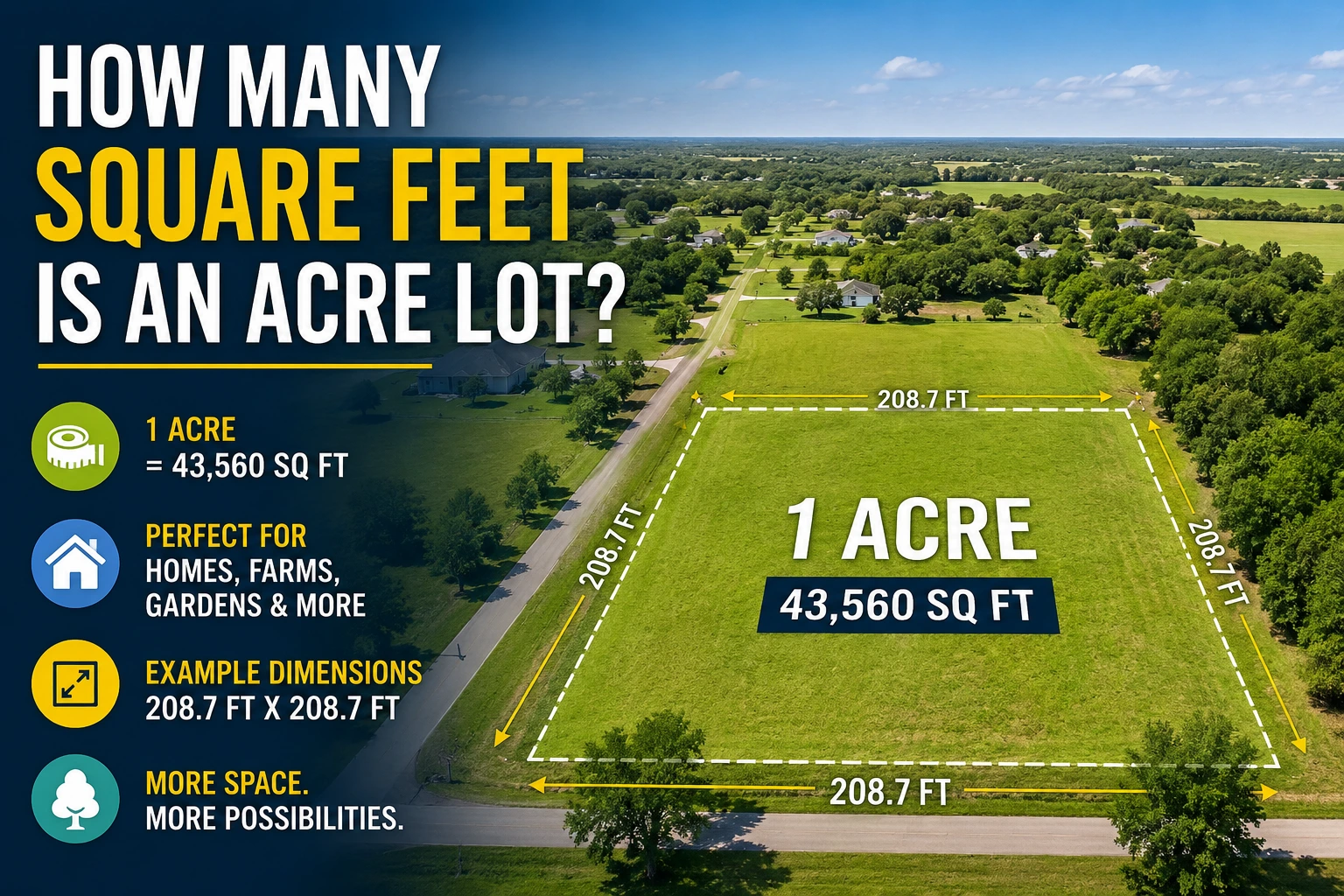
One acre equals 43,560 square feet.
While that number is easy to remember, many people struggle to picture what an acre actually looks like. Land isn’t always perfectly square, and lot shapes can vary significantly.
This guide explains everything you need to know about acre lots, including dimensions, comparisons, real-world examples, conversion charts, and expert tips to help you better understand property sizes.
What Is an Acre Lot?
An acre is a standard unit of land measurement commonly used in the United States and several other countries.
Rather than measuring length, an acre measures area. It tells you how much surface space a piece of land covers.
An acre lot may be:
- Square
- Rectangular
- Triangular
- Irregularly shaped
Regardless of the shape, the total area remains exactly 43,560 square feet.
Real estate listings often describe land using acres because it is much easier than listing thousands of square feet.
How Many Square Feet Is an Acre Lot?
The exact measurement is:
| Land Measurement | Square Feet |
|---|---|
| 1 Acre | 43,560 sq ft |
| ½ Acre | 21,780 sq ft |
| ¼ Acre | 10,890 sq ft |
| 2 Acres | 87,120 sq ft |
| 5 Acres | 217,800 sq ft |
| 10 Acres | 435,600 sq ft |
So whenever someone asks how many square feet is an acre lot, the correct answer is always:
43,560 square feet.
Why Is an Acre Used to Measure Land?
Acres have been used for centuries because they make measuring large areas simpler.
Instead of saying:
“This property has 43,560 square feet.”
A real estate listing simply says:
“This property is one acre.”
This makes comparing lots much easier.
Acres are commonly used for:
- Residential land
- Farms
- Ranches
- Commercial developments
- Recreational property
- Agricultural land
What Does an Acre Look Like?
Many people know the number 43,560, but they still can’t picture it.
Here are a few easy ways to visualize one acre.
A Football Field
A full American football field (including end zones) is approximately 57,600 square feet.
One acre is about 75% of a football field.
Tennis Courts
One acre can fit around 16 tennis courts.
Parking Spaces
Depending on spacing, one acre can hold approximately 150–170 parking spaces.
Residential Homes
An acre can comfortably fit several average-sized homes, depending on local zoning laws.
Acre Dimensions Explained
Many people think an acre has fixed dimensions.
It doesn’t.
An acre simply has a total area of 43,560 square feet.
Examples include:
| Length | Width |
|---|---|
| 208.7 ft | 208.7 ft |
| 435.6 ft | 100 ft |
| 660 ft | 66 ft |
| 871.2 ft | 50 ft |
Each of these examples equals one acre.
This flexibility allows developers to design lots that suit roads, terrain, and local regulations.
Acre Conversion Chart
Here’s a quick reference for common land conversions.
| Unit | Equivalent to 1 Acre |
|---|---|
| Square Feet | 43,560 |
| Square Yards | 4,840 |
| Square Meters | 4,046.86 |
| Hectares | 0.4047 |
| Square Miles | 0.0015625 |
These conversions are useful when comparing international property listings.
Comparing an Acre to Other Lot Sizes
Residential lots vary greatly depending on location.
| Lot Size | Square Feet |
|---|---|
| Small Urban Lot | 5,000 |
| Average Suburban Lot | 8,000–12,000 |
| Quarter Acre | 10,890 |
| Half Acre | 21,780 |
| One Acre | 43,560 |
| Two Acres | 87,120 |
As you can see, an acre offers significantly more space than the average suburban property.
Benefits of Buying an Acre Lot
Buying a one-acre property offers many advantages, especially if you want extra outdoor space or long-term investment potential. Since an acre equals 43,560 square feet, it provides far more room than the average residential lot.
Some of the biggest benefits include:
More Privacy
A larger lot creates more distance between you and neighboring homes. This added space can reduce noise and provide a more peaceful living environment.
Room for Expansion
An acre gives homeowners the flexibility to build additional structures, such as:
- Guest houses
- Detached garages
- Workshops
- Barns
- Home offices
- Storage sheds
Before building, always check local zoning and building regulations.
Space for Outdoor Living
Many homeowners choose acre lots because they can enjoy:
- Large gardens
- Swimming pools
- Outdoor kitchens
- Patios
- Fire pits
- Children’s play areas
- Sports courts
Better Long-Term Value
Land is a limited resource. In many growing communities, larger lots often maintain strong resale value, especially in desirable locations.
Potential Drawbacks of an Acre Lot
While owning an acre has many advantages, it also comes with responsibilities.
Higher Maintenance
More land means more work, including:
- Mowing grass
- Trimming trees
- Weed control
- Irrigation
- Snow removal (in colder climates)
Increased Costs
A larger property may involve higher:
- Property taxes
- Landscaping expenses
- Fence installation costs
- Utility costs
- Maintenance budgets
More Time Required
If you enjoy gardening and outdoor projects, this may not be an issue. However, homeowners with busy schedules should consider the time needed to maintain a large property.
How to Measure an Acre Lot
If you’re buying land or verifying property dimensions, measuring the lot correctly is essential.
Step 1: Find the Property Dimensions
Check:
- Property survey
- Title documents
- County records
- Real estate listing
Step 2: Measure Length and Width
For rectangular lots, use this formula:
Length × Width = Square Feet
Example:
- Length = 220 feet
- Width = 198 feet
220 × 198 = 43,560 square feet
This equals one acre.
Step 3: Verify with a Survey
For irregularly shaped lots, hire a licensed land surveyor or review an official survey map. Irregular lots may still total exactly one acre even if each side has a different length.
Real-World Examples of One Acre
Understanding how many square feet is an acre lot becomes easier when you compare it to familiar properties.
Example 1: Residential Property
A family purchases a one-acre lot to build:
- A 2,800-square-foot home
- Three-car garage
- Swimming pool
- Garden
- Backyard play area
There is still plenty of open space remaining.
Example 2: Hobby Farm
A homeowner uses one acre for:
- Vegetable gardens
- Fruit trees
- Chicken coop
- Greenhouse
- Small storage barn
One acre provides enough room for many small-scale farming activities.
Example 3: Commercial Property
A contractor purchases a one-acre lot for:
- Equipment storage
- Office building
- Employee parking
- Outdoor material storage
Common Acre Lot Shapes
Although every acre contains 43,560 square feet, its shape can vary.
| Shape | Example Dimensions |
|---|---|
| Square | 208.7 ft × 208.7 ft |
| Rectangle | 435.6 ft × 100 ft |
| Narrow Rectangle | 660 ft × 66 ft |
| Irregular | Total area = 43,560 sq ft |
The shape affects how usable the land is, even though the total area stays the same.
Expert Tips Before Buying an Acre Lot
Before purchasing an acre of land, keep these expert recommendations in mind.
Check Zoning Laws
Some properties restrict:
- Home businesses
- Livestock
- Multiple buildings
- Rental units
Always review local zoning requirements.
Review Utility Access
Verify that the property has access to:
- Electricity
- Water
- Sewer or septic
- Internet service
- Natural gas (if available)
Understand Property Boundaries
Never rely only on fences. Request a recent land survey to confirm the exact boundaries.
Evaluate Drainage
Walk the property after heavy rain if possible. Poor drainage can affect landscaping and future construction.
Consider Future Growth
Research nearby developments. Future schools, roads, and shopping centers may increase property value over time.
Common Mistakes People Make
When comparing land sizes, many buyers misunderstand acreage. Avoid these common mistakes.
Assuming Every Acre Is Square
An acre measures area, not shape. It can be square, rectangular, or irregular.
Ignoring Zoning Restrictions
A large lot doesn’t automatically allow additional buildings or businesses.
Forgetting Maintenance Costs
Owning more land usually means higher maintenance expenses.
Comparing Lots Only by Acreage
Two one-acre lots may have very different layouts, slopes, access roads, and usable space.
Confusing Square Feet with Linear Feet
Square feet measure area, while linear feet measure length. These units are not interchangeable.
Why Understanding Acre Measurements Matters
Knowing that one acre equals 43,560 square feet helps you make better decisions when buying or selling property.
Whether you’re:
- Purchasing your first home
- Investing in land
- Building a custom house
- Starting a hobby farm
- Comparing real estate listings
Understanding acreage helps you estimate usable space, compare values, and plan future improvements with confidence.
FAQ 1: How many square feet is an acre lot?
One acre lot contains exactly 43,560 square feet. This standard measurement is used for residential, commercial, and agricultural land.
FAQ 2: What are the dimensions of a one-acre lot?
There are no fixed dimensions. A square acre measures approximately 208.7 feet by 208.7 feet, but any shape totaling 43,560 square feet equals one acre.
FAQ 3: Is an acre bigger than a football field?
No. A standard American football field, including end zones, covers about 57,600 square feet, making it larger than one acre. An acre is roughly 75% of a football field.
FAQ 4: How many houses can fit on one acre?
The number depends on home size, setbacks, zoning laws, and local regulations. In many suburban areas, several average-sized homes may fit on an acre if permitted.
FAQ 5: Why do real estate listings use acres instead of square feet?
Acres make it easier to describe larger parcels of land. Instead of listing 43,560 square feet, sellers simply describe the property as one acre, making comparisons simpler for buyers.
Conclusion
Understanding how many square feet is an acre lot is essential for anyone buying, selling, or developing land. The answer is straightforward: one acre equals 43,560 square feet. However, knowing the number is only the first step. Visualizing the size, comparing it with other lot sizes, understanding different acre dimensions, and considering zoning, maintenance, and future use will help you make informed decisions.
Whether you’re planning to build a dream home, invest in real estate, start a small farm, or simply compare property listings, understanding acreage gives you greater confidence. By using the conversion charts, practical examples, and expert tips in this guide, you’ll be better prepared to evaluate land and choose the right property for your needs.
Discover more