

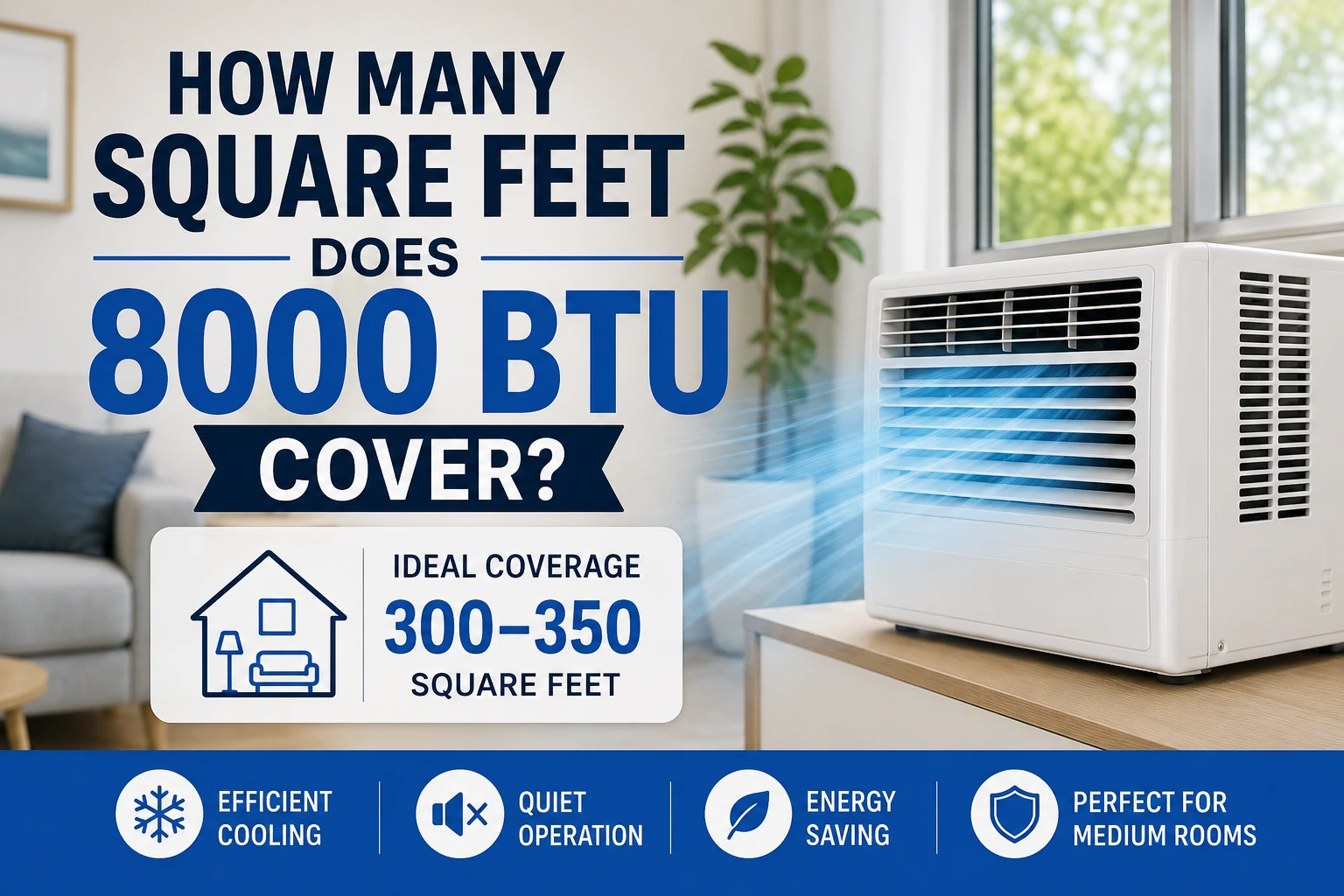
If you’re shopping for a new air conditioner, one of the most common questions is how many square feet does 8000 BTU cover. Choosing the right BTU rating is important because an undersized unit won’t cool your room effectively, while an oversized one can waste energy and increase your electricity bill.
In general, an 8000 BTU air conditioner covers approximately 300 to 350 square feet under normal conditions. However, several factors such as insulation, ceiling height, sunlight, and the number of occupants can affect its actual cooling performance.
This guide explains everything you need to know about 8000 BTU cooling capacity, ideal room sizes, comparison charts, and expert tips to help you make the right decision.
What Does BTU Mean?
BTU stands for British Thermal Unit, a standard measurement used to describe how much heat an air conditioner can remove from a room every hour.
Simply put:
- Higher BTU = More cooling power
- Lower BTU = Suitable for smaller rooms
Choosing the correct BTU rating helps your air conditioner cool efficiently while keeping energy costs under control.
Why BTU Matters
The correct BTU size provides:
- Faster cooling
- Better humidity control
- Lower electricity bills
- Longer AC lifespan
- More consistent room temperature
If your AC is too small, it will run continuously without reaching the desired temperature.
How Many Square Feet Does 8000 BTU Cover?
An 8000 BTU air conditioner is generally recommended for rooms between 300 and 350 square feet.
Examples include:
- Large bedrooms
- Studio apartments
- Medium-sized living rooms
- Home offices
- Guest rooms
Quick Coverage Chart
| BTU Rating | Recommended Room Size |
|---|---|
| 5,000 BTU | 100–150 sq ft |
| 6,000 BTU | 150–250 sq ft |
| 8,000 BTU | 300–350 sq ft |
| 10,000 BTU | 400–450 sq ft |
| 12,000 BTU | 500–550 sq ft |
| 14,000 BTU | 600–700 sq ft |
Factors That Affect How Many Square Feet an 8000 BTU Covers
Although manufacturers recommend 300–350 square feet, real-world performance depends on several conditions.
1. Ceiling Height
Most BTU recommendations assume an 8-foot ceiling.
Higher ceilings increase the room’s air volume, meaning your AC has more space to cool.
2. Sunlight Exposure
Rooms receiving direct sunlight throughout the day become much warmer.
South-facing rooms or spaces with large windows may require additional cooling capacity.
3. Insulation
Well-insulated homes retain cool air much better than older buildings with poor insulation.
Good insulation allows an 8000 BTU unit to cool more efficiently.
4. Number of Occupants
Every person generates body heat.
If multiple people regularly use the room, your air conditioner will need extra cooling power.
5. Heat-Producing Appliances
Electronics and appliances such as:
- Computers
- TVs
- Gaming consoles
- Kitchen equipment
all generate additional heat.
If your room contains several heat-producing devices, consider a larger BTU rating.
Is an 8000 BTU Air Conditioner Right for You?
Let’s look at common room types.
Bedrooms
An 8000 BTU AC works exceptionally well for:
- Master bedrooms
- Large guest rooms
- Bedrooms with attached sitting areas
Smaller bedrooms may only require a 5000–6000 BTU unit.
Living Rooms
Medium-sized living rooms around 300 square feet are an excellent match.
Large open-concept living rooms may require 10,000 BTU or more.
Home Offices
If you work from home with multiple monitors and computers, an 8000 BTU AC usually provides comfortable cooling while handling the extra heat generated by electronics.
Studio Apartments
Many studio apartments fall within the ideal cooling range for an 8000 BTU unit, making it one of the most popular choices.
8000 BTU vs Other AC Sizes
| BTU | Ideal Room Size | Best For |
| 5000 | 100–150 sq ft | Small bedrooms |
| 6000 | 150–250 sq ft | Offices |
| 8000 | 300–350 sq ft | Large bedrooms, studios |
| 10000 | 400–450 sq ft | Living rooms |
| 12000 | 500–550 sq ft | Large family rooms |
The 8000 BTU model provides an excellent balance between cooling performance and energy efficiency for medium-sized spaces.
How to Calculate the Right BTU for Your Room
Follow these simple steps:
- Measure room length.
- Measure room width.
- Multiply both numbers.
Example:
20 feet × 16 feet = 320 square feet
A room measuring 320 square feet is ideal for an 8000 BTU air conditioner.
If the room receives heavy sunlight, add approximately 10% more cooling capacity.
If the room is heavily shaded, you may not need any additional BTU.
Benefits of Choosing an 8000 BTU Air Conditioner
There are several reasons homeowners choose this size.
Energy Efficient
Compared to larger units, an 8000 BTU AC uses less electricity while still providing excellent cooling for medium-sized rooms.
Affordable
These units typically cost less than higher-capacity models.
Easy Installation
Window and portable 8000 BTU units are generally lightweight and easier to install.
Quiet Operation
Many modern models operate quietly, making them ideal for bedrooms and offices.
Excellent Humidity Control
Besides cooling, these units help reduce indoor humidity, making your room feel more comfortable.
Common Mistakes When Choosing AC Size
Avoid these common errors:
- Buying based only on price
- Ignoring room insulation
- Forgetting ceiling height
- Not considering sunlight
- Choosing an oversized AC
- Choosing an undersized AC
Proper sizing improves comfort and saves money over time.
Expert Tips for Better Cooling
For the best performance:
- Keep doors and windows closed.
- Clean the air filter every month.
- Use blackout curtains during hot afternoons.
- Seal air leaks around windows.
- Use ceiling fans to improve air circulation.
- Keep furniture away from the air conditioner.
These simple steps can significantly improve cooling efficiency.
FAQ 1: Is 8000 BTU enough for a 300-square-foot room?
Yes. An 8000 BTU air conditioner is designed to cool rooms between 300 and 350 square feet under normal conditions.
FAQ 2: Can an 8000 BTU AC cool a living room?
Yes, provided the living room is around 300 to 350 square feet and isn’t heavily exposed to sunlight.
FAQ 3: Is 8000 BTU enough for a bedroom?
Absolutely. It is an excellent choice for large bedrooms and master bedrooms.
FAQ 4: What happens if my AC has too many BTUs?
An oversized AC cools the room too quickly without properly removing humidity, which can leave the room feeling damp and uncomfortable.
FAQ 5: Does insulation affect BTU requirements?
Yes. Better insulation improves cooling efficiency, while poor insulation may require a larger BTU unit.
Conclusion
So, how many square feet does 8000 BTU cover? In most cases, an 8000 BTU air conditioner effectively cools rooms between 300 and 350 square feet. However, factors such as ceiling height, insulation, sunlight, occupancy, and indoor appliances can influence its performance.
Before purchasing an air conditioner, always measure your room carefully and consider its unique conditions. Selecting the right BTU rating ensures better comfort, lower energy bills, quieter operation, and a longer-lasting cooling system. An 8000 BTU AC remains one of the best choices for medium-sized bedrooms, home offices, studio apartments, and similar living spaces where efficient and reliable cooling is essential.
Discover more