
If you’re planning a lawn renovation, one of the first questions you’ll likely ask is how many square feet in a pallet of zoysia sod. Knowing the answer helps you estimate costs, schedule delivery, and avoid buying too much or too little sod.
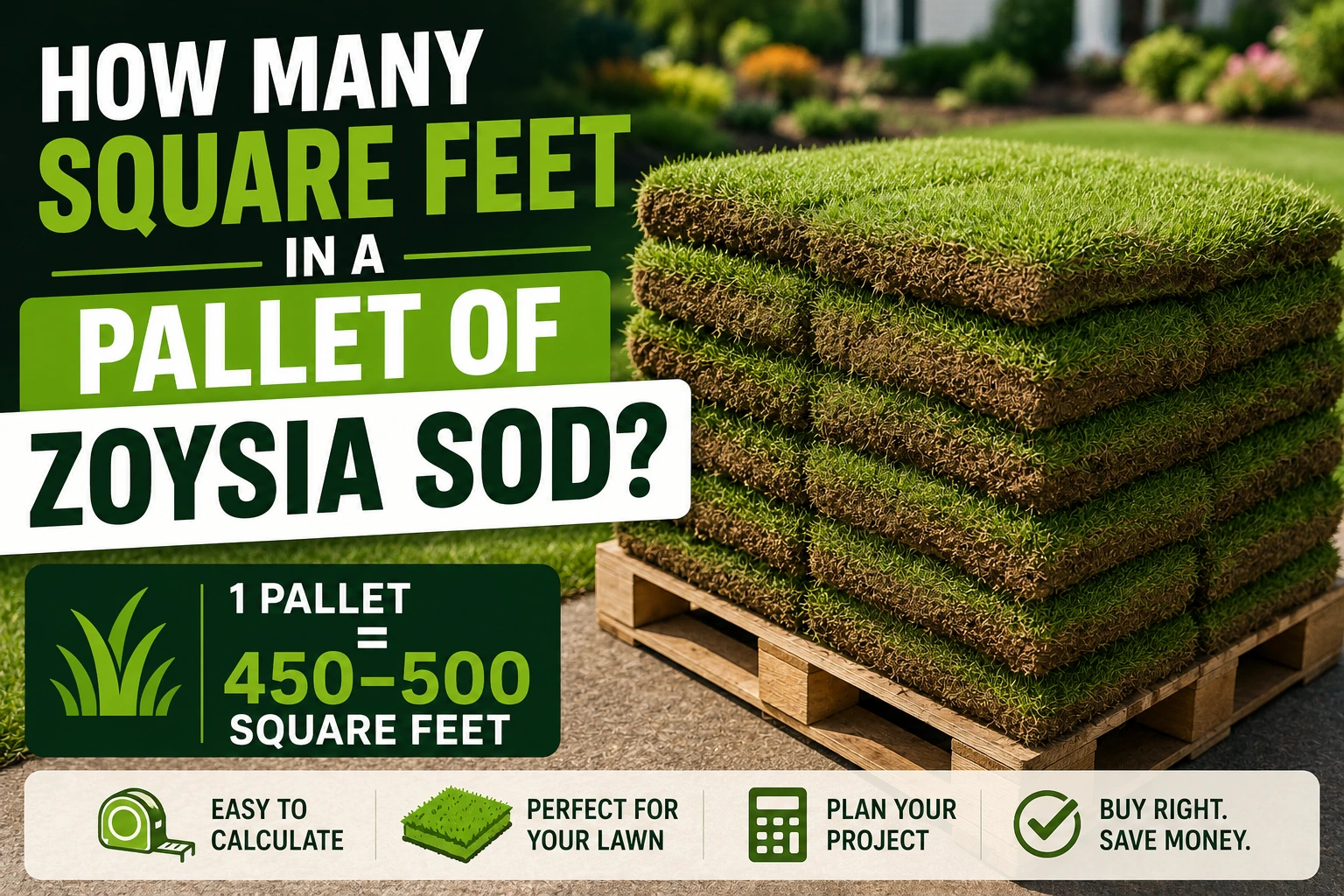
In most cases, a standard pallet of Zoysia sod covers between 450 and 500 square feet. However, the exact amount can vary depending on the sod farm, pallet size, and how the grass is harvested and stacked.
Understanding pallet coverage is essential before starting any landscaping project. In this guide, you’ll learn how much area a pallet covers, how to calculate your lawn size, how many pallets you’ll need, and practical tips for a successful Zoysia sod installation.
Quick Answer
For most residential landscaping projects:
| Sod Type | Coverage Per Pallet |
|---|---|
| Zoysia Sod | 450–500 sq ft |
The most common industry standard is:
1 pallet of Zoysia sod = approximately 450 square feet
Some suppliers package slightly larger pallets that cover up to 500 square feet.
Always confirm coverage with your local sod supplier before ordering.
What Is Zoysia Sod?
Zoysia is a warm-season turfgrass known for its:
- Dense growth pattern
- Drought resistance
- Heat tolerance
- Attractive appearance
- Reduced weed invasion
Originally introduced from Asia, Zoysia has become one of the most popular lawn grasses in the southern and transition regions of the United States.
Homeowners appreciate Zoysia because it creates a thick carpet-like lawn that feels soft underfoot while requiring less water than many cool-season grasses.
How Many Square Feet Does a Pallet of Zoysia Sod Cover?
The exact answer depends on the supplier, but most pallets contain enough sod to cover:
Standard Coverage Range
- 400 square feet
- 450 square feet
- 500 square feet
The most common coverage amount is:
450 square feet per pallet
This standard allows landscapers and homeowners to estimate projects quickly.
Why Coverage Varies by Supplier
Different farms cut and package sod differently.
Factors include:
- Piece dimensions
- Roll thickness
- Harvesting methods
- Shipping requirements
- Local industry standards
Some suppliers prioritize easier handling with smaller pallets, while others maximize coverage per shipment.
Typical Zoysia Sod Pallet Coverage Chart
Use the table below as a quick reference.
| Number of Pallets | Coverage Area |
|---|---|
| 1 | 450 sq ft |
| 2 | 900 sq ft |
| 3 | 1,350 sq ft |
| 4 | 1,800 sq ft |
| 5 | 2,250 sq ft |
| 6 | 2,700 sq ft |
| 7 | 3,150 sq ft |
| 8 | 3,600 sq ft |
| 10 | 4,500 sq ft |
This chart assumes a standard 450-square-foot pallet.
How to Calculate How Much Zoysia Sod You Need
Accurate measurements help prevent waste and unnecessary expenses.
Measure Lawn Length and Width
For rectangular areas:
Measure:
- Length
- Width
Using a tape measure.
Calculate Square Footage
Use the formula:
Square Feet=Length×Width
Example:
- Length = 50 feet
- Width = 30 feet
50 × 30 = 1,500 square feet
Determine Number of Pallets
Divide total square footage by pallet coverage.
Example:
1,500 ÷ 450 = 3.33 pallets
You’ll need:
4 pallets
Always round up because sod cannot be purchased in partial pallet amounts from many suppliers.
Real-World Examples
Small Yard
Lawn Size:
400 square feet
Coverage Needed:
- 1 pallet
You’ll have a small amount left over for repairs.
Medium Lawn
Lawn Size:
1,200 square feet
Calculation:
1,200 ÷ 450 = 2.67
Order:
- 3 pallets
Large Property
Lawn Size:
3,000 square feet
Calculation:
3,000 ÷ 450 = 6.67
Order:
- 7 pallets
This provides sufficient coverage with a small safety margin.
Factors That Affect Zoysia Sod Coverage
Several variables influence actual pallet coverage.
Sod Piece Size
Common sod pieces include:
- 16″ × 24″
- 18″ × 24″
- Large rolls
- Small rolls
Different dimensions affect how many pieces fit on a pallet.
Pallet Weight
Most pallets weigh:
- 2,000 to 3,000 pounds
Weight depends on:
- Soil moisture
- Grass variety
- Soil thickness
Heavier pallets do not always mean greater coverage.
Supplier Standards
Coverage standards vary between growers.
Always ask:
- Exact pallet coverage
- Piece dimensions
- Number of pieces per pallet
Before placing an order.
Benefits of Choosing Zoysia Sod
Zoysia remains a top choice for homeowners because of several advantages.
Excellent Drought Tolerance
Once established, Zoysia requires less water than many grass species.
Dense Growth
Its thick growth pattern naturally discourages weeds.
Heat Resistance
Zoysia performs exceptionally well in hot climates.
Durable Surface
The grass handles moderate foot traffic effectively.
Attractive Appearance
Many homeowners love its lush green color and uniform texture.
Potential Drawbacks of Zoysia Sod
No grass type is perfect.
Consider these disadvantages before purchasing.
Slow Establishment
Zoysia grows slower than some other warm-season grasses.
Dormancy During Winter
In cooler temperatures, it turns brown until spring.
Higher Initial Cost
Zoysia sod often costs more than common Bermuda grass.
Thick Thatch Layer
Without proper maintenance, thatch buildup can become an issue.
Zoysia Sod vs Other Popular Grass Types
| Feature | Zoysia | Bermuda | St. Augustine |
|---|---|---|---|
| Drought Tolerance | Excellent | Excellent | Moderate |
| Shade Tolerance | Good | Poor | Good |
| Foot Traffic | Good | Excellent | Moderate |
| Growth Rate | Slow | Fast | Moderate |
| Maintenance | Moderate | High | Moderate |
For many homeowners, Zoysia offers one of the best balances between beauty and durability.
Cost of a Pallet of Zoysia Sod
Prices vary based on region and variety.
Typical range:
| Coverage | Average Cost |
|---|---|
| 450 sq ft pallet | $180–$350 |
| Installed | $0.80–$2.50 per sq ft |
Factors affecting cost:
- Grass variety
- Local availability
- Delivery distance
- Seasonal demand
- Installation services
Premium Zoysia cultivars often command higher prices.
Expert Tips for Installing Zoysia Sod
Professional landscapers follow several best practices.
Prepare Soil Properly
Remove:
- Existing weeds
- Rocks
- Debris
Level the area before installation.
Install Immediately
Fresh sod should be installed within 24 hours of delivery whenever possible.
Stagger Seams
Lay sod pieces in a brick-like pattern.
This improves appearance and rooting.
Water Thoroughly
Keep sod consistently moist during the establishment period.
Watering is critical during the first few weeks.
Limit Foot Traffic
Avoid heavy activity until roots firmly establish themselves in the soil.
Common Mistakes to Avoid
Many homeowners make avoidable errors.
Ordering Too Little Sod
Always add 5% to 10% extra for:
- Waste
- Irregular shapes
- Future repairs
Poor Measurements
Incorrect measurements can lead to costly shortages.
Double-check dimensions before ordering.
Delaying Installation
Sod deteriorates quickly when left stacked on pallets.
Install promptly.
Underwatering
Insufficient moisture can prevent proper root development.
Ignoring Soil Quality
Healthy soil dramatically improves long-term lawn success.
Consider soil testing before installation.
9. FAQs
1. How many square feet in a pallet of Zoysia sod?
Most pallets cover between 450 and 500 square feet, with 450 square feet being the most common standard.
2. How many pallets of Zoysia sod do I need for 1,000 square feet?
At 450 square feet per pallet, you’ll need approximately 3 pallets.
3. Does every supplier sell the same pallet size?
No. Coverage varies between sod farms and distributors.
4. How much does a pallet of Zoysia sod weigh?
Most pallets weigh between 2,000 and 3,000 pounds depending on moisture content and soil thickness.
5. Is Zoysia sod worth the extra cost?
For many homeowners, yes. Its durability, drought tolerance, and dense growth often justify the higher upfront investment.
10. Conclusion
If you’re wondering how many square feet in a pallet of zoysia sod, the answer is typically 450 to 500 square feet, with 450 square feet being the industry standard used by many suppliers. Understanding pallet coverage helps you estimate costs, plan deliveries, and purchase the correct amount of sod for your project.
Before ordering, accurately measure your lawn, divide the total square footage by pallet coverage, and add a small buffer for waste. By following these steps, you’ll save money, reduce installation headaches, and enjoy a healthy, beautiful Zoysia lawn for years to come.
Discover more