

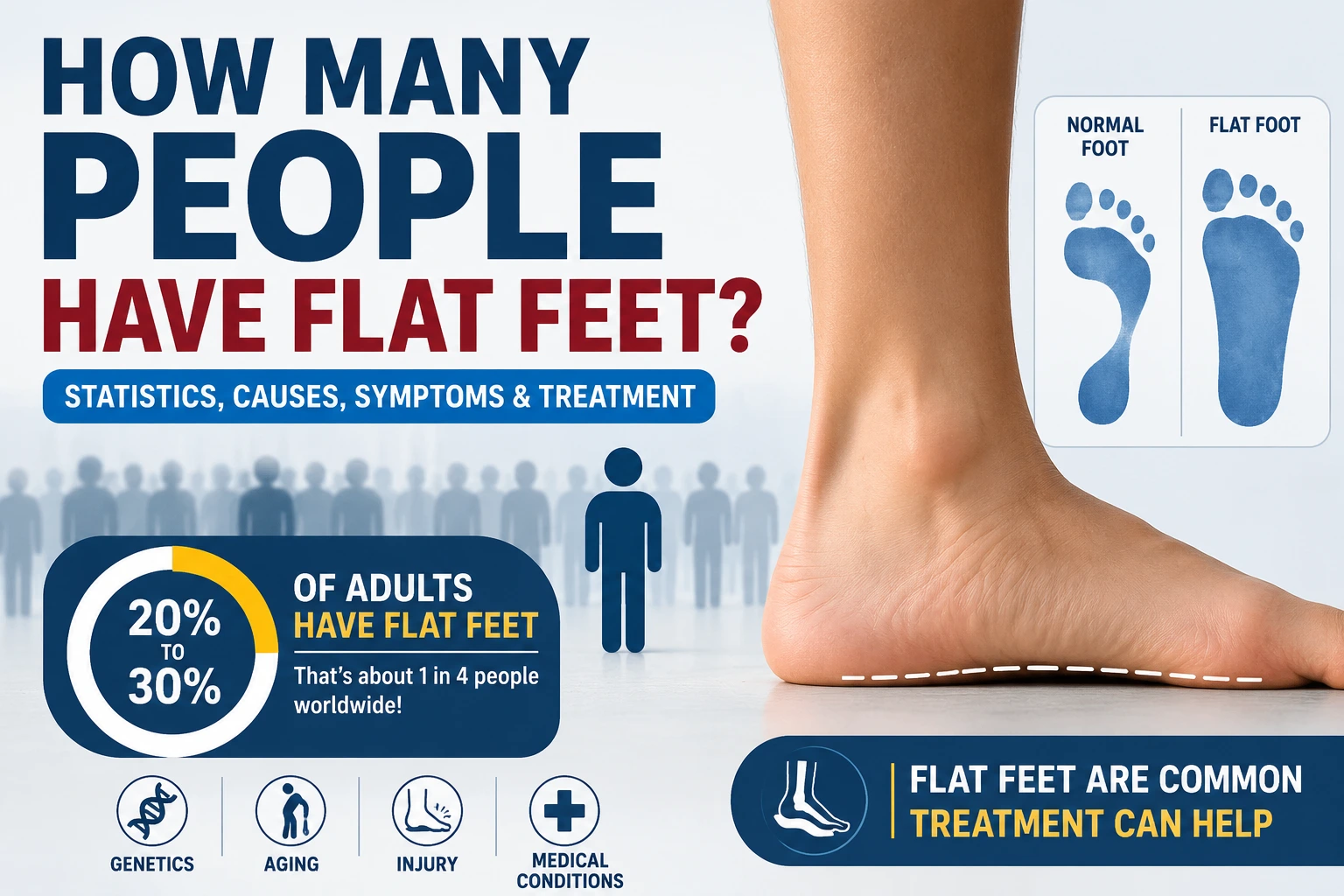
If you’ve ever looked at your footprints and noticed little or no arch, you may have wondered: how many people have flat feet?
The answer may surprise you. Flat feet are one of the most common foot conditions in the world. Millions of adults and children have flat feet, and many live completely normal lives without pain or mobility issues.
However, for some people, flat feet can contribute to discomfort, balance problems, and changes in walking patterns. Understanding how common flat feet are and what they mean for your health can help you make informed decisions about treatment and prevention.
In this guide, we’ll explore flat feet statistics, prevalence rates, causes, symptoms, and treatment options.
Quick Answer
Research suggests that approximately 20% to 30% of adults worldwide have flat feet.
Among children, the percentage is much higher because foot arches are still developing. In young children, flat feet may affect more than 40% of the population and often improve naturally with age.
This means that hundreds of millions of people around the world have some degree of flat-footedness.
What Are Flat Feet?
Flat feet, medically known as pes planus, occur when the arches of the feet collapse or fail to develop fully.
Definition of Flat Feet
A person with flat feet has little or no visible arch when standing.
Normally, the arch helps:
- Absorb shock
- Distribute body weight
- Improve balance
- Support walking and running
When the arch is absent, the entire sole of the foot may touch the ground.
Types of Flat Feet
There are two main types:
Flexible Flat Feet
- Arch appears when sitting
- Arch disappears when standing
- Most common type
- Often painless
Rigid Flat Feet
- Arch remains absent at all times
- Less common
- More likely to cause pain
How Many People Have Flat Feet Worldwide?
The prevalence of flat feet varies by age, genetics, lifestyle, and population studied.
Adult Statistics
Most studies estimate that:
| Population | Estimated Rate |
|---|---|
| Adults | 20%–30% |
| Older adults | 25%–40% |
| Athletes | Varies widely |
| Children | 15%–45% |
This means roughly one in every four adults may have flat feet.
Children’s Statistics
Flat feet are particularly common among children.
At birth, almost all babies appear flat-footed because:
- Arches have not yet developed
- Fat pads hide the arch
- Foot structures are still forming
By age 6 to 10, many children develop normal arches naturally.
Global Prevalence Estimates
Because populations differ, prevalence rates vary worldwide.
Factors influencing rates include:
- Genetics
- Obesity
- Physical activity levels
- Footwear habits
- Age distribution
Overall, flat feet remain one of the most frequently observed foot conditions globally.
How Common Are Flat Feet by Age Group?
Age plays a major role in foot arch development.
| Age Group | Flat Feet Prevalence |
|---|---|
| Infants | Very common |
| Children under 5 | 40–60% |
| School-age children | 15–30% |
| Adults | 20–30% |
| Seniors | Up to 40% |
The prevalence decreases during childhood and may increase again later in life as tissues weaken.
Flat Feet Prevalence Chart
Estimated Frequency
- 1 in 2 young children
- 1 in 4 adults
- 1 in 3 older adults
These figures show that flat feet are far from rare.
In fact, most people know someone with flat feet, even if they are unaware of it.
Why Do Some People Have Flat Feet?
Several factors can contribute to flat feet.
Genetics
Genetics is one of the strongest predictors.
If parents have flat feet, their children are more likely to develop them.
Aging
As people age:
- Tendons weaken
- Muscles lose strength
- Ligaments stretch
This can lead to fallen arches later in life.
Injury
Foot and ankle injuries can damage structures supporting the arch.
Examples include:
- Tendon tears
- Fractures
- Severe sprains
Medical Conditions
Some health conditions increase risk.
These include:
- Obesity
- Diabetes
- Arthritis
- Neuromuscular disorders
- Connective tissue diseases
Symptoms of Flat Feet
Many people have no symptoms at all.
Others may experience:
- Foot pain
- Heel pain
- Arch discomfort
- Ankle swelling
- Knee pain
- Hip pain
- Lower back discomfort
Symptoms often worsen after prolonged standing or physical activity.
Do Flat Feet Always Cause Problems?
No.
This is one of the biggest misconceptions about flat feet.
Many people:
- Walk normally
- Run normally
- Play sports
- Live pain-free lives
Flat feet only become a concern when symptoms interfere with daily activities.
A person can have completely flat arches and still remain healthy and active.
Benefits and Drawbacks of Flat Feet
Potential Advantages
Some studies suggest certain individuals with flat feet may experience:
- Greater foot flexibility
- Improved ground contact
- Enhanced stability in specific situations
However, these benefits vary greatly between individuals.
Potential Disadvantages
Flat feet may increase risk of:
- Overpronation
- Foot fatigue
- Shin splints
- Plantar fasciitis
- Knee stress
- Ankle discomfort
Proper footwear often reduces these issues.
How Flat Feet Affect Daily Life
Most people adapt naturally to their foot structure.
However, flat feet can influence:
Walking
Changes in gait mechanics may occur.
Running
Overpronation may increase stress on certain joints.
Standing
Long periods of standing can cause fatigue.
Sports
Some athletes require supportive footwear or orthotics.
Despite these challenges, many elite athletes have flat feet and perform at the highest levels.
When to See a Doctor
You should seek medical advice if you experience:
- Persistent foot pain
- Sudden arch collapse
- Difficulty walking
- Swelling in the foot or ankle
- Progressive worsening symptoms
Early evaluation helps identify underlying causes and appropriate treatment options.
Treatment Options for Flat Feet
Treatment depends on symptoms rather than appearance alone.
Supportive Footwear
Good shoes can improve comfort significantly.
Look for:
- Arch support
- Stability features
- Proper cushioning
Orthotics
Custom or over-the-counter inserts may help reduce strain.
Physical Therapy
Exercises can strengthen supporting muscles.
Examples include:
- Calf stretches
- Toe raises
- Towel scrunches
- Balance exercises
Weight Management
Reducing excess body weight decreases pressure on the feet.
Surgery
Surgery is rarely necessary and is typically reserved for severe cases.
Common Myths About Flat Feet
Myth 1: Flat Feet Always Hurt
False.
Many people experience no symptoms.
Myth 2: Flat Feet Prevent Sports Participation
False.
Numerous athletes compete successfully with flat feet.
Myth 3: All Children Need Treatment
False.
Most children develop arches naturally.
Myth 4: Flat Feet Are Rare
False.
Millions of people worldwide have flat feet.
Expert Tips for Healthy Feet
Whether you have flat feet or not, these habits support foot health:
- Wear properly fitted shoes
- Maintain a healthy weight
- Stretch regularly
- Replace worn-out footwear
- Strengthen foot muscles
- Avoid ignoring chronic pain
Preventive care often reduces future problems.
Conclusion: How Many People Have Flat Feet?
If you’re wondering how many people have flat feet, estimates suggest that approximately 20% to 30% of adults and a much larger percentage of children have this condition. Flat feet are extremely common and, in many cases, completely harmless.
While some individuals experience pain or mobility issues, many live active, healthy lives without any treatment. Understanding the prevalence, causes, symptoms, and management options can help you make informed decisions about your foot health.
The key takeaway is simple: flat feet are common, often normal, and only require attention when they cause discomfort or interfere with daily activities.
FAQs
How many people have flat feet worldwide?
Experts estimate that roughly 20% to 30% of adults worldwide have flat feet, representing hundreds of millions of people.
What percentage of adults have flat feet?
Most studies place adult flat-foot prevalence between 20% and 30%.
Are flat feet more common in children?
Yes. Flat feet are significantly more common in children because foot arches are still developing.
Can flat feet develop later in life?
Yes. Aging, injuries, obesity, and certain medical conditions can cause arches to collapse over time.
Do all people with flat feet need treatment?
No. Treatment is only necessary when flat feet cause pain, mobility problems, or other symptoms.
Conclusion
Understanding how many people have flat feet reveals just how common this condition really is. Affecting approximately one-quarter of adults and many children worldwide, flat feet are usually a normal variation in foot structure. While some individuals may require supportive footwear, exercises, or medical treatment, many experience no symptoms at all. By maintaining healthy foot habits and seeking professional advice when needed, people with flat feet can remain active, comfortable, and healthy throughout life.
Discover more