

If you’ve ever driven beside an 18-wheeler on the highway, you’ve probably wondered: how many feet is a semi truck? These massive vehicles dominate the road, transporting goods across cities, states, and countries. Understanding their length is useful for drivers, trucking professionals, logistics planners, and anyone interested in commercial transportation.
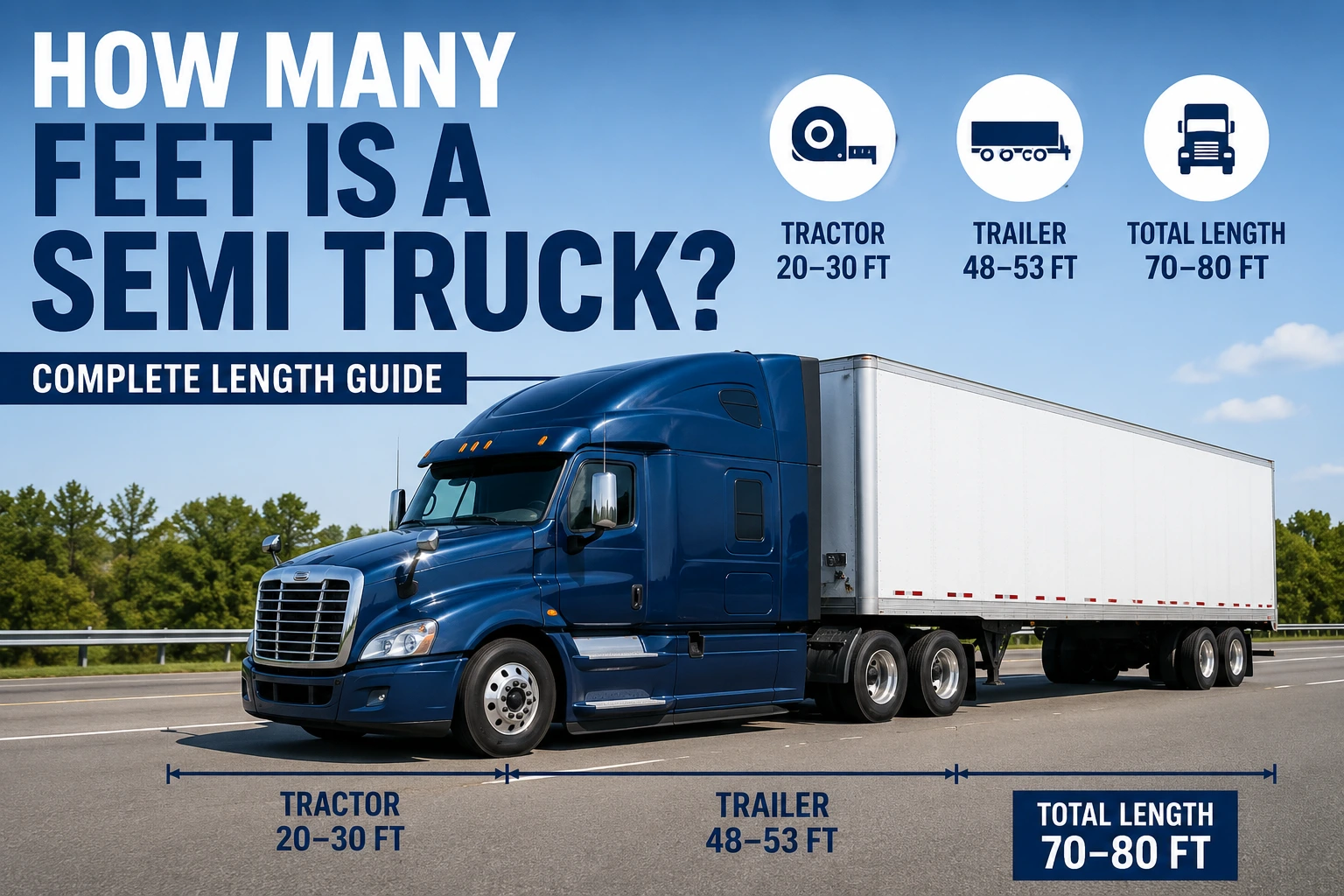
The short answer is that a typical semi truck with a trailer is between 70 and 80 feet long, although the exact length depends on the type of tractor, trailer, and local regulations.
In this guide, you’ll learn the average semi truck length, legal limits, common trailer sizes, and why truck dimensions matter for safety and transportation.
Understanding Semi Truck Length
Before discussing measurements, it helps to understand what makes up a semi truck.
A semi truck consists of two main parts:
- Tractor (cab) – The powered vehicle containing the engine and driver’s compartment.
- Trailer – The attached cargo unit used for transporting freight.
Because these two components vary in size, the total length of a semi truck can differ significantly.
Main Components Affecting Length
- Tractor design
- Sleeper cab size
- Trailer type
- Cargo requirements
- State and federal regulations
A longer truck generally carries more freight, but it also requires more space to maneuver.
How Many Feet Is a Semi Truck on Average?
The average semi truck length depends on whether you’re measuring only the tractor or the entire tractor-trailer combination.
Tractor Length
Most tractors measure:
| Tractor Type | Length |
|---|---|
| Day Cab | 20–25 feet |
| Sleeper Cab | 25–30 feet |
Day cabs are shorter because they lack sleeping accommodations. Sleeper cabs include a resting area behind the driver’s seat, adding several feet.
Trailer Length
Most commercial trailers measure:
| Trailer Type | Typical Length |
|---|---|
| Short Trailer | 28 feet |
| Standard Trailer | 48 feet |
| Long Trailer | 53 feet |
The 53-foot trailer is the most common in North America.
Combined Length
When a tractor and trailer are connected:
- Short combination: 60–65 feet
- Standard combination: 70–75 feet
- Long combination: 75–80 feet
Therefore, when someone asks how many feet is a semi truck, the most common answer is approximately 72 feet long.
Semi Truck Length Chart
The following chart provides a quick overview of common semi truck configurations.
| Configuration | Approximate Length |
|---|---|
| Day Cab + 48-Foot Trailer | 68–73 feet |
| Day Cab + 53-Foot Trailer | 73–78 feet |
| Sleeper Cab + 53-Foot Trailer | 75–80 feet |
| Flatbed Truck | 65–80 feet |
| Refrigerated Truck | 70–80 feet |
| Double Trailer Setup | 90–100+ feet |
These figures can vary depending on manufacturer specifications and regulations.
Different Types of Semi Trucks and Their Lengths
Not all semi trucks are built the same. Different industries use specialized truck configurations.
Day Cab Trucks
Day cabs are designed for shorter routes where drivers return home daily.
Typical characteristics:
- No sleeping compartment
- Easier maneuverability
- Lower weight
- Length of approximately 20–25 feet for the tractor
When paired with a 53-foot trailer, the total vehicle length often reaches around 73 feet.
Sleeper Cab Trucks
Long-haul trucking usually requires sleeper cabs.
Features include:
- Bed area
- Storage compartments
- Climate controls
- Additional living space
Because of these additions, sleeper cabs can be 25–30 feet long before a trailer is attached.
Flatbed Trucks
Flatbeds transport:
- Steel
- Lumber
- Construction materials
- Machinery
Flatbed trailers are commonly:
- 48 feet long
- 53 feet long
Total vehicle length generally falls between 70 and 80 feet.
Refrigerated Trucks
Also known as “reefers,” refrigerated trucks transport:
- Food products
- Pharmaceuticals
- Temperature-sensitive cargo
Most reefer trailers use standard 53-foot dimensions, making overall truck length similar to standard freight haulers.
Double Trailer Configurations
Some freight carriers operate double trailers.
Examples include:
- Twin 28-foot trailers
- Turnpike doubles
- Rocky Mountain doubles
These combinations often exceed 90 feet and can surpass 100 feet depending on local regulations.
Federal and State Length Regulations
Semi truck dimensions are heavily regulated to ensure road safety.
Federal Rules
The United States federal government generally allows:
- 48-foot trailers on major highways
- 53-foot trailers on designated routes
Federal law focuses mainly on trailer length rather than overall vehicle length.
This flexibility allows trucking companies to optimize freight capacity.
State-Specific Variations
States may impose their own regulations regarding:
- Overall length
- Double trailers
- Triple trailers
- Special permits
For example:
- Some states allow longer combinations.
- Others restrict certain trailer configurations.
- Oversized loads often require permits and escort vehicles.
Drivers must always comply with state-specific requirements.
Why Semi Truck Length Matters
Knowing how many feet a semi truck measures is important for several reasons.
1. Road Safety
Longer vehicles require:
- Greater stopping distances
- Larger turning radiuses
- More lane space
Passenger vehicle drivers should avoid lingering in truck blind spots.
2. Parking Requirements
A typical passenger car parking space cannot accommodate a semi truck.
Truck stops are specifically designed to handle vehicles exceeding 70 feet.
3. Turning Radius
Long vehicles need extra room when turning.
Drivers often swing wide during:
- Right turns
- Backing maneuvers
- Loading dock approaches
This is why motorists should avoid attempting to squeeze beside turning trucks.
4. Freight Capacity
Longer trailers generally provide:
- More cargo volume
- Increased efficiency
- Lower shipping costs per load
The 53-foot trailer became popular largely because it maximizes freight capacity while remaining practical for highway use.
Semi Truck Length Compared to Other Vehicles
Many people struggle to visualize truck dimensions. Comparing them to familiar vehicles helps.
| Vehicle Type | Average Length |
|---|---|
| Passenger Car | 14–16 feet |
| Pickup Truck | 18–22 feet |
| SUV | 15–18 feet |
| School Bus | 35–45 feet |
| RV Motorhome | 25–45 feet |
| Semi Truck | 70–80 feet |
A standard semi truck can be roughly:
- Five times longer than a car
- Three times longer than a pickup truck
- Nearly twice the length of a school bus
This explains why truck drivers need significantly more operating space.
Common Mistakes People Make About Semi Truck Length
Many drivers misunderstand truck dimensions.
Assuming Every Semi Truck Is the Same Size
Truck lengths vary widely depending on:
- Cargo type
- Trailer design
- Route requirements
Measuring Only the Trailer
Some people believe a semi truck is simply 53 feet long.
In reality, the 53-foot measurement usually refers only to the trailer.
The tractor adds another 20–30 feet.
Ignoring State Regulations
Not every state permits identical vehicle lengths.
Legal configurations can differ substantially between jurisdictions.
Underestimating Turning Space
Many accidents occur because motorists fail to realize how much room long trucks need when turning.
Expert Tips for Understanding Truck Dimensions
If you’re studying trucking, managing freight, or simply sharing the road safely, keep these tips in mind.
Think in Sections
Remember:
- Tractor = approximately 20–30 feet
- Trailer = approximately 48–53 feet
Adding them together provides a realistic estimate.
Use Landmarks
A 72-foot semi truck is roughly:
- Five midsize cars parked end-to-end
- Half the length of a football field
- Longer than many city buses
These comparisons make truck dimensions easier to visualize.
Respect Following Distance
Because of their size and weight, semi trucks require more stopping distance.
Allow plenty of space when:
- Merging
- Passing
- Changing lanes
Learn Trailer Types
Understanding trailer sizes helps predict truck length.
Common examples:
- Dry van trailers
- Flatbeds
- Refrigerated trailers
- Tankers
- Double trailers
Each configuration affects overall dimensions.
Summary: How Many Feet Is a Semi Truck?
When asking how many feet is a semi truck, the answer depends on the tractor and trailer combination. Most tractors measure between 20 and 30 feet, while trailers typically range from 48 to 53 feet.
As a result, the average semi truck with a standard trailer is usually 70 to 80 feet long, with approximately 72 feet being a common overall length.
Understanding these dimensions improves road safety, helps visualize freight transportation, and provides useful insight into how commercial trucking operates across North America.
9. FAQs
How many feet long is a standard semi truck?
A standard semi truck with a 53-foot trailer is usually between 70 and 80 feet long, depending on the tractor size.
Is a semi truck exactly 53 feet long?
No. The 53-foot measurement generally refers only to the trailer. The tractor adds another 20–30 feet.
How long is an 18-wheeler in feet?
Most 18-wheelers measure approximately 70–80 feet from front bumper to rear trailer end.
What is the longest legal semi truck length?
The maximum legal length varies by state and vehicle configuration. Some double-trailer combinations can exceed 100 feet.
Why are most trailers 53 feet long?
A 53-foot trailer provides excellent cargo capacity while remaining practical for highway transportation and loading operations.
10. Conclusion
Understanding how many feet is a semi truck is more than a simple measurement question. It provides valuable insight into commercial transportation, highway safety, and freight logistics. While dimensions vary by tractor and trailer type, most semi trucks on North American roads measure between 70 and 80 feet long, with a typical setup averaging around 72 feet.
Whether you’re a new driver, trucking professional, or simply curious about vehicle dimensions, knowing the length of a semi truck helps you better appreciate the size, capabilities, and operational needs of these essential freight-hauling vehicles.
Discover more