
-9If you’re wondering how many square feet in a pallet of sod, the answer depends on the type of sod and the supplier. However, most standard pallets of sod cover:
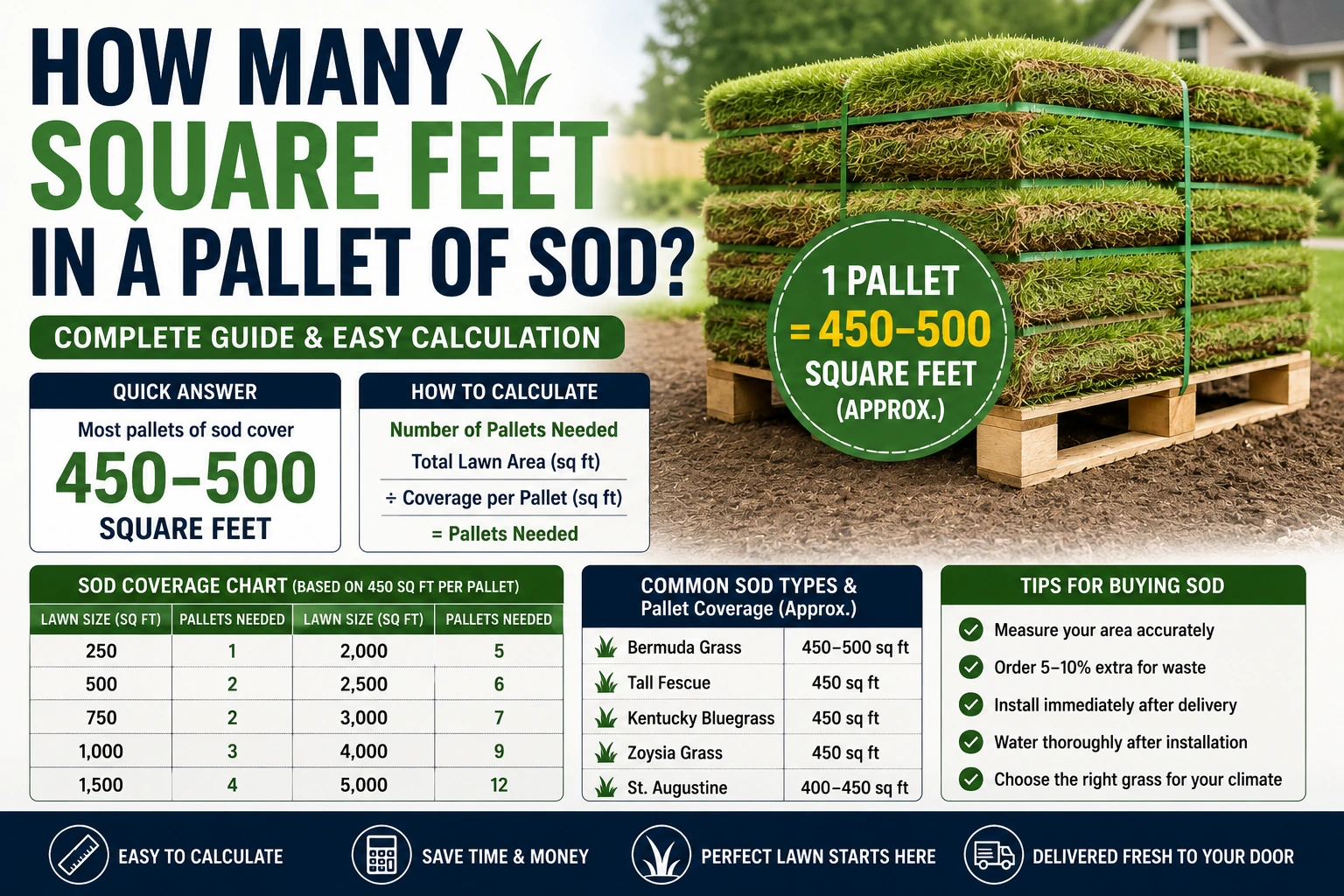
450 to 500 square feet
The most common pallet size sold by landscaping suppliers and home improvement stores covers approximately 450 square feet, although some farms package pallets that cover 500 square feet.
Knowing the coverage of one pallet helps you estimate costs, avoid over-ordering, and ensure your lawn installation project goes smoothly.
In this guide, you’ll learn how much sod comes on a pallet, how to calculate the number of pallets you need, average costs, and practical tips for a successful installation.
Quick Answer
Most sod suppliers sell pallets that cover:
| Pallet Type | Coverage |
|---|---|
| Small Pallet | 400 sq ft |
| Standard Pallet | 450 sq ft |
| Large Pallet | 500 sq ft |
For most residential projects, you can safely estimate:
1 pallet of sod = approximately 450 square feet.
Always verify coverage with your local supplier before purchasing.
What Is a Pallet of Sod?
A pallet of sod is a stack of freshly harvested grass sections placed on a wooden pallet for transport.
Each piece of sod contains:
- Grass
- Roots
- Soil layer
These sections are ready to install immediately after delivery.
Sod pallets are commonly used for:
- New lawn installation
- Lawn repairs
- Commercial landscaping
- Parks
- Sports fields
- Residential yards
Standard Sod Pallet Coverage
Although pallet sizes vary slightly by supplier, most follow industry standards.
Typical coverage includes:
| Sod Type | Average Coverage |
|---|---|
| Bermuda | 450–500 sq ft |
| Kentucky Bluegrass | 450 sq ft |
| Tall Fescue | 450 sq ft |
| Zoysia | 450 sq ft |
| St. Augustine | 400–450 sq ft |
| Centipede | 450 sq ft |
Some suppliers count individual rolls or slabs, while others sell by total square footage.
How to Calculate the Number of Pallets You Need
Calculating sod requirements is simple.
Step 1
Measure the length and width of your lawn.
Example:
Length = 40 feet
Width = 30 feet
Step 2
Calculate the total area.
40 × 30 = 1,200 square feet
Step 3
Divide by pallet coverage.
If one pallet covers 450 square feet:
1,200 ÷ 450 = 2.67 pallets
Round up.
You’ll need 3 pallets.
Sod Coverage Formula
Use this formula for any lawn size:
Number of Pallets = Total Lawn Area ÷ Coverage Per Pallet
Example:
900 square feet
900 ÷ 450 = 2 pallets
Sod Coverage Chart
Use this chart for quick estimates.
| Lawn Size | Pallets Needed (450 sq ft each) |
|---|---|
| 250 sq ft | 1 pallet |
| 450 sq ft | 1 pallet |
| 600 sq ft | 2 pallets |
| 900 sq ft | 2 pallets |
| 1,200 sq ft | 3 pallets |
| 1,500 sq ft | 4 pallets |
| 2,000 sq ft | 5 pallets |
| 2,500 sq ft | 6 pallets |
Always order slightly more than your calculated amount to allow for trimming and waste.
Factors That Affect Pallet Coverage
Several factors influence how much area one pallet covers.
Sod Size
Some farms produce:
- Large slabs
- Small rolls
- Mini rolls
Different sizes change the number of pieces per pallet.
Grass Variety
Thicker grasses may include fewer pieces per pallet.
Supplier Standards
Coverage varies between suppliers.
Some sell:
- 400 sq ft pallets
- 450 sq ft pallets
- 500 sq ft pallets
Installation Waste
Irregular yard shapes create more trimming waste.
Most professionals recommend ordering 5–10% extra sod.
Different Sod Types and Coverage
Different grass varieties have similar coverage but vary in appearance and maintenance.
Bermuda Sod
Best for:
- Warm climates
- Sunny lawns
- Sports fields
Coverage:
450–500 sq ft
Kentucky Bluegrass
Ideal for:
- Cooler climates
- Residential lawns
Coverage:
About 450 sq ft
Tall Fescue
Known for:
- Drought tolerance
- Deep roots
Coverage:
Approximately 450 sq ft
St. Augustine
Popular in southern regions.
Coverage:
400–450 sq ft
Zoysia
Excellent for:
- Dense lawns
- Heat tolerance
Coverage:
Around 450 sq ft
Cost of a Pallet of Sod
Prices vary by region and grass type.
Typical estimates:
| Sod Type | Average Cost per Pallet |
|---|---|
| Bermuda | $180–$300 |
| Tall Fescue | $200–$350 |
| Kentucky Bluegrass | $200–$350 |
| Zoysia | $250–$450 |
| St. Augustine | $250–$450 |
Additional costs may include:
- Delivery
- Installation
- Soil preparation
- Fertilizer
- Irrigation
Real-Life Examples
Example 1
A backyard measures:
20 × 25 feet
Area:
500 square feet
Required sod:
Approximately 2 pallets (allowing for waste).
Example 2
A front lawn measures:
60 × 30 feet
Area:
1,800 square feet
Required pallets:
1,800 ÷ 450 = 4
Order:
4–5 pallets
Example 3
A commercial landscape requires:
4,500 square feet
Required pallets:
4,500 ÷ 450 = 10 pallets
Benefits of Buying Sod by the Pallet
Purchasing full pallets offers several advantages.
- Better pricing than buying individual pieces
- Faster installation
- Uniform grass appearance
- Easier transportation
- Reduced delivery charges
- Consistent quality from the same harvest
Common Mistakes to Avoid
Many homeowners make these mistakes.
Not Measuring the Lawn Correctly
Always measure every section separately.
Ignoring Waste
Allow an extra 5–10% for cutting around edges and landscaping features.
Buying the Wrong Grass Type
Choose a grass variety suited to your:
- Climate
- Sun exposure
- Soil type
Delaying Installation
Install sod as soon as possible after delivery to keep it healthy.
Forgetting Irrigation
Fresh sod requires frequent watering during the establishment period.
Expert Tips for Successful Sod Installation
Professionals recommend the following:
- Remove old grass before installation.
- Level the soil.
- Add compost if needed.
- Install sod immediately after delivery.
- Stagger seams like brickwork.
- Water thoroughly after laying sod.
- Avoid heavy foot traffic for the first few weeks.
- Mow only after the grass has rooted properly.
Frequently Asked Questions
How many square feet does a pallet of sod cover?
Most pallets cover 450 square feet, although some suppliers offer pallets covering 400 to 500 square feet.
How many pallets of sod do I need for 1,000 square feet?
For a standard 450-square-foot pallet:
1,000 ÷ 450 = 2.22
You should purchase 3 pallets to account for trimming and waste.
How much does one pallet of sod weigh?
A standard pallet typically weighs between 2,000 and 3,000 pounds, depending on moisture content and grass variety.
Should I buy extra sod?
Yes. Most professionals recommend purchasing 5–10% more than your calculated area to allow for cutting and irregular lawn shapes.
How long can sod stay on a pallet?
Ideally, sod should be installed within 24 hours of delivery. During hot weather, installing it as soon as possible helps prevent damage and keeps the grass healthy.
Conclusion
If you’re asking how many square feet in pallet of sod, the answer is that most standard pallets cover approximately 450 square feet, although some suppliers offer pallets ranging from 400 to 500 square feet.
By measuring your lawn accurately, using the simple coverage formula, and ordering an extra 5–10% for trimming, you can ensure you purchase the right amount of sod for your project. Whether you’re installing a small residential lawn or landscaping a large commercial property, understanding pallet coverage helps you save money, reduce waste, and achieve a healthy, beautiful lawn.
Discover more