

If you are planning to replace your roof or install new shingles, one of the first questions you will probably ask is how many square feet in a pack of shingles. Knowing the answer helps you estimate material costs, reduce waste, and make sure you purchase enough roofing supplies before starting the project.
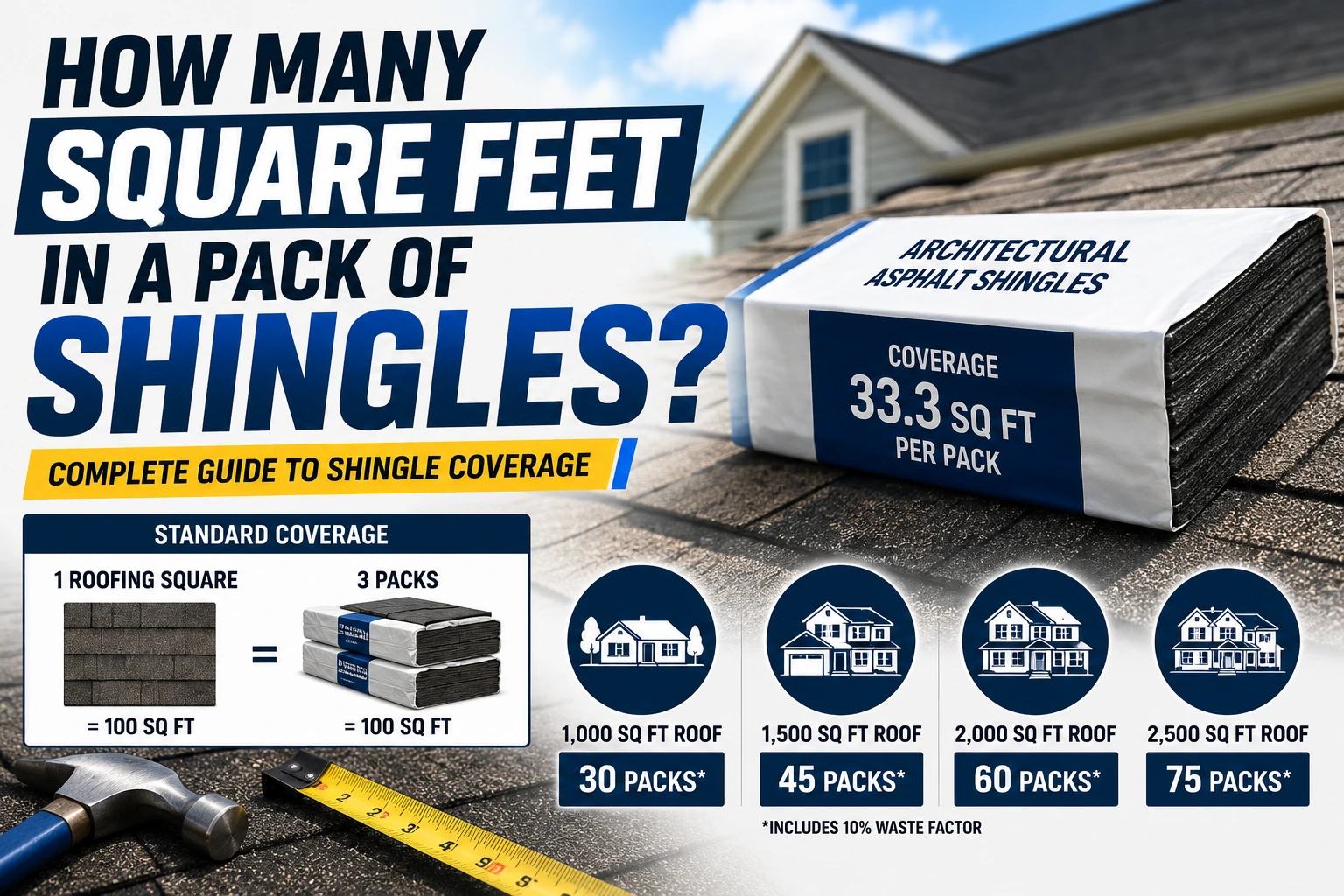
The coverage of a shingle pack depends on the type of shingles you choose. In most cases, one pack of standard asphalt shingles covers about 33.3 square feet, meaning three packs are usually needed to cover one roofing square, which equals 100 square feet. However, premium and specialty shingles may cover less because they are thicker and heavier.
This guide explains how shingle packs are measured, how to calculate the number of packs needed for your roof, and the factors that can affect coverage. Whether you are a homeowner or a roofing professional, understanding these basics can save both time and money.
What Is a Pack of Shingles
A pack of shingles, also called a bundle, is a packaged group of roofing shingles designed for easy transportation and installation.
Manufacturers divide shingles into packs because a full roofing square would be too heavy to handle safely.
Instead of buying shingles by individual pieces, roofing suppliers sell them in packs.
Most roofing projects are estimated using:
- Packs
- Roofing squares
- Total roof area in square feet
Understanding how these measurements work together makes it much easier to estimate roofing materials accurately.
How Many Square Feet in a Pack of Shingles
For most residential roofing projects, the answer is simple.
A standard pack of asphalt shingles covers approximately 33.3 square feet.
Since one roofing square equals 100 square feet, it typically takes:
- 3 packs to cover one roofing square
- About 33.3 square feet per pack
This has become the industry standard for many asphalt shingle manufacturers.
However, not every product follows this exact coverage.
Premium shingles often require additional packs because they contain fewer shingles per bundle.
Coverage by Shingle Type
Different roofing materials provide different coverage.
The table below shows the average coverage for common shingle types.
| Shingle Type | Average Coverage Per Pack | Packs Per Roofing Square |
|---|---|---|
| Three tab shingles | About 33.3 square feet | 3 |
| Architectural shingles | About 33.3 square feet | 3 |
| Premium laminated shingles | 20 to 25 square feet | 4 to 5 |
| Designer shingles | 18 to 25 square feet | 4 to 6 |
Always check the manufacturer’s specifications before purchasing because coverage varies between brands.
Understanding a Roofing Square
A roofing square is the standard unit used throughout the roofing industry.
One roofing square equals:
100 square feet of roof surface
Roofers rarely estimate materials by individual shingles.
Instead, they calculate:
- Total roof area
- Number of roofing squares
- Number of packs required
For example:
A roof measuring 2,000 square feet contains:
20 roofing squares
Since each square typically requires three packs, the calculation becomes:
20 roofing squares × 3 packs
Total:
60 packs of shingles
Why Roofing Squares Matter
Using roofing squares simplifies estimating.
Instead of saying:
“My roof is 2,460 square feet.”
A contractor simply says:
“The roof is about 24.6 squares.”
This standard system helps suppliers, contractors, and homeowners communicate clearly.
Standard Shingle Coverage Chart
The following chart provides quick estimates.
| Roof Size | Roofing Squares | Estimated Packs Needed |
|---|---|---|
| 500 square feet | 5 | 15 |
| 800 square feet | 8 | 24 |
| 1,000 square feet | 10 | 30 |
| 1,200 square feet | 12 | 36 |
| 1,500 square feet | 15 | 45 |
| 2,000 square feet | 20 | 60 |
| 2,500 square feet | 25 | 75 |
| 3,000 square feet | 30 | 90 |
These estimates assume standard asphalt shingles without excessive roof waste.
How to Calculate the Number of Shingle Packs Needed
Calculating roofing materials is easier than many homeowners think.
Follow these simple steps.
Measure Roof Length
Measure the length of each roof section.
Record every measurement carefully.
Measure Roof Width
Next, measure the width of every roof section.
If your roof has multiple sections, calculate each one separately.
Calculate Total Roof Area
Multiply the length by the width.
Example:
Length:
40 feet
Width:
30 feet
Calculation:
40 × 30
Total roof area:
1,200 square feet
Convert Square Feet into Roofing Squares
Divide the roof area by 100.
Example:
1,200 ÷ 100
Result:
12 roofing squares
Calculate the Number of Packs
Multiply the roofing squares by three.
12 × 3
Total:
36 packs
Add Extra Material for Waste
No roofing project uses every shingle perfectly.
Some shingles must be cut around:
- Roof edges
- Valleys
- Dormers
- Chimneys
- Skylights
- Roof vents
Most professionals recommend adding:
- 10 percent extra for simple roofs
- 15 percent for medium complexity
- Up to 20 percent for complex roof designs
This extra material prevents shortages during installation.
Factors That Affect Shingle Coverage
Although most packs cover around 33.3 square feet, several factors can change the total number of packs required.
Roof Pitch
Steeper roofs have more surface area than they appear to have from the ground.
A roof with a high pitch requires more shingles than a flat roof with the same building footprint.
Roof Shape
Simple rectangular roofs require fewer cuts.
Complex roofs with multiple angles create more waste.
Examples include:
- Hip roofs
- Mansard roofs
- Cross gable roofs
- Multi level roofs
These designs usually require extra packs.
Shingle Style
Thicker shingles cover less area per pack because each bundle contains fewer pieces.
Premium roofing products often require four or even five packs per roofing square.
Installation Pattern
Some installation methods require additional material.
Examples include:
- Decorative layouts
- High wind installation
- Special overlap patterns
- Manufacturer specific installation instructions
Following the manufacturer’s guidelines ensures the roof remains covered under warranty.
Real World Roofing Example
Imagine you are replacing the roof on a single story home.
Roof dimensions:
50 feet long
32 feet wide
Roof area:
50 × 32
Total:
1,600 square feet
Roofing squares:
1,600 ÷ 100
16 roofing squares
Standard packs needed:
16 × 3
48 packs
Adding 10 percent waste:
48 × 1.10
Approximately 53 packs should be purchased.
This small adjustment can prevent delays if additional shingles are needed during installation.
Roof Waste Calculation Chart
Adding extra shingles for waste is one of the most important parts of estimating roofing materials. Roofs with more valleys, hips, dormers, or skylights require additional bundles because more shingles must be cut.
| Roof Area | Standard Packs | Ten Percent Waste | Fifteen Percent Waste | Twenty Percent Waste |
|---|---|---|---|---|
| 1,000 square feet | 30 | 33 | 35 | 36 |
| 1,500 square feet | 45 | 50 | 52 | 54 |
| 2,000 square feet | 60 | 66 | 69 | 72 |
| 2,500 square feet | 75 | 83 | 87 | 90 |
| 3,000 square feet | 90 | 99 | 104 | 108 |
These figures provide a practical estimate for most residential roofing projects.
Common Roofing Calculations
Below are some quick examples that homeowners and contractors frequently use.
Example One
Roof size:
900 square feet
Calculation:
900 ÷ 100 = 9 roofing squares
9 × 3 = 27 packs
With ten percent waste:
30 packs
Example Two
Roof size:
1,850 square feet
Calculation:
1,850 ÷ 100 = 18.5 roofing squares
18.5 × 3 = 55.5 packs
Rounded up:
56 packs
Adding ten percent waste:
Approximately 62 packs
Example Three
Roof size:
2,400 square feet
Calculation:
2,400 ÷ 100 = 24 roofing squares
24 × 3 = 72 packs
Adding fifteen percent waste:
Approximately 83 packs
These examples show why adding extra material is always recommended.
Benefits of Understanding Shingle Coverage
Knowing how many square feet in a pack of shingles offers several advantages.
Benefits include:
- Creates a more accurate roofing budget.
- Prevents running out of materials.
- Reduces unnecessary purchases.
- Helps compare roofing quotes.
- Improves project planning.
- Saves time during installation.
- Minimizes material waste.
Whether you hire a contractor or complete the work yourself, understanding shingle coverage helps the project run more smoothly.
Drawbacks of Estimating Without Proper Measurements
Estimating roofing materials without accurate measurements can lead to costly mistakes.
Common problems include:
- Buying too few packs.
- Purchasing excessive materials.
- Delays while ordering additional shingles.
- Higher shipping costs.
- Possible color differences between production batches.
- Increased labor expenses.
Taking accurate measurements before ordering materials helps avoid these issues.
Architectural Shingles Versus Three Tab Shingles
Homeowners often compare these two popular roofing materials.
| Feature | Three Tab Shingles | Architectural Shingles |
|---|---|---|
| Average packs per square | 3 | 3 |
| Typical lifespan | 15 to 20 years | 25 to 30 years |
| Appearance | Flat | Dimensional |
| Wind resistance | Moderate | Higher |
| Cost | Lower | Higher |
| Durability | Good | Excellent |
Although both usually require three packs per roofing square, architectural shingles provide better durability and a more attractive appearance.
Expert Tips for Buying Roofing Shingles
Professional roofers follow several best practices when purchasing shingles.
- Measure the roof twice before placing an order.
- Always round your estimates up rather than down.
- Add extra bundles for future repairs.
- Buy all shingles from the same manufacturing batch when possible.
- Check the manufacturer’s coverage information.
- Include starter shingles and ridge cap shingles in your estimate.
- Consider local weather conditions before selecting roofing materials.
- Store unused shingles in a dry, covered area.
These simple tips can save both time and money during installation.
Common Mistakes When Estimating Shingle Packs
Many homeowners make avoidable estimating errors.
Ignoring Roof Pitch
A steep roof has more surface area than a flat roof with the same footprint.
Always account for roof pitch.
Forgetting Waste Material
Ordering the exact number of calculated packs often leads to shortages.
Always include a waste allowance.
Assuming Every Pack Covers the Same Area
Coverage varies by manufacturer and product line.
Read the product label before purchasing.
Overlooking Roof Features
Features such as chimneys, skylights, valleys, and dormers increase waste.
These areas require extra cutting.
Rounding Down
Always round estimates upward.
A few extra packs are much less expensive than delaying the project because materials run out.
When Should You Buy Extra Packs
Buying additional packs is recommended in several situations.
Consider purchasing extra shingles if:
- Your roof has many valleys.
- Your roof has several dormers.
- You are installing premium shingles.
- You plan to keep spare shingles for future repairs.
- This is your first roofing project.
- The manufacturer is discontinuing the color you selected.
Extra bundles provide peace of mind and simplify future maintenance.
Practical Uses of Shingle Coverage Calculations
Understanding bundle coverage is useful in many situations.
Homeowners use these calculations to:
- Estimate roof replacement costs.
- Compare contractor bids.
- Plan DIY roofing projects.
- Calculate delivery requirements.
- Estimate material storage space.
- Prepare insurance claims after storm damage.
Roofing contractors also rely on these calculations when preparing accurate project estimates for customers.
Frequently Asked Questions
How many square feet in a pack of shingles?
A standard pack of asphalt shingles typically covers about 33.3 square feet. Since one roofing square equals 100 square feet, it generally takes three packs to cover one roofing square.
How many packs of shingles are needed for 1,500 square feet?
A 1,500 square foot roof equals 15 roofing squares. Most standard asphalt roofs require 45 packs, plus additional bundles for waste depending on the roof design.
Does every pack of shingles cover the same area?
No. Coverage varies by manufacturer and shingle type. Premium laminated and designer shingles often cover less area per pack than standard asphalt shingles.
How much extra roofing material should I buy?
Most roofing professionals recommend adding 10 to 15 percent extra for simple roofs and up to 20 percent for roofs with complex designs or numerous valleys and dormers.
What is a roofing square?
A roofing square is the standard unit used in the roofing industry. One roofing square equals 100 square feet of roof surface and usually requires three packs of standard asphalt shingles.
Conclusion
Understanding how many square feet in a pack of shingles is essential for planning any roofing project. For most standard asphalt shingles, one pack covers approximately 33.3 square feet, meaning three packs are needed to cover one roofing square or 100 square feet. However, premium and specialty shingles may require additional packs because they cover less area.
Accurate roof measurements, proper waste allowances, and checking the manufacturer’s coverage specifications are the keys to ordering the right amount of material. By using the calculations, charts, and examples in this guide, you can estimate roofing materials with confidence, reduce unnecessary expenses, and avoid delays caused by running out of shingles during installation. Whether you are replacing a small residential roof or managing a larger roofing project, careful planning will help ensure a smoother installation and long lasting results.
Discover more