
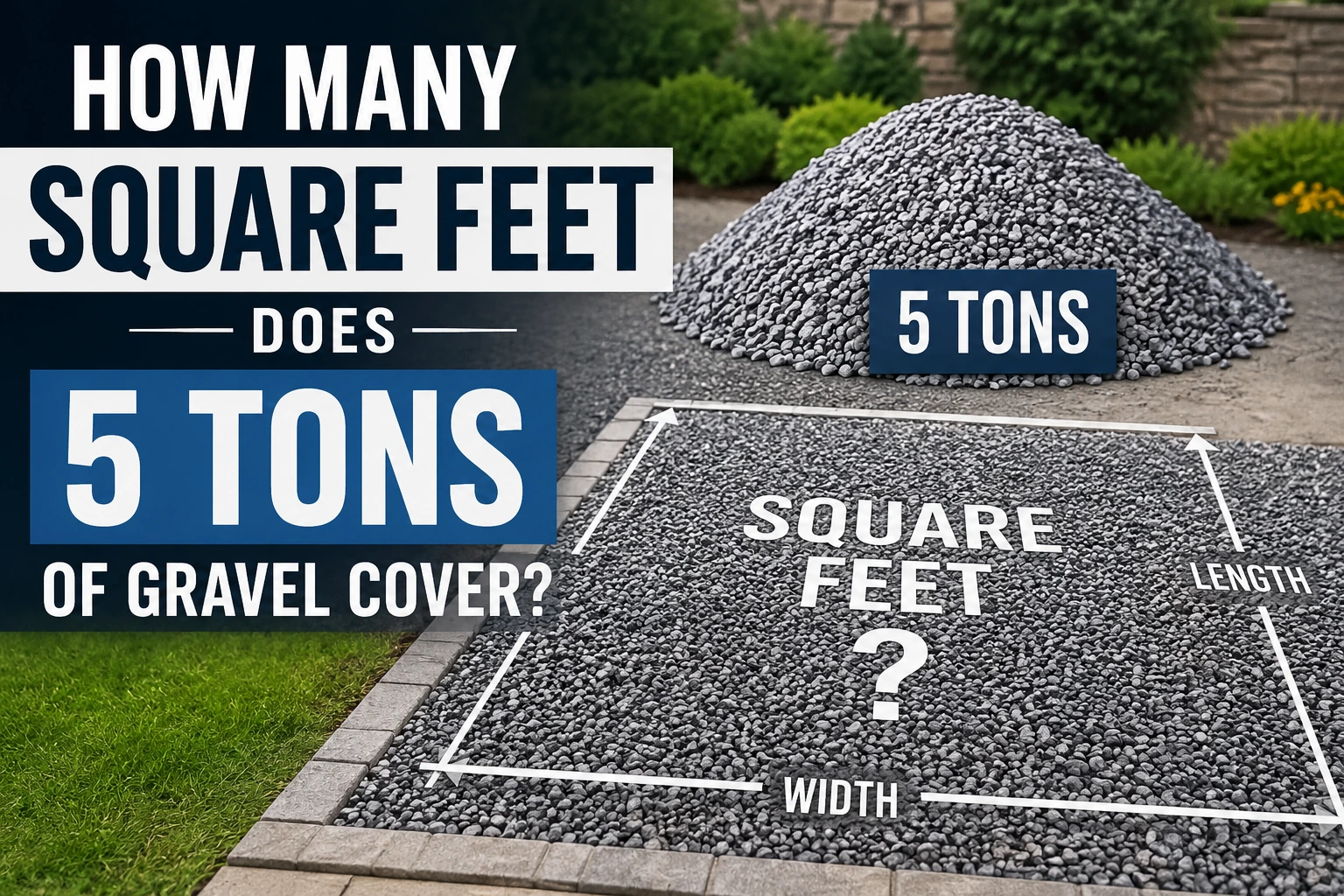
If you are planning a driveway, garden path, or landscaping project, one of the most common questions is how many square feet does 5 tons of gravel cover. The answer is not fixed because it depends on depth, gravel type, and how compact the surface is.
In this guide, you will learn simple formulas, real-world examples, and practical charts to help you accurately estimate gravel coverage without confusion. Whether you are a homeowner or contractor, this will help you avoid overbuying or underestimating materials.
Understanding Gravel Coverage Basics
Before calculating area coverage, it is important to understand what gravel measurement means.
What Does “Ton of Gravel” Mean?
A ton of gravel is a weight measurement, not volume. However, for construction purposes, it is converted into volume:
- 1 ton of gravel ≈ 0.67 to 0.75 cubic yards
- This depends on the type of gravel and moisture content
Different gravel types have different densities, so coverage may slightly vary.
Why Depth Matters in Coverage
The most important factor in answering how many square feet does 5 tons of gravel cover is depth.
- The deeper the gravel layer → the smaller the area it covers
- The thinner the layer → the larger the coverage
Common depths used in projects:
- 1 inch (decorative paths)
- 2 inches (landscaping)
- 3–4 inches (driveways or heavy use areas)
How Many Square Feet Does 5 Tons of Gravel Cover?
Now let’s get to the main answer.
Average Real-World Estimate
On average, 5 tons of gravel covers:
- 👉 400 to 600 square feet at 2 inches depth
- 👉 200 to 300 square feet at 3–4 inches depth
This range depends on compaction and gravel type.
Step-by-Step Calculation
Let’s break it down simply:
Step 1: Convert tons to cubic yards
- 5 tons ≈ 3.3 to 3.75 cubic yards
We’ll use average:
👉 3.5 cubic yards
Step 2: Convert depth into feet
- 2 inches = 0.167 feet
Step 3: Use formula
Area = Volume ÷ Depth
So:
- 3.5 cubic yards = 94.5 cubic feet
- 94.5 ÷ 0.167 ≈ 566 square feet
Final Answer
👉 5 tons of gravel covers approximately 500–600 square feet at 2 inches depth
Gravel Coverage Chart by Depth
To make it easier, here is a practical breakdown:
| Depth | Coverage of 5 Tons |
|---|---|
| 1 inch | 900–1,100 sq ft |
| 2 inches | 500–600 sq ft |
| 3 inches | 330–400 sq ft |
| 4 inches | 250–300 sq ft |
This shows how dramatically depth changes coverage.
Formula to Calculate Gravel Coverage
Understanding the formula helps you estimate any project size.
Basic Formula
Area = Volume ÷ Depth
Where:
- Volume = gravel in cubic feet
- Depth = thickness of gravel layer
Ton to Cubic Yard Conversion
- 1 ton gravel ≈ 0.67–0.75 cubic yards
- 1 cubic yard = 27 cubic feet
So:
- 5 tons ≈ 135–150 cubic feet (approx)
Real-Life Example Calculations
Let’s apply this in real situations.
Driveway Example
You want a driveway:
- Size: 500 sq ft
- Depth: 2 inches
You will need:
- Around 5 tons of gravel
👉 This makes 5 tons perfect for small driveways.
Garden Path Example
- Path size: 300 sq ft
- Depth: 3 inches
Result:
- You need around 4–5 tons of gravel
This ensures stability and proper coverage.
Factors That Affect Gravel Coverage
Several real-world factors change the final result.
1. Gravel Type and Density
- Pea gravel is lighter
- Crushed stone is denser
- Limestone compacts more
2. Compaction Level
After installation:
- Gravel settles
- Coverage reduces slightly
3. Surface Condition
- Soft soil absorbs more gravel
- Hard base needs less material
4. Moisture Content
Wet gravel weighs more, slightly affecting ton-to-volume conversion.
Common Mistakes in Gravel Estimation
Many people miscalculate gravel needs. Here are common errors:
1. Ignoring Depth
Depth is the biggest factor. Even a 1-inch mistake changes coverage drastically.
2. Not Accounting for Compaction
Gravel settles after a few days.
3. Assuming All Gravel is the Same
Different gravel types behave differently.
Expert Tips for Accurate Gravel Measurement
Measure Depth First
Decide:
- Decorative path = 1–2 inches
- Driveway = 3–4 inches
Always Add Extra Material
Professionals recommend:
👉 10% extra gravel for waste and leveling
Prepare Base Properly
A compact base reduces gravel loss over time.
Is 5 Tons of Gravel Enough?
Small Projects
Yes, 5 tons is usually enough for:
- Small patios
- Walkways
- Decorative landscaping
Medium Projects
- Partial driveway
- Larger garden beds
Large Projects
Not enough alone—may require 10–20+ tons.
Conclusion
So, how many square feet does 5 tons of gravel cover? The answer depends on depth, but on average, it covers about 500 to 600 square feet at 2 inches depth.
Understanding gravel coverage helps you plan smarter, avoid waste, and save money on landscaping or construction projects. Always consider depth, compaction, and material type before ordering gravel.
With the right calculation, even a simple 5-ton load can be used efficiently for a strong and long-lasting surface.
9. FAQs
1. How many square feet does 5 tons of gravel cover at 2 inches?
Around 500–600 square feet.
2. How much area does 5 tons of gravel cover at 3 inches?
Approximately 330–400 square feet.
3. Is 5 tons of gravel enough for a driveway?
Yes, for a small driveway (around 500 sq ft).
4. How do you calculate gravel coverage?
Use: Area = Volume ÷ Depth
5. Does gravel type affect coverage?
Yes, density and compaction can slightly change coverage.
10. Conclusion
In summary, how many square feet does 5 tons of gravel cover depends mainly on depth, but typically it covers a medium-sized area suitable for small landscaping and driveway projects. With proper planning and accurate measurement, you can maximize efficiency and avoid material waste.
Discover more