

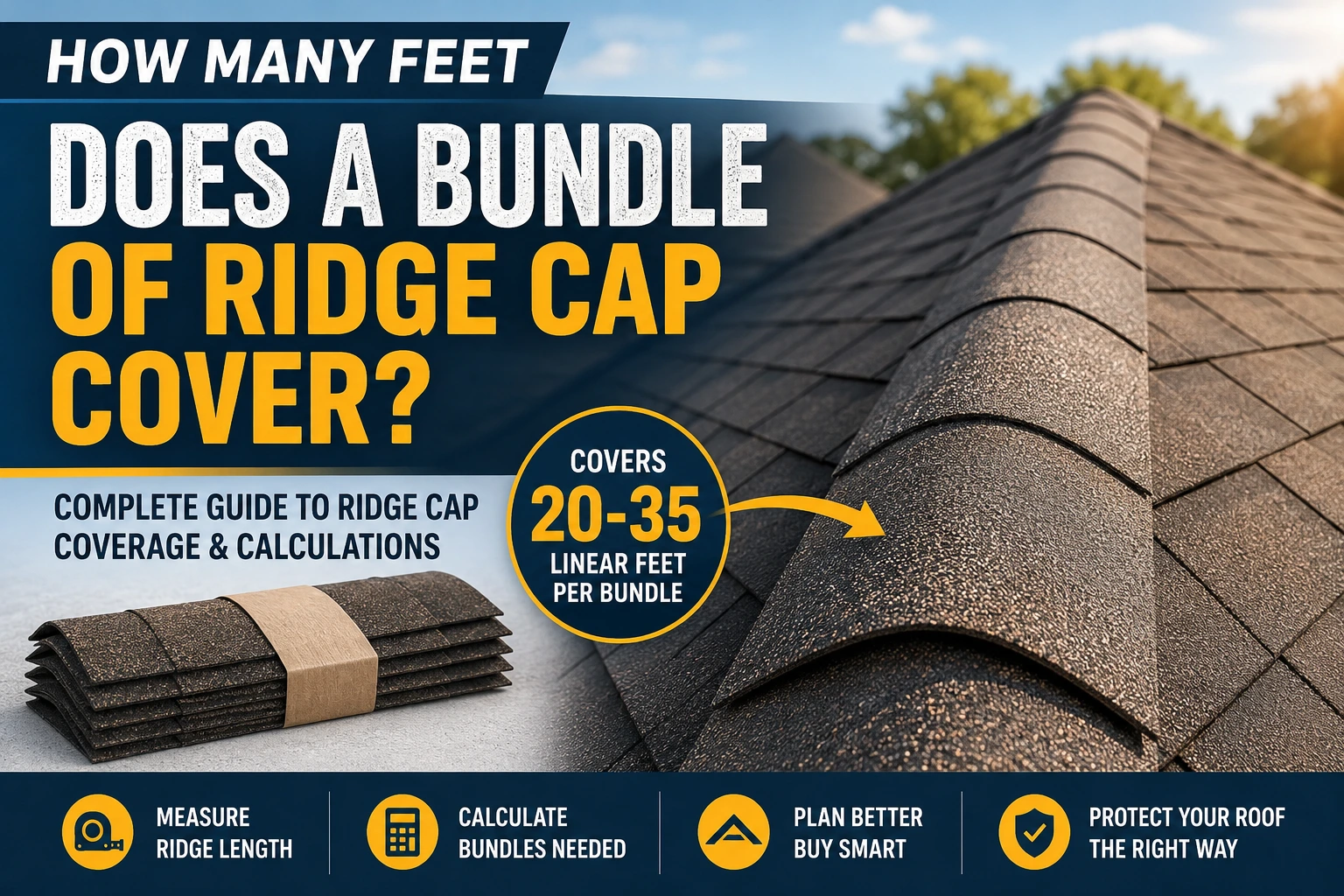
When planning a roofing project, one of the most common questions homeowners and contractors ask is how many feet does a bundle of ridge cap cover. Getting this calculation right is important because ridge cap shingles protect the most exposed part of the roof—the ridge line.
Buying too few bundles can delay installation, while purchasing too many increases project costs. Understanding ridge cap coverage helps ensure accurate material estimates and a smoother roofing process.
In most cases, a standard bundle of ridge cap shingles covers approximately 20 to 35 linear feet, depending on the product type, manufacturer, and installation method. However, the exact coverage can vary significantly.
This guide explains ridge cap coverage, calculation methods, real-world examples, and expert roofing tips to help you estimate your project accurately.
Understanding Ridge Cap Shingles
What Are Ridge Cap Shingles?
Ridge cap shingles are specially designed roofing shingles installed along the roof ridge or peak. They cover the seam where two roof slopes meet.
Unlike standard field shingles, ridge cap shingles are engineered to:
- Bend easily over roof peaks
- Resist wind uplift
- Improve water protection
- Create a finished roof appearance
These shingles are often thicker and more durable than standard roofing shingles.
Why Are They Important?
The ridge is one of the most vulnerable parts of a roof because it receives direct exposure to:
- Wind
- Rain
- Snow
- UV rays
- Temperature changes
Proper ridge cap installation helps:
- Prevent leaks
- Extend roof life
- Improve roof ventilation systems
- Enhance curb appeal
How Many Feet Does a Bundle of Ridge Cap Cover?
The answer depends on the specific ridge cap product being used.
Most manufacturers design ridge cap bundles to cover:
| Ridge Cap Type | Average Coverage Per Bundle |
|---|---|
| Standard Ridge Cap | 20–25 linear feet |
| High Profile Ridge Cap | 20–30 linear feet |
| Hip and Ridge Shingles | 25–35 linear feet |
| Architectural Ridge Cap | 20–30 linear feet |
| Premium Ridge Systems | 30–35 linear feet |
Typical Industry Average
For many asphalt roofing systems:
1 bundle of ridge cap shingles covers approximately 33 linear feet.
However, some products provide closer to:
- 20 feet
- 25 feet
- 30 feet
Always check manufacturer specifications before ordering materials.
Ridge Cap Coverage Chart
The following chart provides a quick reference for common roofing estimates.
| Ridge Length | Bundles Needed (33-ft Coverage) |
|---|---|
| 33 feet | 1 bundle |
| 66 feet | 2 bundles |
| 99 feet | 3 bundles |
| 132 feet | 4 bundles |
| 165 feet | 5 bundles |
| 198 feet | 6 bundles |
For products covering only 20 feet per bundle:
| Ridge Length | Bundles Required |
|---|---|
| 20 feet | 1 bundle |
| 40 feet | 2 bundles |
| 60 feet | 3 bundles |
| 80 feet | 4 bundles |
| 100 feet | 5 bundles |
Factors That Affect Ridge Cap Coverage
Several factors influence how many feet a bundle of ridge cap covers.
Shingle Size
Different manufacturers produce ridge cap shingles in varying dimensions.
Larger shingles generally provide greater coverage per bundle.
Smaller shingles require more pieces and may reduce total coverage.
Exposure Length
Exposure refers to the visible portion of each installed ridge cap shingle.
For example:
- 5-inch exposure
- 5⅝-inch exposure
- 6-inch exposure
Greater exposure means fewer shingles are needed per foot of ridge.
As a result, coverage increases.
Manufacturer Specifications
Each roofing brand has unique product designs.
For example:
- GAF
- Owens Corning
- CertainTeed
- IKO
Coverage rates can vary even between similar products.
Always review the packaging details before purchasing.
How to Calculate Ridge Cap Bundles Needed
Calculating ridge cap requirements is straightforward.
Step 1: Measure the Ridge Line
Measure every roof ridge and hip that requires ridge cap shingles.
Add all lengths together.
Example:
- Main ridge = 40 feet
- Garage ridge = 20 feet
- Hip sections = 15 feet
Total:
40 + 20 + 15 = 75 linear feet
Step 2: Determine Product Coverage
Assume your chosen ridge cap bundle covers:
33 linear feet
Step 3: Divide Total Ridge Length by Coverage
Formula:
Bundles Needed = Total Ridge Length ÷ Coverage Per Bundle
Example:
75 ÷ 33 = 2.27 bundles
Since partial bundles cannot be purchased in most situations:
Round up to:
3 bundles
Step 4: Add Waste Factor
Most roofing professionals recommend adding:
- 5%–10% extra material
This accounts for:
- Cutting waste
- Installation mistakes
- Future repairs
Example Roofing Calculations
Small Home
Roof ridge length:
50 feet
Coverage:
25 feet per bundle
Calculation:
50 ÷ 25 = 2 bundles
Recommended purchase:
3 bundles
Medium-Sized Home
Roof ridge length:
90 feet
Coverage:
30 feet per bundle
Calculation:
90 ÷ 30 = 3 bundles
Recommended purchase:
4 bundles
Large Home
Roof ridge length:
180 feet
Coverage:
33 feet per bundle
Calculation:
180 ÷ 33 = 5.45 bundles
Recommended purchase:
6 bundles
Ridge Cap Coverage for Different Roofing Materials
Not all roofing systems use identical ridge cap products.
| Roofing Material | Typical Ridge Cap Coverage |
|---|---|
| Asphalt Shingles | 20–35 feet |
| Architectural Shingles | 20–30 feet |
| Designer Shingles | 20–30 feet |
| Laminate Shingles | 25–35 feet |
| Composite Roofing | Varies by manufacturer |
Always match ridge cap products with the roofing system to maintain warranty coverage.
Common Roofing Scenarios
New Roof Installation
When installing a new roof, ridge cap estimates should be included in the initial material order.
This prevents delays during installation.
Roof Replacement
During reroofing projects, contractors typically replace all ridge caps rather than reusing existing materials.
Roof Repairs
Small repairs may only require a partial bundle.
However, purchasing a full bundle often ensures color consistency.
Ridge Cap vs Standard Three-Tab Shingles
Years ago, roofers often cut standard three-tab shingles into ridge caps.
Today, most manufacturers recommend dedicated ridge cap products.
Standard Three-Tab Shingles
Pros:
- Lower cost
- Readily available
Cons:
- Lower wind resistance
- Less attractive appearance
- Reduced durability
Dedicated Ridge Cap Shingles
Pros:
- Better protection
- Easier installation
- Enhanced appearance
- Stronger warranties
Cons:
- Slightly higher cost
Most modern roofing professionals prefer dedicated ridge cap shingles.
Common Mistakes When Estimating Ridge Cap Coverage
Many roofing projects run into material shortages because of estimating errors.
Avoid these common mistakes.
Ignoring Hip Measurements
Many homeowners measure only the main ridge.
Hip sections also require ridge cap materials.
Forgetting Waste
Cutting and trimming create unavoidable waste.
Always order extra.
Using Generic Estimates
Not every bundle covers the same length.
Verify product specifications before purchasing.
Not Rounding Up
Always round up when calculating bundle requirements.
Running short on materials can delay completion.
Expert Tips for Accurate Ridge Cap Estimates
Professional roofers use several techniques to improve estimate accuracy.
Measure Twice
Double-check all ridge and hip lengths before ordering materials.
Review Product Data
Manufacturer packaging contains exact coverage information.
Buy Extra Material
An extra bundle can save time and money if repairs are needed later.
Match Product Lines
Use ridge caps designed specifically for your roofing shingles.
Keep Leftover Materials
Store spare ridge cap shingles in a dry location for future maintenance.
Frequently Asked Questions
1. How many feet does a bundle of ridge cap cover on average?
Most ridge cap bundles cover between 20 and 35 linear feet, with many products averaging around 33 feet per bundle.
2. How many ridge cap shingles are in a bundle?
The number varies by manufacturer, but most bundles contain enough pieces to cover approximately 20–35 linear feet of roof ridge.
3. How do I calculate ridge cap bundles for my roof?
Measure total ridge and hip length, then divide by the manufacturer’s coverage rating per bundle. Always round up and add extra for waste.
4. Do architectural shingles require special ridge caps?
Yes. Many architectural roofing systems use matching hip and ridge products designed for appearance and warranty compliance.
5. Should I buy extra ridge cap bundles?
Yes. Roofing professionals typically recommend purchasing 5%–10% extra material to account for waste, cuts, and future repairs.
Conclusion
If you’re wondering how many feet does a bundle of ridge cap cover, the typical answer is 20 to 35 linear feet per bundle, depending on the product and manufacturer. Many standard hip and ridge products cover approximately 33 linear feet, making them a common benchmark for roofing estimates.
To calculate your needs accurately, measure all roof ridges and hips, divide the total length by the bundle coverage rating, and add a small waste allowance. By understanding how many feet does a bundle of ridge cap cover, homeowners and contractors can avoid material shortages, reduce project delays, and ensure a professional roofing installation that lasts for years.
Discover more
how many cubic feet of soil for 5 gallon pot