
If you are planning a building project, buying property, designing a garage, or simply trying to understand dimensions, you may wonder: how many square feet is 40 by 60?
The answer is simple:
40×60=2400
A 40 by 60 space equals 2,400 square feet.
While the math is easy, understanding what 2,400 square feet actually looks like can be more challenging. Is it large enough for a home? Can it fit multiple vehicles? Is it suitable for a workshop or warehouse?
This complete guide explains everything you need to know about a 40×60 space, including calculations, real-world examples, layout ideas, building costs, and practical uses.
Understanding Square Footage
Square footage measures the total area inside a space. It is calculated by multiplying the length by the width.
Builders, architects, real estate agents, and homeowners use square footage to determine:
- Property size
- Building capacity
- Flooring needs
- Construction costs
- Space planning
- Furniture placement
In the United States and many other countries, square feet are one of the most common units for measuring buildings and rooms.
For example:
- A small bedroom may be 120 square feet
- A two-car garage may be around 400–600 square feet
- A typical family home may range from 1,500 to 2,500 square feet
That means a 40×60 structure is considered a fairly large space.
How to Calculate the Square Footage of 40 by 60
To calculate square footage, use this formula:
Square Footage=Length×Width
For a 40 by 60 space:
40 ft×60 ft=2400 sq ft
So, the total area is:
- 2,400 square feet
- About 222.97 square meters
- Roughly the size of a medium to large home
Step-by-Step Breakdown
| Measurement | Value |
|---|---|
| Length | 60 feet |
| Width | 40 feet |
| Formula | Length × Width |
| Total Area | 2,400 sq ft |
This formula works for any rectangular space.
How Big Is a 40×60 Space in Real Life?
Numbers alone can be difficult to visualize. Here are some practical comparisons to help you understand how large 2,400 square feet really is.
Comparable to a Large Family Home
A 40×60 building is similar in size to many modern 3- or 4-bedroom homes.
It can comfortably include:
- Multiple bedrooms
- Bathrooms
- Kitchen
- Living room
- Storage areas
Fits Several Vehicles
A 40×60 garage or shop can often fit:
- 6 to 8 standard cars
- RV storage
- Boats
- Trucks
- Work equipment
Large Enough for Commercial Use
Many small businesses use 2,400-square-foot buildings for:
- Workshops
- Retail stores
- Warehouses
- Fitness studios
- Auto repair shops
Common Uses for a 40×60 Building
A 40×60 structure is extremely versatile. Its size makes it useful for residential, agricultural, and commercial purposes.
Residential Uses
Many people build 40×60 homes because they offer plenty of living space without becoming too expensive.
Popular residential uses include:
- Barndominiums
- Large garages
- Guest houses
- Multi-family spaces
- Workshop and living combinations
A 2,400-square-foot home can easily support a family while still offering storage and entertainment areas.
Commercial Uses
Businesses often choose 40×60 buildings because they balance affordability and functionality.
Common commercial applications include:
- Machine shops
- Warehouses
- Retail spaces
- Fitness gyms
- Office and storage combinations
Agricultural Uses
Farmers and landowners frequently use 40×60 buildings for:
- Equipment storage
- Hay storage
- Livestock shelters
- Feed storage
- Barns and workshops
The large open floor plan works especially well for tractors and farming equipment.
40×60 Building Layout Ideas
One of the biggest advantages of a 40×60 building is layout flexibility.
Here are several common design ideas.
Open Floor Plan
An open layout creates maximum flexibility.
Benefits include:
- Easier vehicle movement
- Better equipment storage
- Improved visibility
- Flexible future use
This setup works well for warehouses, workshops, and garages.
Multi-Room Layout
You can divide 2,400 square feet into several rooms for better organization.
Possible room layout:
| Room | Approximate Size |
|---|---|
| Living Room | 400 sq ft |
| Kitchen | 250 sq ft |
| Master Bedroom | 300 sq ft |
| Bedrooms | 150 sq ft each |
| Bathrooms | 80–100 sq ft |
| Garage/Storage | Remaining area |
Garage Workshop Combination
Many people use half the building for parking and the other half for projects or storage.
For example:
- Front section for vehicles
- Rear section for tools and workspace
- Side storage shelves
- Office corner
This layout is very popular among mechanics and hobbyists.
Cost Estimates for a 40×60 Building
The total cost of a 40×60 building depends on several factors, including materials, location, labor, and interior finishes.
Average Building Costs
Here is a general estimate:
| Building Type | Estimated Cost |
|---|---|
| Basic Metal Building | $40,000–$70,000 |
| Finished Workshop | $70,000–$120,000 |
| Fully Finished Home | $120,000–$250,000+ |
Prices vary based on:
- Foundation type
- Roofing materials
- Insulation
- Electrical work
- Plumbing
- Interior finishing
Factors That Affect Pricing
Location
Labor and material costs differ by city and state.
Custom Features
Adding windows, insulation, HVAC systems, or premium finishes increases total costs.
Permits and Site Preparation
Land grading, permits, and utility installation can significantly impact your budget.
Comparing 40×60 to Other Building Sizes
Understanding how a 40×60 structure compares to other common building dimensions can help you choose the right size.
| Building Size | Square Feet | Common Use |
|---|---|---|
| 20×20 | 400 sq ft | Small garage |
| 30×40 | 1,200 sq ft | Workshop |
| 40×60 | 2,400 sq ft | Home or commercial |
| 50×80 | 4,000 sq ft | Large warehouse |
| 60×100 | 6,000 sq ft | Industrial building |
A 40×60 building offers an excellent middle ground between affordability and spaciousness.
Benefits of a 40×60 Building
There are several reasons why this size is so popular.
Spacious Interior
With 2,400 square feet, you get enough room for storage, living, or business operations.
Flexible Design
You can customize the space for almost any purpose.
Good Investment Value
Larger buildings often improve property value and increase functionality.
Easier Expansion
A rectangular design makes future additions simpler.
Potential Drawbacks of a 40×60 Space
Although a 40×60 building has many advantages, there are some things to consider.
Higher Heating and Cooling Costs
Large spaces can cost more to heat or cool.
More Maintenance
Bigger roofs and floors require more upkeep over time.
Zoning Restrictions
Some residential areas may limit building sizes or commercial usage.
Always check local building regulations before starting construction.
Common Mistakes When Measuring Square Footage
Many people make errors when calculating area.
Here are the most common mistakes to avoid.
Using Incorrect Measurements
Always double-check the length and width.
Even small mistakes can lead to major calculation errors.
Forgetting Unit Consistency
Keep measurements in the same units.
Do not mix feet and inches without converting them first.
Ignoring Interior Walls
In finished homes, wall thickness may slightly reduce usable floor space.
Misunderstanding Gross vs. Usable Area
Gross square footage includes all space, while usable square footage excludes some non-livable areas.
Tips for Planning a 40×60 Space
Planning carefully helps maximize functionality and comfort.
Prioritize Storage
Use vertical shelving and wall-mounted storage systems to save floor space.
Think About Lighting
Natural light can make a large building feel more comfortable and energy efficient.
Plan for Future Growth
Leave extra space for future vehicles, equipment, or room additions.
Use Multi-Purpose Areas
Flexible spaces improve long-term usability.
For example:
- Office + guest room
- Garage + workshop
- Storage + gym
Is a 40×60 Building Right for You?
A 40×60 structure is ideal if you need:
- A large garage
- A spacious workshop
- A medium-sized warehouse
- A family home
- Agricultural storage
- Multi-purpose property space
However, your ideal building size depends on:
- Budget
- Land availability
- Intended use
- Local regulations
- Future expansion plans
Before building, create a detailed layout and calculate your total costs carefully.
FAQs
1. How many square feet is 40 by 60 exactly?
A 40 by 60 space equals 2,400 square feet. You calculate it by multiplying 40 feet by 60 feet.
2. Is 2,400 square feet considered large?
Yes, 2,400 square feet is considered a large space for a home, garage, workshop, or commercial building.
3. How many cars can fit in a 40×60 garage?
A 40×60 garage can typically fit 6 to 8 standard vehicles, depending on layout and storage needs.
4. Can you build a house in a 40×60 structure?
Yes, many people build 2,400-square-foot homes, barndominiums, and mixed-use living spaces in a 40×60 building.
5. What is the average cost of a 40×60 building?
Costs vary widely, but basic structures often start around $40,000, while fully finished homes may exceed $200,000.
Conclusion
So, how many square feet is 40 by 60? The answer is simple: a 40×60 space equals 2,400 square feet.
That amount of space is large enough for homes, workshops, garages, commercial buildings, and agricultural storage. Its versatility, practical layout options, and strong value make it one of the most popular building sizes today.
Whether you are planning construction, comparing property sizes, or exploring layout ideas, understanding the square footage of a 40×60 building helps you make smarter decisions and better use of your space
discover more
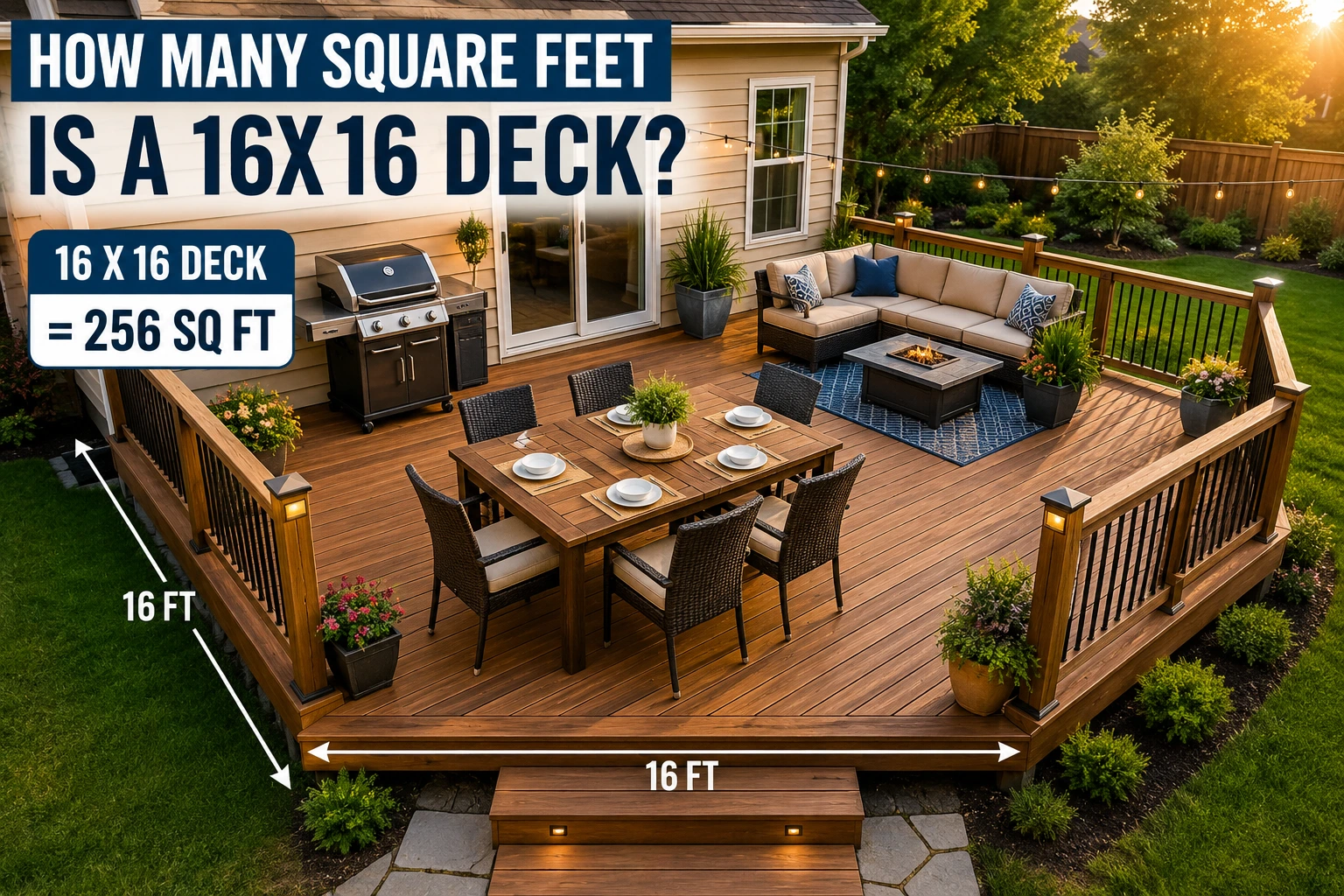
how many square feet is a 16×16 deck